AI Coding Tool Usage Patterns by Engineering Specialization
Different engineering roles need different AI coding tools to match how their work is structured.
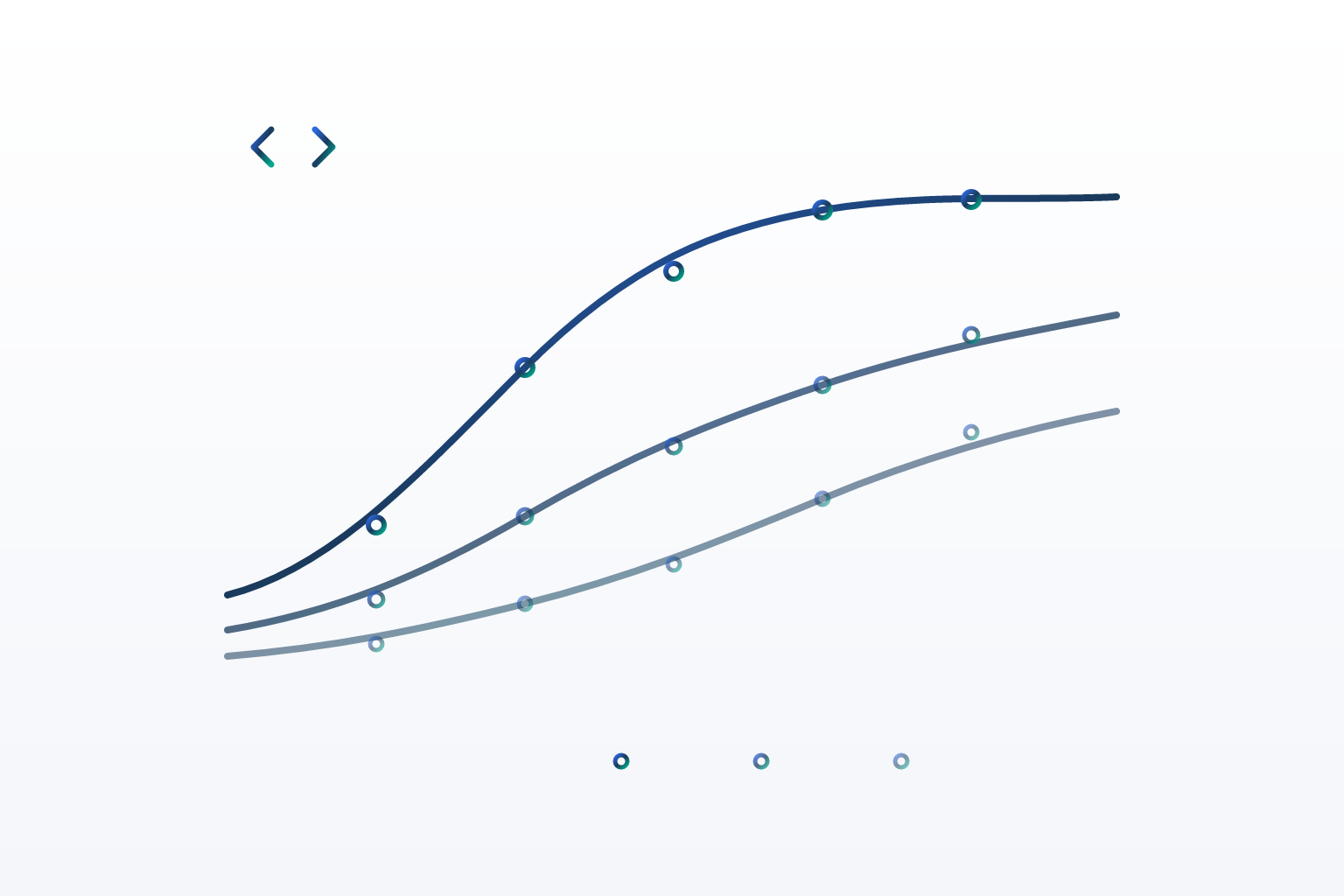
AI coding tool usage patterns differ by engineering specialization because the work itself differs. Backend, frontend, full-stack, and staff-plus engineers need different combinations of delegation, editor context, and architectural oversight. These patterns make a practical case for role-based tooling rather than a single company-wide winner, with human judgment determining where each tool can usefully take over.
Why AI tool preference has become a meaningful signal about how engineering work is actually structured
Tool fragmentation is not simply noise in an unsettled market. Most engineers now run two to four tools simultaneously, with a meaningful share using five or more. Engineers build stacks around tasks that need different kinds of context, interaction, and supervision, with each interface handling the work it does well.
Those choices reveal the structure of the job. An engineer who delegates changes across a codebase needs a different working relationship with AI from one who repeatedly edits and previews a component. Both may use AI a lot, but they choose tools to fit the units of work they handle. Specialization provides a useful way to interpret those choices without treating popularity as a universal measure of suitability.
How backend engineers use AI: terminal-native, multi-file, and oriented toward delegation
Backend engineers gravitate toward Claude Code because cross-cutting refactors, business logic, API design, and service boundaries fit terminal-native, agentic workflows. These tasks often extend beyond the file currently open. Claude Code’s strengths in deep reasoning, complex refactors, and multi-file changes align with work that requires traversing a codebase. The relevant distinction is the scope of delegation.
In this workflow, the terminal agent drives multi-file work while the IDE remains open for human review. The engineer delegates a bounded change, then evaluates how that change fits the surrounding system. This split suits backend work because making edits and judging what they do are linked but distinct tasks. An agent can support the first without taking ownership of the second.
Backend work also includes well-defined tasks such as CRUD operations, standard API integrations, and test scaffolding, where AI can produce reliable first drafts quickly. As implementation becomes cheaper, human effort shifts from routine construction toward review and edge cases. A practical backend stack therefore combines Claude Code for delegated heavy lifting, Claude or ChatGPT for reasoning and exploration, and a lighter inline tool for daily editing.
How frontend engineers use AI: IDE-centered, context-aware, and edit-loop focused
Frontend engineers’ preference for Cursor follows a different task rhythm. Their work often follows an edit-preview-iterate loop, in which they judge component-scoped changes as they make repeated adjustments. Cursor’s AI-first IDE, inline editing, and interactive code changes fit this loop because engineers get help in the editor where they are already working on the code.
These tasks include component generation, style refactoring, accessibility fixes, and test scaffolding for UI logic. Each benefits from in-editor context rather than requiring a separate delegation workflow for every change. The editor is part of the feedback loop. Compared with backend work that spans service boundaries, frontend iteration often rewards close interaction with the current component and its code. That difference explains the appeal of IDE-native assistance without placing it below terminal-native agents.
Cursor therefore fits this workflow. The engineer’s attention remains on successive edits and their effect. GitHub Copilot also fits frontend contexts, particularly where VS Code and Azure are already standard. In those teams, how a tool fits the ecosystem and how the organization buys it can shape what is available before engineers get to choose what they prefer. Frontend adoption consequently reflects both the shape of the edit loop and the organization that supplies the editor.
How full-stack engineers use AI: breadth demands a deliberate multi-tool stack
Full-stack engineers cross the boundary between these workflows, making them the clearest case for deliberate multi-tool use. Component work calls for IDE-native fluency, while backend changes can require deeper multi-file delegation. Neither mode covers the whole working day. Their breadth creates a practical reason to maintain tools with different strengths rather than settle into one tool’s preferred interaction model.
A common stack uses Cursor or Copilot for daily component and integration editing, Claude Code for complex backend changes or cross-cutting refactors, and a standalone chatbot for reasoning and design exploration. The division follows the work being attempted. The chatbot provides a separate space for exploring a question before committing to an implementation. Engineers choose a tool as they choose a task, leaving them free to switch products as the work changes.
That flexibility introduces genuine cognitive overhead, however. Engineers must switch between terminal and IDE, decide which tool to trust for which task, and maintain consistent prompting habits across interfaces. Solo contributors absorb it differently from team members who can share stack configurations, making support for multi-tool work an organizational concern. Full-stack usage exposes a tooling requirement that a uniform rollout can overlook, namely the need to manage transitions as well as provide access.
How staff-plus engineers use AI: agents for architectural delegation, not code generation
At staff-plus level, seniority becomes a stronger explanatory axis than backend or frontend specialization alone. These engineers are the heaviest users of agents, with leverage coming primarily from delegating investigative and architectural work. Their judgment and attention are in short supply. Codebase investigation, multi-file refactoring, and architecture exploration can consume time that would otherwise go toward design decisions and trade-off analysis.
Senior engineers’ stronger mental models help them supervise partial or imperfect output. They can delegate exploration while retaining ownership of the question being asked and the criteria for accepting an answer. Supervision is itself a form of expertise. An agent’s ability to produce a plausible result does not remove the need to recognize missing context, evaluate trade-offs, or decide whether a proposed change belongs in the system. The engineer’s understanding gives the delegated work its direction.
The preference pattern is consistent with that division of labor. Directors and senior leaders show disproportionately high preference for Claude Code, while Cursor’s relative appeal decreases with seniority. Agentic use also stands out as the strongest signal of AI enthusiasm in the described patterns. This is an association, with the causal link between agents and enthusiasm remaining unproven. Its significance is that senior-level AI fluency means more than prompting for code, because extracting value depends on framing investigations and evaluating their results.
What the tool preferences reveal about where human judgment still anchors the work
Across these roles, tool fit tracks the boundary between codified work and context-dependent judgment. Boilerplate generation, CRUD operations, standard API integrations, test scaffolding, and documentation give AI well-defined patterns from which to produce first drafts. These were historically substantial parts of junior engineering work. As tools absorb more of that implementation, the distribution of engineering value shifts toward deciding what should be built and assessing whether the result is appropriate.
The work that remains human-dominated has a different structure. System-level design, technology selection, cross-team coordination, and architectural review require system understanding, organizational context, and accountability. Those requirements involve trade-offs whose acceptability depends on the organization and its responsibilities. This explains why an agent can assist architectural exploration without becoming the authority for an architectural decision.
Delegated investigation can support an ambiguous problem even when the final decision is not safely delegatable. The useful unit of automation is therefore narrower than the engineer’s full responsibility. Multi-file execution can coexist with human control over service boundaries, just as component generation can coexist with human evaluation of the result. The tool map and the expertise map describe the same division of work, showing where production can be delegated and where informed acceptance remains essential.
How enterprise size and procurement shape tool distribution regardless of individual preference
At large enterprises, procurement decisions and Microsoft ecosystem alignment can determine distribution more strongly than an individual engineer’s preferred workflow. GitHub Copilot remains the installed-base leader in that setting. Microsoft integration, procurement simplicity, and policy controls help explain its position, but installed share and developer satisfaction answer different questions. One describes what organizations provide, while the other concerns how engineers experience the available tools.
That distinction creates a legitimate organizational tension. Standardizing on one tool simplifies procurement, yet it can underserve roles whose work benefits from another interaction model. A backend engineer suited to Claude Code’s agentic depth may have access only to the organization’s standard offering. A tool can satisfy enterprise requirements while leaving some workflows less well supported than a role-configured stack would.
Governance requirements nevertheless constrain which alternatives an organization can approve. Copilot’s enterprise security controls, legal terms, compliance provisions, and indemnity address legitimate procurement concerns. For regulated industries and classified work, individual preference is subordinate to organizational policy. Accounting for workflow differences within those constraints requires more than either unrestricted choice or uniform distribution alone.
What role-differentiated AI usage means for how engineering teams should be built and equipped
The practical implication for engineering leaders is to provision tools by role and workflow, within the organization’s governance requirements. Backend engineers need access to agentic tools capable of multi-file reasoning, while frontend engineers benefit from IDE-native inline assistance. Full-stack engineers need both, with support for managing the switching overhead. Staff-plus engineers should have access to agents as a basic part of their tooling. Premature standardization overlooks these differences and limits the range of work teams can delegate effectively.
Tool access also changes what teams need from their people. As routine implementation gives way to more architectural review and design thinking, seniority distribution becomes a more consequential team-design decision. AI fluency should be evaluated at the appropriate level. For senior engineers, that means the ability to frame delegated work, supervise imperfect output, make trade-off calls, and retain responsibility for final review. Adding engineers who already work natively in agentic workflows can compress the time to productivity, rather than making tool familiarity a separate learning burden after hiring.
For distributed teams, that fluency needs a compatible review model. Nearshore talent with real AI tool fluency and timezone-aligned availability addresses the risk of generated errors propagating through asynchronous review loops. Timezone overlap is part of quality control. It lets engineers work together in real time to catch and fix problems, avoiding review delays that leave time between implementation and correction. Equipping a team for AI-assisted development therefore includes not only choosing tools, but also providing the experienced reviewers and working-hour overlap needed to supervise their output.