Sprint Retrospective Formats That Surface Friction in Augmented Teams
Redesigned prompts expose friction that standard retro formats quietly hide in augmented teams.
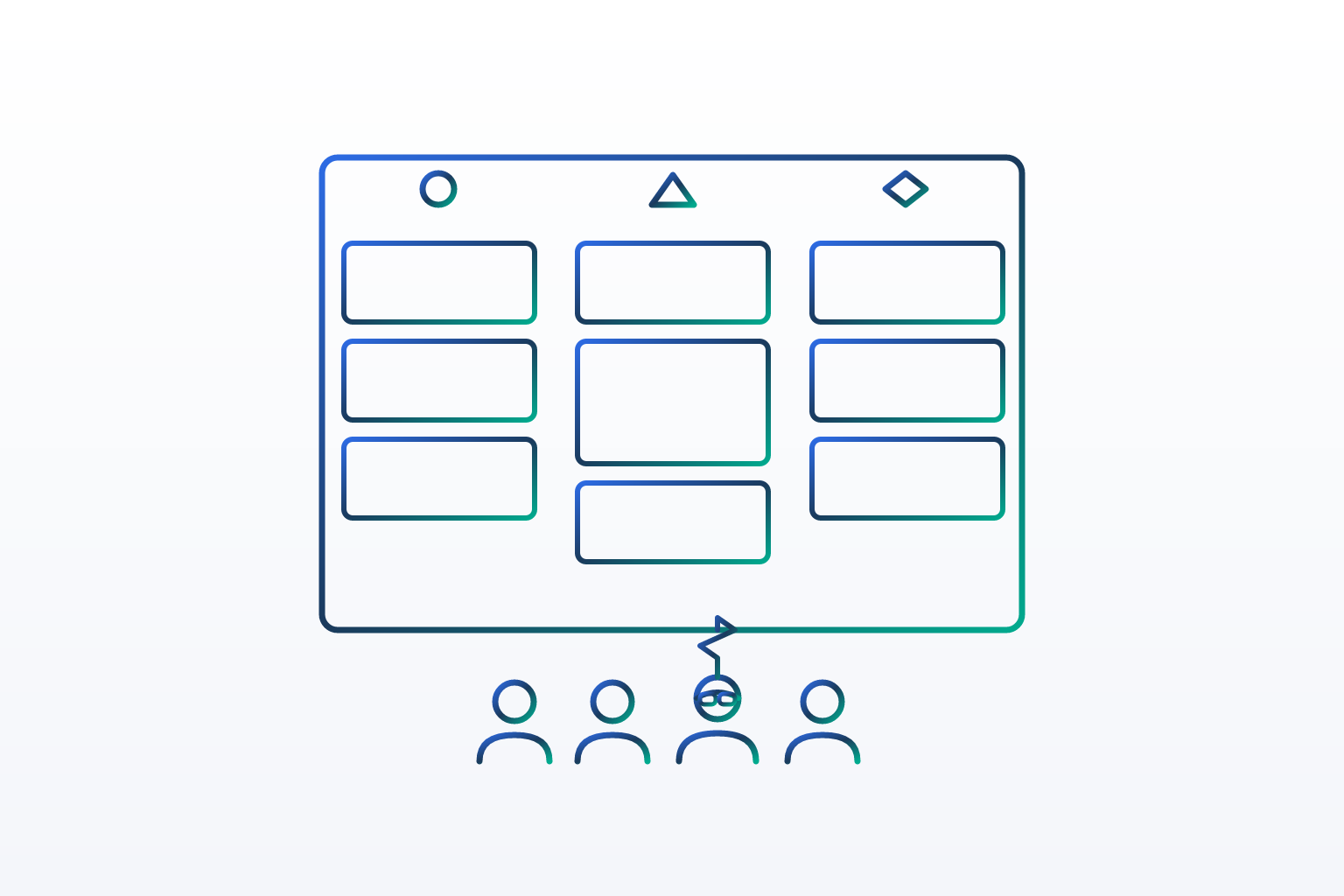
Standard sprint retrospective formats were built for a co-located, homogeneous team, so they quietly leave out the integration problems that define an augmented engagement. The retro is the one recurring meeting where integration friction either gets named or gets buried under small talk, and if the format can't see that friction, the team has no mechanism left to fix it. Augmented engineers sit in a structurally different spot on the team: they carry gaps in codebase history, in unwritten norms, in the relationship capital that core engineers built up over months or years of working side by side. Running the same three prompts sprint after sprint turns the ceremony into what engineers call sticky-note theater: notes generate conversation, conversation generates vibes, and vibes generate zero changed behavior. The fix doesn't start with better facilitation. It starts with admitting that the format itself was never built to look for the kind of friction augmentation produces.
The three friction types that augmented engagements generate and retros routinely miss
Friction in augmented engagements clusters into three distinct patterns, and a retro that only asks what went well and what to improve won't catch any of them. The first is collaboration gaps: augmented engineers often get treated as separate code contributors rather than full team members, with their own onboarding track, their own review expectations, and their own place (or absence of one) in the retro. Engineering leads who run a parallel track for external engineers report that the resulting friction compounds from sprint to sprint as people get used to each other. The COO of First Factory, a software provider based in New York with nearshore operations in Costa Rica, says clients who treat augmented engineers exactly like in-house engineers, same onboarding checklist, same code review expectations, same retro, are the ones where integration actually works. The clients who keep a separate track are the ones left wondering why it doesn't.
The second pattern is context asymmetry. Augmented engineers hold less institutional knowledge about why the codebase looks the way it does, what the stakeholders actually want, and which team conventions are unwritten but load-bearing. No standard retro prompt asks who is missing context or where a handoff of knowledge broke down, so the gap just sits there, compounding sprint over sprint. The gap is structural, rooted in information that core engineers accumulate and augmented engineers don't, and it keeps growing until a format is built specifically to surface it.
The third is workflow silos. When AI-assisted pull requests get merged at a higher rate but review time climbs sharply, the review bottleneck concentrates on a small group of reviewers, usually the core team, while augmented engineers sit and wait. Standard retro formats never name that distribution as a constraint because they were never built to look at who is actually absorbing the review load. AI tooling makes this worse on its own: when augmented engineers produce more AI-assisted PRs and no retro format checks for review bottlenecks, the team ships faster into work that's quietly getting worse, and nobody says so out loud.
Psychological safety collapse in augmented teams
Augmented engineers face a psychological safety problem that compounds on top of the usual team dynamics: raising a blocker or naming a process failure can feel like it puts the engagement itself at risk, so the most useful signal in the retro is also the signal most likely to go unsaid. If a core engineer names a leadership problem out loud, it might cause some social friction. For an augmented engineer, the same comment can carry the risk of losing the contract. The two aren't the same bet, and treating them as if they were is how the retro ends up hearing silence where it should be hearing a warning.
That silence moves the real conversation somewhere else: Slack DMs, end-of-day calls, informal venting to a manager who isn't in the room. The retro captures the team's surface sentiment while the actual integration problems keep deepening underneath, unrecorded and unaddressed. Anonymity has a role here, but only as a first step: the goal is to use anonymous input to surface what people won't say out loud yet, and then build toward open candor as trust develops over time, not to let anonymity become the permanent way the team talks to itself. Facilitation structure matters just as much as the tool chosen. Open discussion alone structurally shuts out whatever a team member doesn't feel safe saying in front of the group, and in an augmented team, that excluded comment is disproportionately the exact integration friction the retro exists to catch.
The four anti-patterns that kill retro signal in distributed and augmented teams
Most augmented teams aren't running bad retros on purpose. They run one of four identifiable anti-patterns, and each one quietly destroys the signal that augmentation friction would otherwise produce.
The first is sticky-note theater: a virtual board full of observations that generates conversation and nothing else, surviving only because it feels like work got done. A retro that actually serves an augmented team needs to produce things that travel past the meeting itself, decisions with a named owner and a check-in date, not a pile of observations the team shares once and forgets.
The second is same-format fatigue. Running Start-Stop-Continue or Mad-Sad-Glad on autopilot every sprint ignores a basic fact that experienced facilitators already know: different questions reveal different parts of how a team actually works. Most augmented teams don't rotate formats because the scrum master running the retro is also juggling three other ceremonies that week.
The third is what amounts to an async ghost town: retros run entirely asynchronously, where the person who types the most ends up shaping the whole narrative and quieter contributors get steamrolled. Async retrospectives only work when a synchronous working session exists to turn observations into decisions. Without that session, the retro becomes a mailbox nobody checks. The fix is a hybrid structure: gather observations asynchronously, then hold a short, live session to decide what happens next. If you hand that decision phase off to async tools, you lose the thing that makes it a decision.
The fourth anti-pattern is open-discussion exclusion. Facilitators who lean on open conversation alone are, by the structure of the format itself, excluding whatever a team member doesn't feel safe saying out loud. In an augmented team, that excluded voice disproportionately carries the integration friction the retro was supposed to catch.
Matching retro format to friction type: which formats surface what in augmented teams
No single retro format outperforms the others across the board. The job is to match the format to whichever friction type the team is currently dealing with, and to rotate as that friction shifts.
Mad-Sad-Glad works best for emotional signal and morale friction. It organizes reflection around how people actually felt, frustrated, disappointed, genuinely satisfied, before tracing those feelings back to their causes. Starting with emotion rather than a dry recap of events catches interpersonal and morale friction in a way a plain sprint timeline never would. The Mad column handled well can unstick a team that's been stuck in place; handled poorly, it can harden a grudge. So Mad-Sad-Glad belongs on teams that already have some baseline trust. A newly onboarded augmented engineer on a fragile team needs a trust-building format first, not this one.
The 4Ls format, Liked, Learned, Lacked, Longed For, is built for context asymmetry and integration gaps. The "Longed For" column is the real innovation here: it gives augmented engineers a way to name an aspirational improvement as a wish, which is often the only way that feedback gets voiced. The "Learned" column doubles as a knowledge-transfer audit. If an augmented engineer learned something mid-sprint that core engineers already knew going in, that points to a process failure in how knowledge moved across the team, not a sign that the augmented engineer wasn't capable.
Timeline retrospectives are built for coordination breakdowns and workflow silos. Mapping the sprint's actual sequence of events, who touched what, when, in what order, turns handoff gaps and review bottlenecks into visible patterns on a shared timeline instead of vague, hard-to-pin-down complaints. In augmented teams running AI-assisted development, the timeline is where the PR review concentration problem becomes visible: exactly where an augmented engineer's pull requests sat in queue, and who ended up absorbing the review load.
Sailboat retrospectives separate what's propelling the team forward (the wind), what's holding it back (the anchors), and what risks lie ahead (the rocks). Because of that separation, Sailboat works especially well when augmented engineers are blocked by dependencies sitting entirely outside the core team's control.
Start-Stop-Continue still has a place, as a reset tool for a healthy, stable team running a routine process check, but not as the default format every sprint. Running it on autopilot in an augmented team locks the retro onto process friction alone while collaboration gaps, context asymmetry, and morale friction build up unseen underneath.
Adapting retro structure for the three modes augmented teams run in
Picking the right format solves only half the problem. The meeting structure itself has to account for how the team is physically distributed, and augmented teams tend to run in one of three distinct modes, each needing its own adaptation.
The first mode is fully remote with overlapping time zones, the common shape of LATAM nearshore engagements. Engineers based in Latin America working alongside US teams keep a shared live overlap window, which gives a retro the conditions it needs for candid, real-time decisions. In this mode, the full retro can run synchronously end to end. Collecting input anonymously before the discussion opens gives augmented engineers who might otherwise defer to the core team's existing dynamics an equal voice in what surfaces.
The second mode is hybrid, some people in the room, some joining remotely. The room wins by default: people sitting together fill silences and read each other's faces before a remote participant even finishes unmuting. Augmented engineers are almost always the remote half of a hybrid retro, so without a deliberate step to equalize voices, their input gets quietly suppressed before the conversation even starts.
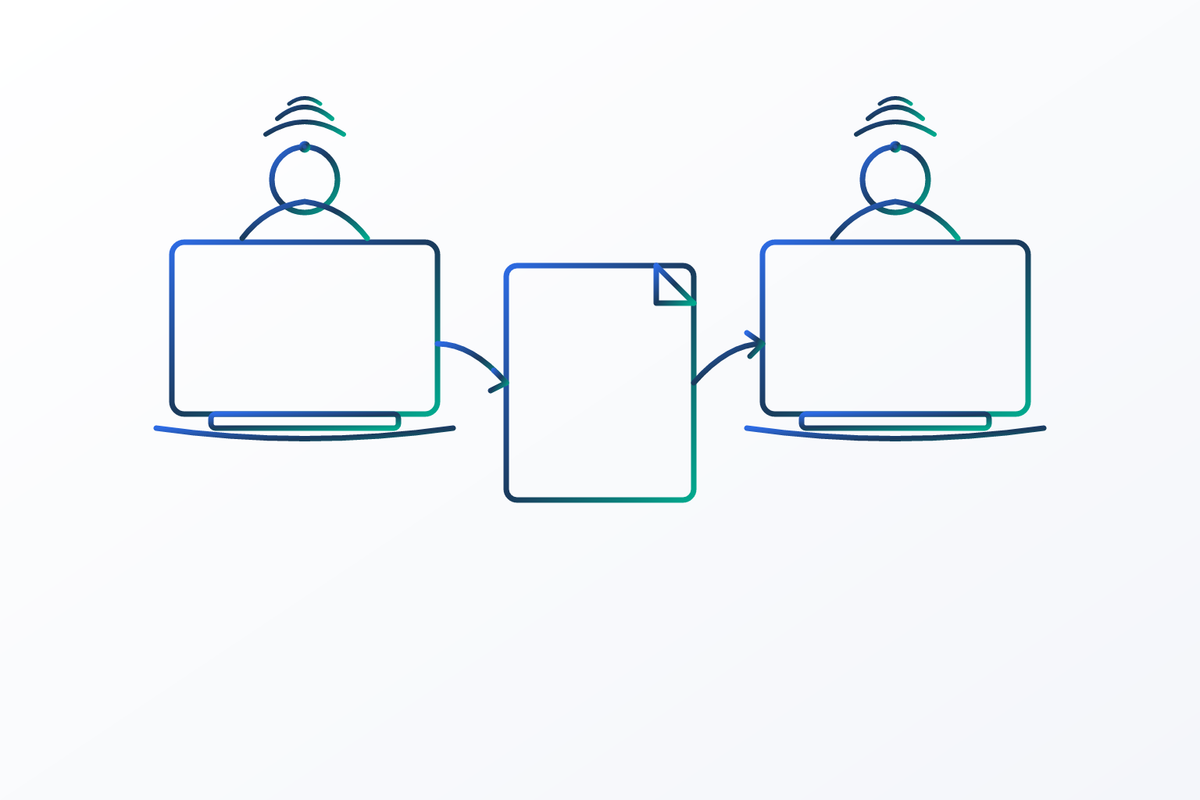
The third mode is fully distributed across a large time zone gap, the typical offshore case with an 8-hour offset or more. Pure async retros at that kind of distance turn into ghost towns: whoever writes the most shapes the whole narrative, quieter voices get steamrolled, and no real commitment to change ever gets made. The fix is a staged model. Gather observations asynchronously over a 48-hour window, Monday through Tuesday, then hold a 30-minute live working session on Wednesday with whoever can attend, and log commitments in the tracker by Thursday. The decision phase has to stay synchronous even if the setup is fully distributed. Pushed to async, the decision phase produces a list of good intentions, not actual commitments anyone is on the hook for.
Pre-retro data for the augmented team canvas
A retro discussion that starts from self-assessment alone is already skewed, because people estimating their own productivity rarely know where the friction actually concentrated. Before any conversation starts, the canvas needs the sprint's real signals already on it: merged PRs broken down by person and size, test failures, incident count, cycle time, deployment frequency, the sprint burn chart, and the status of action items from the prior two or three retros, marked shipped, slipped, or abandoned.
That last item, the audit of prior action items, is the one teams skip most often and the one that costs them the most. A team that never checks which of its own commitments actually got followed through on has no way to tell real improvement from a meeting that just feels productive. AI tooling adds its own wrinkle here: when augmented engineers produce more AI-assisted pull requests, individual output numbers can look strong even as PR review time and incident rates climb. If a retro only reads delivery metrics, it will miss that quiet decline. Prompts also need to separate greenfield AI-assisted work from work in a familiar codebase. Lump the two together, and the self-assessments that come out of the retro end up wrong in opposite directions depending on which kind of work someone was actually doing that sprint. None of this data replaces the conversation. It gives the engineering lead something concrete to point to, so the discussion deals in specifics.
The structural change that determines whether retro outputs change the next sprint
The most common reason a retro's output never changes anything the next sprint is the absence of a decision phase that assigns a clear owner, names a measurable outcome, and sets a check-in date inside the next sprint. A retro that ends in a list of observations with no owner and no follow-up date functions as a venting session, not a mechanism for improvement, and that distinction matters even more across an augmented boundary, where the social norms that quietly enforce accountability on a core team simply don't reach.
Every action item coming out of an augmented team's retro needs to state whether the owner is a core team member, an augmented engineer, or both. In a distributed team, ambiguous ownership defaults to nobody. The review of prior action items at the start of the next retro is what closes the loop: seeing what actually shipped, what slipped, and what got quietly abandoned is the clearest signal available for whether the retro is doing real work or just running on schedule. Integration friction that gets named out loud but never turns into an action item with an owner hasn't been surfaced. It's been performed. The structural fix this piece has been building toward only holds together once that decision phase is treated as mandatory, not optional, and once the team's time zone reality, nearshore overlap being the clearest case, actually allows that synchronous decision to happen when it needs to.