Onboarding External Engineers to an Existing Codebase Remotely
External engineers ramp faster when onboarding follows a repeatable checklist, not improvisation.
Onboarding external engineers into an existing codebase is a process problem, and teams that build a repeatable system for it consistently outperform teams that improvise one each time a new engineer joins. The symptoms are familiar: slow ramp-up, architecture decisions that contradict existing patterns, and rework that costs more than the original task would have. The absence of a discipline applied the same way every single time causes those symptoms.
External engineers, whether staff-augmented or directly contracted, join a codebase that is already alive and in motion. Undocumented decisions, implicit conventions, and institutional memory held only in the heads of people who were present for the original build are invisible to someone arriving new and are not visible in a repository's file structure. In an office, these gaps get corrected informally. A teammate glances at a screen and flags an issue before it compounds. Someone overhears a conversation in the hallway and realizes a plan is already out of date. Remote work removes every one of those informal correction mechanisms, leaving nothing to replace the ambient awareness that used to catch misalignment early.
The external engineer's assumptions about the system and the team's actual practices form a widening gap, and that gap grows every day it goes unaddressed. The fix is a sequence: provisioning before Day 1, a small test of the whole system in the first 48 hours, async rituals that substitute for office correction, documentation built to transfer reasoning rather than just structure, and milestones that convert "ramping up" into something a manager can actually check.
Structuring an onboarding sequence before Day 1
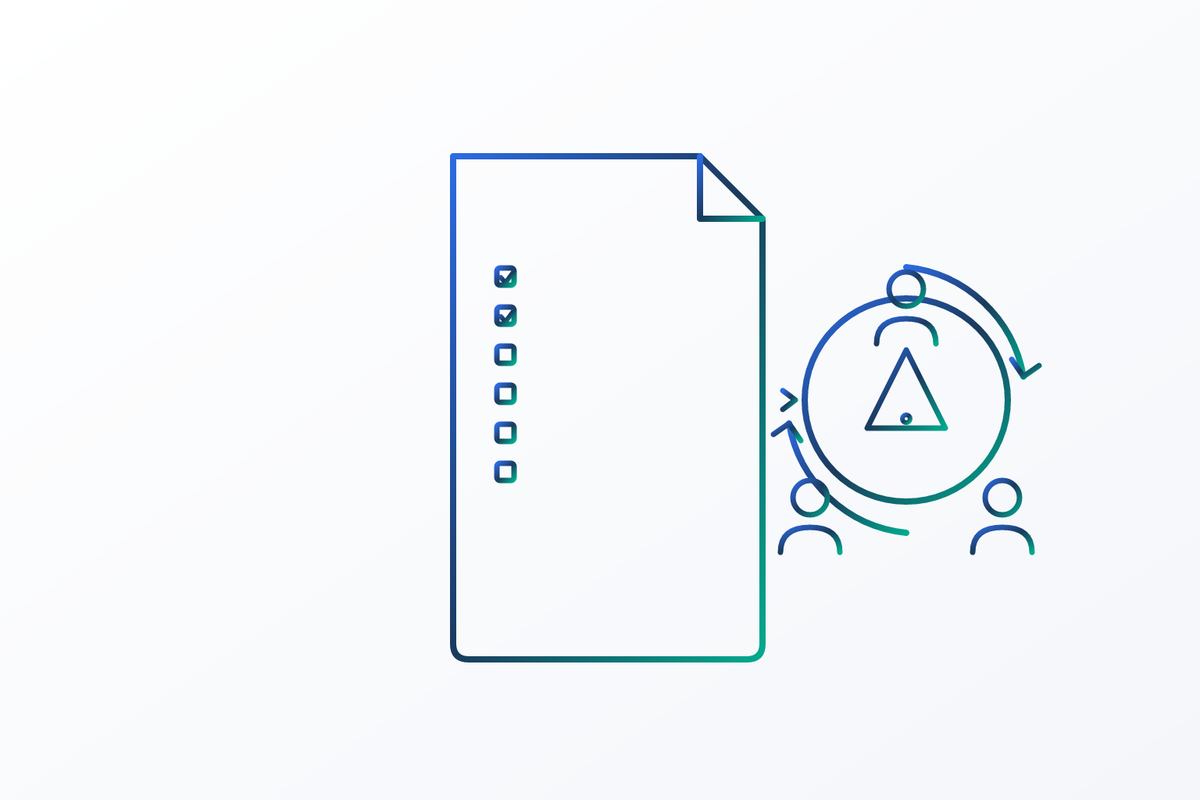
The most avoidable waste in remote onboarding is the access gap: days or weeks where a billable engineer has a laptop and no way to do anything useful with it. Fixing this requires a checklist prepared the week before the engineer's first day, not scrambled together on the morning of it.
Everything the engineer needs by Day 1 should already exist: a company email and identity provider account, repository access that starts as read-only and expands to write access with appropriate branch permissions, CI/CD pipeline credentials along with documentation on how that pipeline is actually configured, a ticket tracker such as Jira or Linear with the current sprint already visible, a chat workspace with the relevant channels joined in advance (the main engineering channel, the specific team channel, and the incident channel), cloud console access with least-privilege IAM roles defined and applied rather than granted broadly out of convenience, and a documentation wiki with a curated starting path rather than an undifferentiated archive of everything anyone has ever written.
That last item deserves its own treatment, because a wiki dump is not a starting path. A real "start here" sequence answers four questions in order: what does this system do, how is the codebase organized, how does a change travel from a branch to production, and who owns what. An engineer who can answer those four questions has enough orientation to ask good questions about everything else.
Architecture decision records deserve particular weight here, because they are the highest-leverage documentation investment a team can make before an external engineer arrives. An ADR explains not just what was built, but why it was built that way instead of some other way, and that reasoning is exactly the context an external engineer needs most urgently and has the least access to by default. Code reveals what exists. ADRs reveal what was considered and rejected, which is the part no amount of code reading will recover.
None of this works without a named internal owner. An Engineering Manager, Tech Lead, or Senior Developer should be assigned as the engineer's internal champion before Day 1, personally responsible for how the first weeks go. An external engineer without a named internal owner drifts quietly out of alignment, and nobody notices until the drift is expensive to reverse.
The first 48 hours: using a small pull request to test the whole system
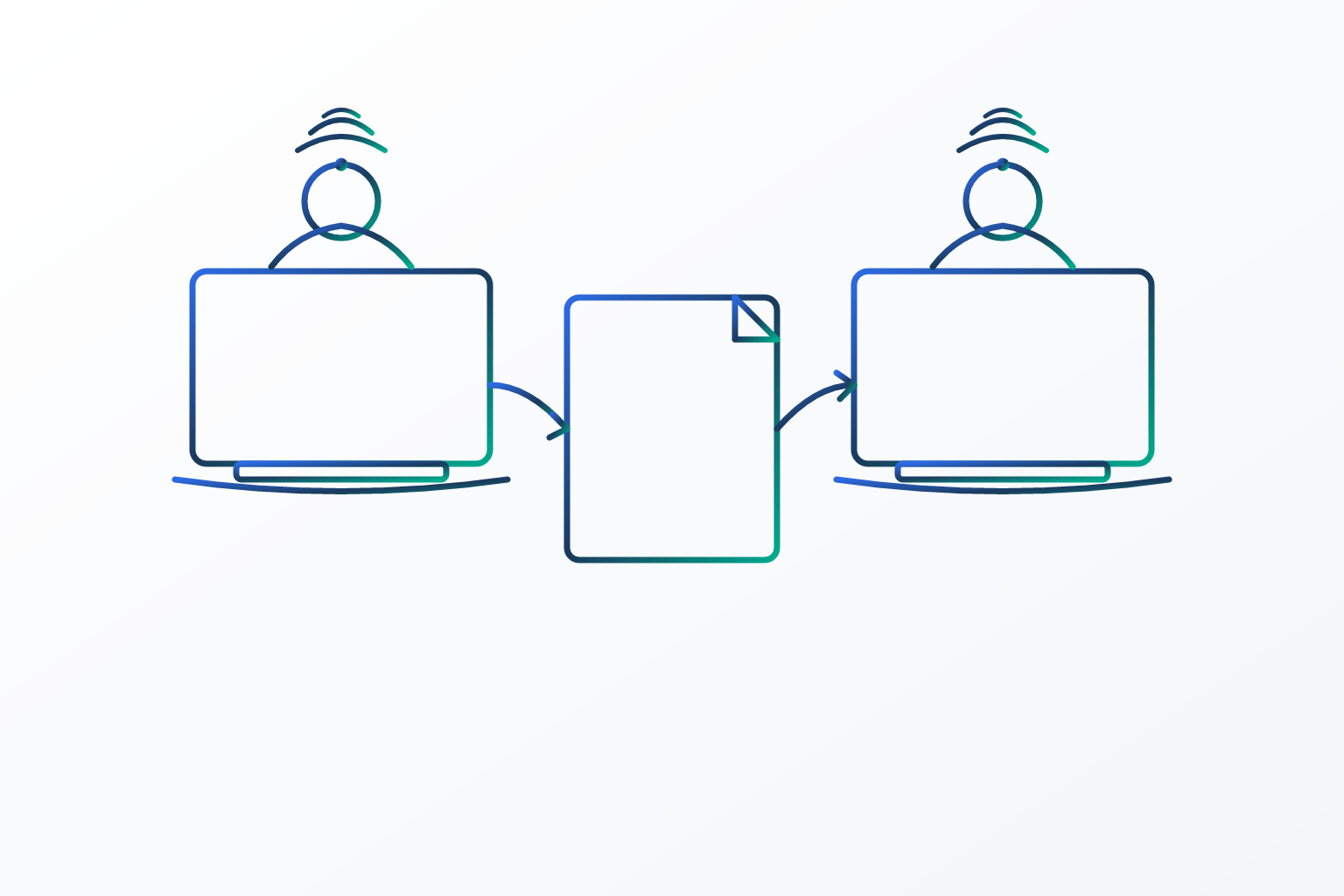
A new external engineer should open a pull request within the first 48 hours, and it should be intentionally small. This exercise is a systems test, designed to surface broken pipelines, misconfigured permissions, and unclear review norms while the cost of finding them is still low, rather than three sprints in when the same problems derail a real feature.
The content of the PR should be close to trivial: a typo fix, one added unit test, a correction to a documentation page. The value is not in the code change itself. The value is in everything the act of submitting that code change forces into the open. Is the branch naming convention, the commit message format, or the PR template written down anywhere a new person could find it on their own?
Every failure that surfaces in this first PR is a failure of the onboarding system, not a failure of the engineer, and it should be treated that way. If the review takes four days, fix the review process, because none of those failures reflect on the person who happened to be the first to trip over them.
The internal champion should review this PR, and the review should be generous. The goal at this stage is to model what the team's review culture looks like in practice, not to evaluate whether the new engineer can write code. That evaluation already happened during vetting.
Async communication rituals that prevent knowledge drift in distributed teams
The biggest risk in remote onboarding is that the engineer makes reasonable decisions in isolation, decisions that look sound on their own terms, and those decisions quietly diverge from internal standards until the divergence becomes expensive to reverse. Distributed teams lack that ambient correction mechanism, so it has to be built deliberately.
A written daily standup is the first piece of that structure: a short async post covering what shipped, what's in progress, and what's blocked, posted to a shared channel. It's a daily breadcrumb trail the internal champion can scan in under a minute, which is often enough to catch a wrong turn before it becomes a wasted week, in place of a meeting.
PR comments should function as the primary medium for technical reasoning, not a formality attached after the fact. A private message that explains a decision is a private message that evaporates the moment the conversation ends.
The log forces a moment of reflection at the point the decision is made, and it leaves behind an artifact the rest of the team can audit later, rather than relying on memory to reconstruct why something was built a particular way.
One failure mode needs to be named directly: separate Slack channels or separate project boards set up specifically for external engineers. One team, one set of rituals, no separate track.
Documentation standards that transfer knowledge without creating a maintenance burden
Documentation for a distributed team is not a compliance artifact kept for an audit somewhere down the line. It functions as the infrastructure that lets an external engineer make a sound decision without waiting hours for someone in a different time zone to wake up and answer a question synchronously.
Five kinds of documentation matter during onboarding, in a rough order of priority. A system architecture overview comes first: one diagram and one page of prose covering what the system does, how its major components relate to each other, and where the significant seams sit. This is not a full technical spec. It exists purely to orient someone, nothing more.
A good ADR records what was decided, what alternatives were on the table, and why the team chose the path it chose, in a short, structured format that someone can read in a few minutes.
A runbook for local development follows: the exact steps to clone the repository, install dependencies, configure environment variables, run the test suite, and get a working local build. This runbook should be tested by someone who didn't write it, ideally the engineer who was most recently onboarded, since that person is best positioned to catch the step everyone else forgot was non-obvious.
The objection to all of this is real on its own terms: documentation rots, and a team that over-documents can end up worse off than a team that under-documents, because stale documentation actively misleads. Being selective about what gets documented is the answer. ADRs and architecture overviews age slowly, because the reasoning behind a system's design changes far less often than the code implementing it does. Line-by-line inline comments age quickly and should live close to the code they describe, updated in the same commit that changes the logic. Documentation ownership should follow the same rule as code ownership: the engineer who builds a component owns the documentation for that component, and both get reviewed in the same pull request.
The 30/60/90-day ownership model
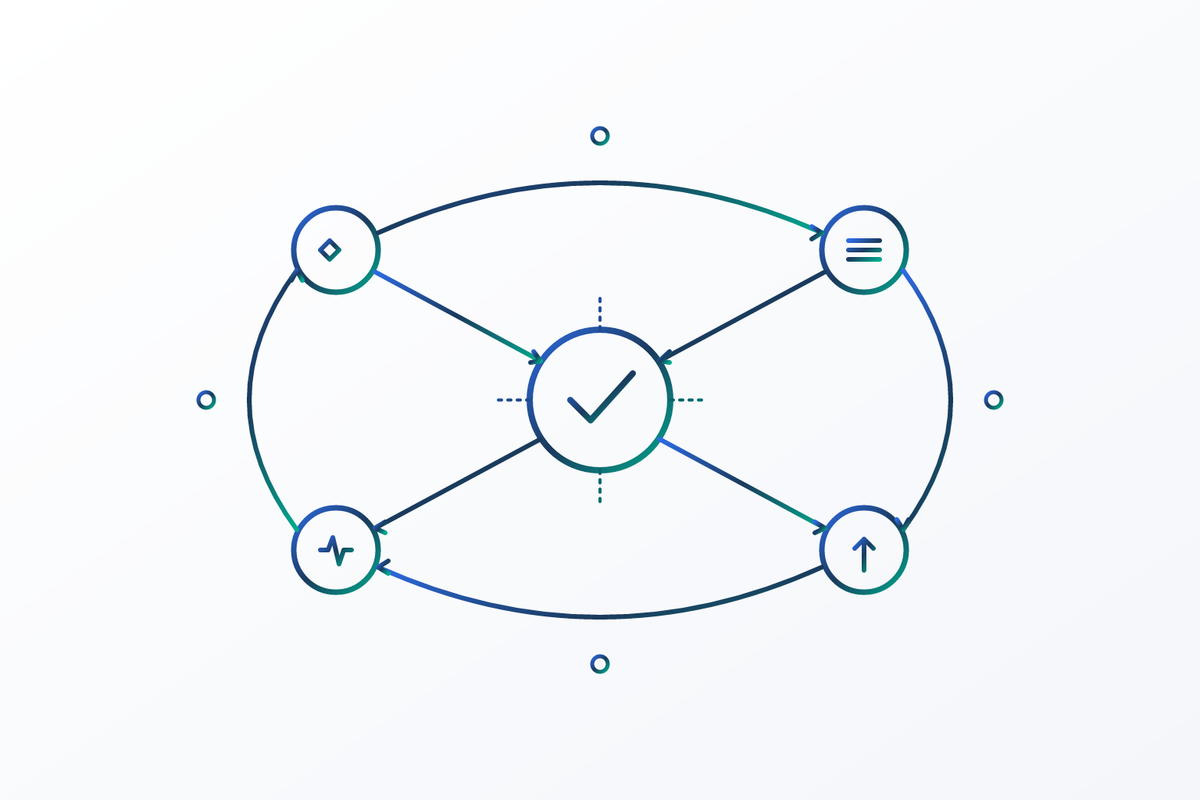
A 30/60/90-day framework turns a vague sense of "ramping up" into milestones a manager can actually check against reality. By Day 30, an external engineer should be shipping small, reviewed changes independently, without requiring a walkthrough for every PR. By Day 60, ownership should extend to a defined slice of the system, a module or service the engineer can be the first point of contact for. By Day 90, the engineer should be contributing to architectural discussions, not just implementing decisions other people made.
Holding external engineers to the same KPIs used for internal engineers is the clearest signal available that the engineer is genuinely part of the team, rather than a contractor being managed at arm's length through a different scorecard. Different standards for different people, even well-intentioned ones, tend to communicate distance.
The internal champion's accountability runs in parallel with the engineer's. If an engineer hasn't reached Day 60 ownership by Day 60, the first question to ask is whether the champion provided the access, the context, and the feedback the engineer actually needed, not simply whether the engineer performed. Gate reviews at each of the three milestones should be short and structured: what's working, what's blocked, and what the engagement suggests should change in the onboarding process for the next engineer who comes through it. That last question is what turns a single onboarding into a system that gets better each time it runs.
AI coding tools and the onboarding equation for external engineers
AI coding assistants speed up output, including during onboarding, but they also produce larger, harder-to-review pull requests, and they shift the review burden onto senior engineers who are already carrying the mentorship load for a new team member. That shift lands at the worst possible moment: the period when the external engineer has the least context about the codebase and internal reviewers have the least spare capacity to absorb additional review work.
The productivity paradox is sharpest right here. An external engineer using an AI coding tool may produce more code, faster, than anyone expected. That code requires deeper review, not lighter review, because the engineer does not yet have the context to judge whether what the model generated actually fits the codebase's conventions and constraints. Code that looks fluent is not the same as code that fits.
The onboarding system needs to account for this directly. Code review standards should explicitly address AI-generated output, not to prohibit its use, but to hold the engineer to a clear bar: they should be able to explain every line of a PR as if they had written it themselves. "The model wrote it" is not an adequate answer to a reviewer's question about why the code works the way it does. AI proficiency belongs in vetting. The question that actually predicts onboarding speed is whether a candidate can evaluate and critique AI-generated code, or whether they accept its output uncritically. The former accelerates everything that follows. The latter compounds the review burden at precisely the point the team can least afford it.
Vetting practices that predict how well an engineer will onboard remotely
Fast remote onboarding starts before any contract is signed. Engineers who demonstrate autonomous working habits, clear written communication, and real architectural reasoning during vetting need less hand-holding once they're actually inside the codebase, and that difference is visible in the first 30 days of the engagement.
A technical screen built for remote-codebase onboarding should include a few specific elements. This measures orientation skill directly, not just algorithmic fluency in a vacuum. A candidate who can recite tool names but stalls when asked to reason through a trade-off is signaling a gap that will slow the entire onboarding sequence described above.
A written communication sample matters as much as either of those. Asking a candidate to write a short technical explanation of something they built predicts the quality of their async communication directly, which is the exact skill the PR-comments-as-primary-medium approach depends on. A behavioral screen for autonomous work rounds out the process: has the candidate actually worked unsupervised across time zones before, and do their references confirm they deliver on deadlines without needing constant follow-up?
None of this replaces the structured sequence described earlier, the provisioning, the 48-hour PR, the async rituals, the documentation, the milestones. What good vetting does is reduce how hard that system has to work to close the gap between what an external engineer assumes and what the team actually does.