CI/CD Pipeline Handoffs Across Timezone Boundaries
Distributed teams need explicit timezone handoff strategies within CI/CD pipelines.
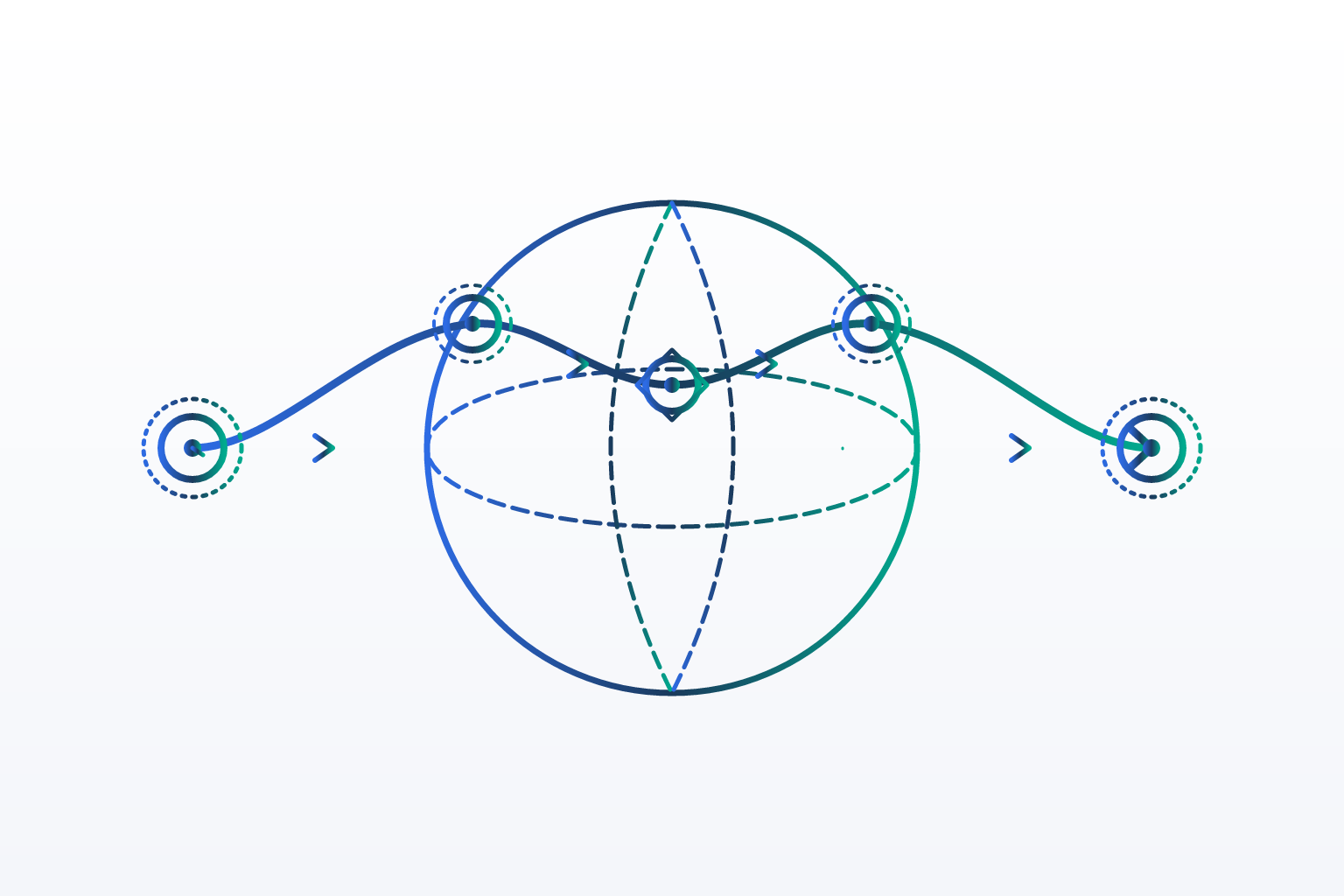
A CI/CD pipeline is built to remove manual handoffs between commit and production, and for the mechanical parts of that journey, it works. But distributed teams run into a second, harder handoff problem that no pipeline configuration resolves on its own: who owns a failing build, who approves a release, and how decisions move when one team's end-of-day is another team's midnight. A blocked pull request at 5 PM in one city sits untouched until the next morning for the team that opened it, and a build that fails at 2 AM local time belongs to nobody until a shift shows up to claim it. The pipeline keeps running. The judgment calls that sit inside it do not run on the same schedule, and that mismatch is what this article maps.
What the pipeline automates
Every commit that enters a CI/CD pipeline moves through the same sequence: build resolves dependencies and produces an artifact, test runs unit, integration, and end-to-end checks across layered gates, and deploy promotes that artifact into one or more environments. The "build once, promote everywhere" pattern means the artifact that gets tested in staging is the same artifact that reaches production, and that immutability is a deliberate design choice rather than a side effect of the tooling.
Where the pipeline stops is the real question for distributed teams, and the answer turns on one distinction: continuous delivery versus continuous deployment. Continuous delivery stops short of production and waits for a human to approve the final push. Continuous deployment removes that approval gate entirely, which only works safely with strong automated test coverage and reliable rollback controls already in place. Delivery is where timezone risk concentrates, because it keeps a person in the loop at the exact point where a pipeline can otherwise run unattended.
Three gates survive even in well-designed pipelines: pull request review, where someone has to approve a merge; release approval, where someone has to authorize a production push under a delivery model; and incident response, where someone has to take ownership of a deploy that's gone wrong. Automated testing gives every team a uniform quality bar to clear, but what it produces is a pass or fail signal, not a decision. When that signal is ambiguous, a person still has to decide what happens next, and that person is not always awake when the signal fires.
The four friction points that timezone boundaries create inside a pipeline
Each of the three human gates above becomes a stall point once a team spans multiple timezones, and each stalls in its own way with its own downstream cost.
The first is the blocked pull request. A developer on a team several hours ahead opens a PR at the end of their day, and the reviewer's workday hasn't started yet. By the time the reviewer logs on, the branch has aged, trunk has moved, and a merge conflict exists that wasn't there when the PR went up.
The second is the unowned failing build. A build breaks during the originating team's off-hours, and the on-call team in another timezone inherits a failure in code they didn't write and may not fully understand. Diagnosis slows down because the context that would normally live in someone's head is missing.
The third is the release approval bottleneck. Under a continuous delivery model, a human still has to sign off on the push to production, and if that approver is asleep, the release waits no matter how clean the build is. A pipeline that automated everything else idles behind a single person's calendar.
The fourth is the incident handoff. A production failure that starts during one team's shift and isn't resolved by the time that shift ends has to pass to the next team, and without a structured transfer of context, the team picking it up starts the investigation from zero on a live incident.
Overlapping working hours make most of this friction disappear by default: when teams work overlapping hours, code reviews and feedback loops don't carry a twelve-hour delay by default. When they don't overlap, the pipeline's design has to make up the difference deliberately, which is the subject of the rest of this piece.
DORA metrics and the cost of unresolved handoff friction
These four friction points aren't just an operational annoyance. They show up directly in the metrics that engineering organizations already use to measure delivery performance. Deployment frequency drops when release approvals sit waiting on an approver who's asleep. Lead time for changes stretches out as pull requests age past their reviewer's working hours. Change failure rate climbs when fatigued teams push changes without the review depth those changes need. Failed deployment recovery time grows longer when incident context doesn't make it across a shift boundary.
The 2025 DORA report changed how this gets measured. It dropped the four-tier performance model entirely in favor of seven archetypes built from eight underlying measures: throughput, stability, team performance, product performance, individual effectiveness, time spent on valuable work, friction, and burnout. Friction and burnout are now named outcomes in the model, not side effects implied by the other numbers, and timezone handoff failure is exactly the kind of friction that model is now built to capture.
The same research found that higher AI adoption tracks with higher delivery throughput and higher software delivery instability at the same time. Speed and fragility can rise together, which is reason to watch change failure rate and recovery time more closely as teams adopt AI tooling and accelerate, not less. DORA's four original metrics were never meant to be read one at a time. Deployment frequency climbing while stability falls doesn't represent progress; the whole point of the framework is that throughput and stability move together or the picture is misleading. A team that inflates deployment counts with trivial changes hasn't solved anything. That balance is what the four friction points above put at risk, and it's what the next four sections are designed to protect.
Async approval workflows: structuring release decisions so no single timezone is a bottleneck
The release approval bottleneck has a specific design answer: stop waiting for a particular person to click approve, and instead release when a defined set of conditions is already met. Those conditions are automated checks, not status updates from a human, so they don't require anyone to be awake at a particular hour.
In practice this means a few concrete changes to how a pipeline is configured. Pre-approved release windows let any authorized engineer in any timezone execute a release without escalating to someone else first. Automated policy checks, such as test pass rate, coverage thresholds, and a clean security scan, become the actual gate, rather than a person's judgment standing in for those checks. Reviewer requirements get distributed across timezones so that at least one qualified reviewer is in working hours at any given point in the day.
Multi-tier peer review built for staggered schedules lets code quality requirements get satisfied across shifts rather than in a single sitting, which keeps review standards intact without forcing everyone onto the same clock. None of this works, though, without a naming convention behind it: every release candidate needs a named owner in each active timezone, someone specifically empowered to approve or block it, not a shared queue anyone can assume someone else will clear.
The obvious objection to spreading approval authority across more people is that someone without full context might approve something they shouldn't. The automated gate conditions carry the quality burden in this model. The human approval step becomes a final authority check layered on top of checks that already ran.
Feature flags as the mechanism that decouples deployment from release decisions
Feature flags solve a related but distinct problem: they let a team merge and deploy code continuously while leaving the decision about when users actually see a feature to whoever is in the best position to make that call, on their own schedule. A team in one timezone can merge and deploy code behind a flag, and the team in another timezone can flip that flag on when they're ready, with no new deployment required.
This removes the release approval bottleneck from the deployment event itself. The code is already sitting in production, hidden behind the flag, so what's left to approve is turning a feature on, which carries far less risk and is far easier to reverse than approving a full production push.
For distributed teams, the operational payoff appears directly in recovery time. A flag functions as a kill switch: if a feature starts causing problems in a timezone where the engineers who built it are offline, the on-call team somewhere else can turn it off immediately, with no rollback and no hotfix deploy required. That's a direct improvement to failed deployment recovery time, the same DORA metric that structured incident handoffs are meant to protect, because the fix takes seconds rather than the length of a full deployment cycle.
Flags carry their own maintenance cost. Old flags that never get cleaned up turn into technical debt and add unnecessary branching complexity to the codebase. Managing a flag's full lifecycle, from creation through activation to eventual removal, matters as much as having the flag mechanism available.
Artifact immutability and environment parity as the foundation for safe promotion across shifts
The unowned failing build gets much harder to diagnose when every environment produces a slightly different version of the thing that was supposedly tested. The fix is the same "build once, promote everywhere" pattern mentioned earlier: a single artifact gets built once, moves through staging and production unchanged, and only configuration values get swapped in per environment.
For distributed teams specifically, this closes a gap that used to cost hours. A build that fails in staging at 3 AM can be picked up and diagnosed by the team starting their shift at 9 AM somewhere else, because they're looking at the exact same artifact that was tested. There's no "it worked on my machine" or "it worked in staging" ambiguity standing between the failure and the fix.
Infrastructure as Code extends that same consistency to the environments themselves. When every environment is defined in version-controlled code, a developer anywhere can reproduce the exact environment that produced a given failure, which removes an entire category of bugs that only ever show up in production-like configurations. Artifact signing adds a security layer on top of this: cryptographically signed artifacts can't be tampered with during promotion, which matters specifically when a build gets promoted while the team that built it is offline and unavailable to verify it by hand.
Centralized logging ties these pieces together operationally. When every build runner and environment feeds the same searchable dashboard, the team picking up a failure in a later timezone can start root-cause analysis immediately, without waiting for the originating team to wake up and explain what happened.
Build ownership conventions that prevent the unowned failing build
None of the mechanisms above stop builds from failing, and none of them should be expected to. What they determine is whether a failure gets picked up by the next available engineer right away, or sits untouched until the team that caused it comes back online.
The core convention is simple to state and easy to skip: every branch, every build, every release candidate has one named owner, a specific person rather than a team, responsible for its state. Ownership transfers explicitly at shift boundaries, on a defined schedule, rather than drifting informally based on whoever happens to be awake in a given timezone.
Branching strategy shapes how clean that ownership line is. GitFlow lets engineers in different timezones work in isolation through long-lived feature branches, which keeps work separate but can also keep failures harder to pin down across a bigger surface area. Trunk-based development takes a different approach: it relies on short-lived branches and feature flags rather than isolation, keeping the main branch releasable at all times, and in doing so produces smaller, more attributable units of work. When something breaks in a trunk-based setup, it's usually easier to trace the failure back to a specific small change and a specific owner.
Alerting is what actually gets a failure to its owner. Webhook notifications fired the moment a critical pipeline stage fails should route to the named owner directly, not to a general team channel where everyone can reasonably assume someone else is already handling it.
Handoff documentation closes the loop at shift boundaries. A short, structured written note, covering current build state, what's failing, what's already been tried, and what the next step should be, attached to the pipeline run record itself rather than buried somewhere in a chat thread the incoming team has to go dig for.
Writing that note takes a few extra minutes, and it's worth weighing that against the alternative. The cost of a structured handoff is far smaller than the cost of re-diagnosing a failure from a blank slate, and teams that skip the handoff pay for it in recovery time, not in time saved.