SDLC Stage Mapping for AI Tool Integration in Software Teams
AI tools must map to SDLC stages where humans retain final judgment and accountability.
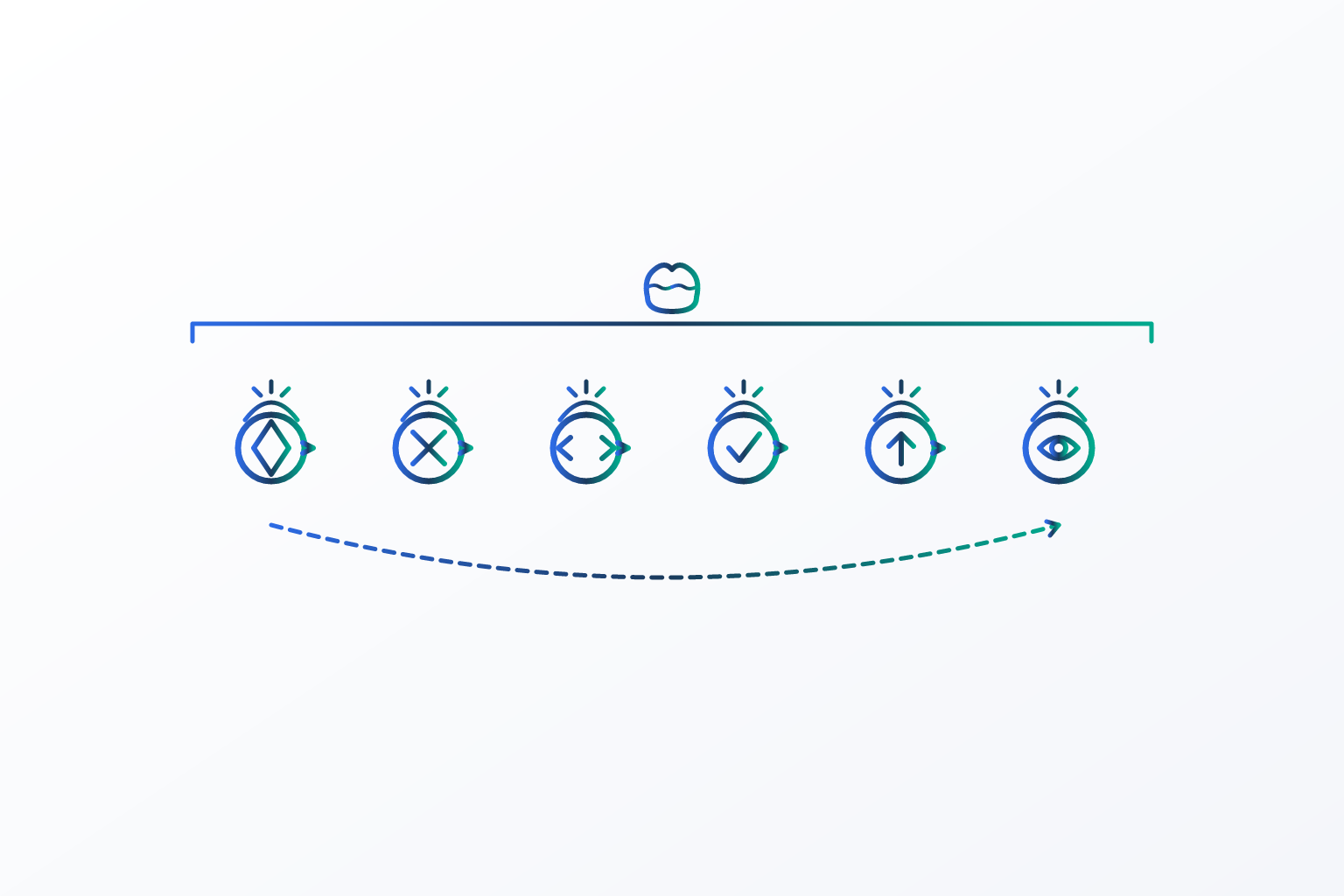
AI integration in the SDLC requires mapping capabilities to stages. Each stage has its own bottleneck, its own risks, and a point where a person must take ownership. Structured adoption matches AI capabilities to those conditions, then measures whether the next stage can absorb the output. Faster generation alone is not evidence of better delivery.
Why the SDLC is the right unit of analysis for AI tool decisions
Engineering leaders in 2026 face tool sprawl. Coding assistants, planning tools, review agents, and deployment automation compete for investment, but their individual capabilities do not establish where a team needs help. A team waiting on clarified requirements has a different problem from one waiting on reviews, even if both could generate code faster.
The SDLC stage provides a useful unit of analysis because it connects a bottleneck to an artifact, a risk, and an owner. That connection becomes more important as tools move from assistance to agency. An assistant completes or summarizes work while a person directs the task. An agent can return a finished spec, branch, pull request, or proposed fix. A poorly placed agent therefore produces artifacts that the process may be unprepared to validate, rather than merely offering suggestions that a developer can ignore.
What agents now own and where human judgment is non-negotiable
The central change is the scope of execution. Agents can complete stage-level work, so their handback points and sign-off owners must be defined. Execution does not confer authority over the outcome. Spec approval, architecture decisions, merge approval, test ownership, and release decisions require explicit human ownership because they involve accountability and risk acceptance.
These boundaries are intentional controls. Gates before merge and release preserve the distinction between producing an artifact and accepting its consequences. Traceable AI-assisted changes make that distinction reviewable by showing which outputs involved AI and how they were validated. Without that visibility, a sign-off says less about whether the person understood what they were accepting.
Claims of end-to-end agent ownership change where delivery constraints appear. When implementation becomes faster, review bandwidth, validation quality, and release control must absorb the resulting volume. The decision rule for each stage is therefore to define the artifact an agent may finish and the judgment a named person must retain.
Planning and requirements: turning messy inputs into reviewable, constrained specs
Planning is constrained by disambiguation. Vague specs, duplicate requests, and late scope changes take up time after implementation has begun. Useful planning AI turns tickets, customer feedback, logs, and internal documentation into draft requirements, risk notes, acceptance criteria, and dependency maps. Fluent writing does little to make unclear scope safe to work from. The valuable output exposes constraints and edge cases in a form a reviewer can approve or reject.
Human approval of the structured spec must precede design and development. Otherwise, vague prompts shift architectural and scope decisions from engineering leadership to downstream tooling. The relevant measures are time from idea to ready-for-development, requirements returned for clarification, and the percentage of stories with clear acceptance criteria and owner-approved scope. Those measures distinguish useful clarification from faster drafting. They also depend on context access, since an agent without the current roadmap, support themes, customer evidence, and technical constraints cannot reliably turn requests into actionable requirements.
Design and architecture: compressing exploration without bypassing judgment
Design work stalls when options take too long to explore, constraints remain undocumented, and architecture tradeoffs disappear from the record. AI can compress that exploration by summarizing alternatives and mapping constraints. The most useful artifact may be a short architecture decision record, or ADR. It names the options, the tradeoff, the rejected paths, and the risk.
An architecture review gate controls design approval. A senior engineer or architect makes the decision and records it, rather than treating a glance at an AI-generated design as approval. Measures include time to reach a decision, major decisions captured in ADRs or equivalent records, and design-to-development rework caused by missing states, edge cases, or constraints. Without the gate, unowned design choices can cause expensive rework later in implementation or testing.
Development and coding: where most teams start, and why starting here alone is not enough
Development is the most visible AI tooling category because implementation throughput is easy to recognize as a constraint. AI IDEs, coding agents, and repo-aware assistants address boilerplate, repetitive fixes, and the work of producing code. Their value is real but bounded. Treating coding assistance as the entire adoption strategy overlooks the validation work that every additional change creates.
ANZ Bank developers using GitHub Copilot showed a statistically significant productivity boost on programming tasks. But that finding does not show that every team or task gains as much. Other findings suggest that AI-assisted programming may lower experienced developers’ productivity by giving them more maintenance work. As of 2025–2026, the divergence between self-reported and objectively measured gains remains disputed in peer-reviewed literature. Claims about productivity must make clear whether they measure performance on programming tasks or delivery through the full lifecycle.
A large AI-assisted pull request illustrates the difference. It can be fast to generate but slow to validate, increasing review fatigue and making defects harder to detect. Engineers may say they work faster even as delivery slows across the system. Human merge approval must remain in place, and teams must also look at review turnaround and escaped defects to judge the wider effects. Implementation output is useful only when downstream stages can absorb it without weakening scrutiny.
Code review and collaboration: the stage where AI output meets human accountability
Review capacity must grow with generation capacity. Otherwise, coding agents move the queue rather than remove it, leaving reviewers with more changes, less time per change, and greater exposure to untested paths. AI review tools help with review queues and with applying standards the same way each time. Their role is to support scrutiny by the person accountable for accepting the change.
Human merge approval resolves the distinction between generated output and accepted code. That approval requires traceability of AI-assisted changes and the validation performed before merge. It also requires attention to paths that fluent implementation can conceal, including edge cases and security behavior.
Review turnaround time measures whether the queue is moving, but it cannot stand alone. Review depth and escaped defects reaching testing or production show whether speed has come at the expense of examination. Faster approval with weaker coverage would simply transfer the constraint to QA or production.
Testing and QA: where AI-generated code creates its own quality debt if left ungoverned
AI-generated code increases the QA workload as well as the opportunity to automate it. Shallow coverage, flaky suites, and manual regression work become more restrictive when implementation volume outpaces manual validation capacity. Test generation and self-healing suites therefore become structural requirements for teams scaling AI-assisted development. They do not remove the need for test strategy. Shift-left testing brings QA into requirements and system design so that teams can set the coverage they expect before code arrives.
The claim that automatic test generation reduces the QA burden overlooks what those tests cover. AI can generate happy-path tests fluently while missing edge cases and security paths that experienced QA engineers seek. Tests remain first-class code and require review and ownership. Unreviewed generated tests can create more confidence than their coverage warrants. Human owners must retain responsibility for test strategy and coverage targets, with critical-path coverage rate, flaky-test rate, and time to triage failures showing whether the testing stage is keeping pace.
CI/CD and deployment: the stage where human release authority prevents agentic drift
Release authority completes the chain of upstream controls. Approved specs, recorded architecture decisions, human merge sign-off, and owned test strategy all lead to a separate decision about exposing a change to production. A well-instrumented pipeline catches the majority of issues before that boundary. It does not decide whether the remaining risk is acceptable, when the release should occur, or who should receive it.
Intelligent test selection, merge queues, canary analysis, and sandboxed deployments address slow validation, manual merge coordination, and risky releases. These tools can automate much of the pipeline work while a named person decides when to release, who gets the release, and under what conditions. Pipeline execution and release authority remain distinct. Deployment frequency shows whether delivery is moving, while change failure rate and mean time to recovery show what happens when those releases go out. An increase in releases is not sufficient evidence of improvement if failures become more frequent or recovery takes longer.
Monitoring, observability, and incident response: where AI triage meets human command
Human ownership continues after deployment because production creates new evidence and new decisions. Alert noise can overwhelm on-call engineers, while slow triage delays understanding and incomplete fixes allow incidents to recur. AI observability and incident-response tools are most useful when they compress triage work. Incident ownership remains human.
Mean time to recovery, alert noise rate, and repeat incident rate measure different parts of that work. Recovery speed shows how quickly service comes back, while repeat incidents reveal fixes that left the root cause in place. Production evidence also needs a route back into planning. Alert patterns, recurring incidents, and anomaly signals should inform corrective work items and requirements, shortening the gap between a production signal and planned action. That feedback makes observability part of the development cycle rather than a separate activity that begins after shipping.
Documentation and knowledge: the connective tissue that lets agents work in context
Documentation determines how much relevant context agents can use across the lifecycle. Stale records, lost architecture decisions, and knowledge held only in engineers’ heads restrict planning and implementation alike. A planning agent cannot surface an unrecorded constraint. A development agent also misses context it needs when codebase decisions are missing or out of date. Documentation is therefore a dependency of useful automation.
Documentation and knowledge tools address that dependency by making decisions, standards, and incident history retrievable. The available record must be current and usable, regardless of how much text has been produced. Documentation freshness rate, onboarding time, and time spent searching for answers show the practical consequences. New engineers, including those joining through staff augmentation, get up to full speed sooner when they can find out why the system was built the way it was. That context also supports review, connecting documentation quality to cycle time and PR review time.
How to sequence AI tool adoption across the SDLC without creating new bottlenecks
Adoption should begin at the stage where work waits, risk escapes, or engineers repeat the same manual judgment. Engineering leaders should use existing delivery measures, including cycle time, change failure rate, mean time to recovery, and deployment frequency, to locate that constraint. The most visible demo is not the criterion. The first investment should address the constrained phase, with its review, merge, or release control established before agent autonomy expands.
Success must then be measured downstream. A rise in PR volume shows better delivery from a coding agent only when review turnaround and escaped defects also improve. If review becomes the next constraint, adding more generation capacity compounds the imbalance. Teams should spend on easing that downstream constraint before feeding more work into it.
Distributed and augmented teams need the same sequence, with particular attention to shared context. Architecture decisions that are written down, shared repositories, and standards used by everyone give remote and augmented engineers what they need to review and own AI-assisted output. Skipping that foundation widens the knowledge gap as generation accelerates. For teams scaling AI across locations or staffing boundaries, documentation investment must precede that expansion so that faster execution does not outrun the people responsible for the result.
Sources
- From Today's Code to Tomorrow's Symphony: The AI Transformation of Developer's Routine by 2030
- From Prompt to Process: a Process Taxonomy and Comparative Assessment of Frameworks Supporting AI Software Development Agents
- Artificial Intelligence for Software Architecture: Literature Review and the Road Ahead