LLM Context Window Limits and Their Effect on Codebase-Scale Refactoring
Advertised windows overstate what LLMs can reliably refactor.
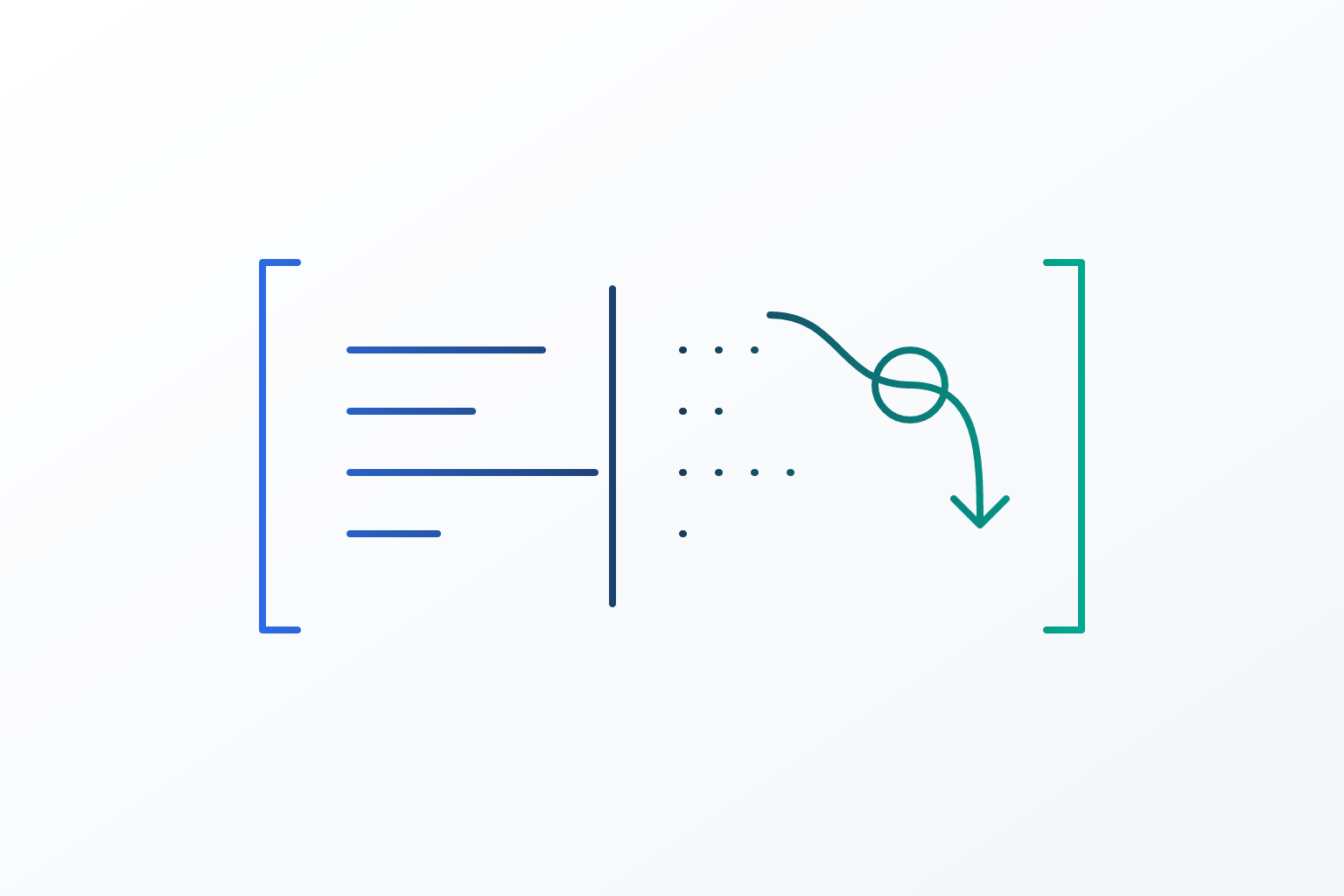
Codebase-scale refactoring exposes a gap between how much code an LLM can accept and how much it can reliably transform. Advertised context windows obscure shared token budgets, output caps, and reasoning that degrades as input grows. Reliable workflows therefore depend on context engineering.
Why the context window is not what it appears to be
A larger context window appears to mean more room for code, but the advertised count is not a dedicated code budget. System instructions, the prompt, conversation history, and the model’s response share the available pool. Every part competes for the same space. A repository that fits on its own may therefore leave insufficient room for the instructions and exchanges needed to work on it. The engineering budget begins with what remains after those demands.
That budget is also asymmetric because input capacity and output capacity are different limits. A model may accept a large body of source code while being unable to return a comparably large rewrite in one response. For a multi-file transformation, output limits can force the work across several turns even when all the relevant source fits into the initial request. Those turns then add history to the shared budget.
Codebase-scale work requires space not only for source files but also for the process of transforming them. Consequently, usable capacity depends on the task’s input, expected output, and accumulated exchanges. A headline token count gives the upper limit. It does not establish a practical working budget for refactoring.
How recall degrades before the window fills — the lost-in-the-middle and context rot problems
Even code that fits is not equally accessible to the model. Content in the middle of a long prompt is systematically under-weighted relative to content at the beginning or end, and this positional bias compounds as context grows. Loading a dependency into the prompt does not guarantee that the model will give it appropriate weight when making an edit elsewhere.
Context rot extends the problem beyond position. Chroma tested a wide range of models and found that every one degraded as context grew. This is not confined to weaker models. A million-token window can begin losing effectiveness well before its nominal limit, so unused capacity is not evidence that reasoning remains dependable.
Research published at EMNLP 2025 showed that context length alone hurts performance even when all relevant information is perfectly retrieved. Relevance does not cancel the cost of volume. For refactoring, this undermines the assumption that supplying every potentially useful file necessarily improves the result. A full repository may contain the right evidence while still making that evidence harder to use.
What context rot and output caps actually cost a refactoring agent in practice
SPOQ’s multi-agent deployment exposed context exhaustion through concrete production failures. Agents lost track of earlier requirements, produced incomplete solutions, and contradicted prior instructions. These were failures within ongoing work. Multi-file refactoring can lead to these failures because it needs large inputs, large outputs, and many exchanges.
Agentic trajectories in the multi-agent deployments described in the research ran into the hundreds of thousands of tokens just to complete tasks. File contents, tool outputs, and error traces contributed to that growth. The task description was only the starting point. A budget based on the initial request would therefore miss much of the working context that the agent eventually had to handle.
Repository structure adds another source of pressure. GNU utils shows how hard full-program translation can be when dependencies span several files and each source file can run to thousands of lines. Including third-party dependencies expands the input further. Even large windows can be too small for this approach before any room is set aside for the output.
Chen Kuang Piao et al. document that developers already neglect refactoring because it is time-consuming and error-prone. In one SPOQ knowledge-graph pipeline, an agent with a very large context began hallucinating function signatures that did not exist in the codebase.
What benchmark results say about the gap between capability and reliable delivery
Repository-level evaluation shows that incomplete delivery is not confined to isolated production incidents. The SWE-Refactor benchmark, published in 2026, evaluated over a thousand real repository-level refactorings across nine models. Its top performer left more than half of attempts incomplete. At that scale, failure was the more common outcome even for the strongest performer, exposing a substantial gap between refactoring capability and dependable completion.
Every model’s accuracy dropped as those descriptions became longer. This pattern supports the distinction between a request that fits inside a model’s window and a task that remains tractable within its effective working memory.
The same benchmark found that multi-agent strategies outperformed both RAG-based retrieval and simple prompting on complex operations such as Move Method and Extract+Move. Architecture and model selection both changed the outcome. That result makes context management a substantive part of the refactoring system. It gives a concrete reason to design beyond a single expanding conversation.
Piao et al. found that instructions based on Martin Fowler’s refactoring guidelines also helped. Specifying motivations, procedural steps, and transformation objectives improved performance. Structure helped the model use what it received. Together, these findings point toward workflows that control both the amount of context and the form in which the task is expressed.
The current model landscape and why bigger windows do not automatically solve the problem
Google’s approximation that a million tokens covers tens of thousands of lines of code explains the appeal of large windows. A large repository can technically fit into a request. Fit, however, is only the first consideration. Every turn that includes the full repository pays for that input again, while reliable recall across its middle is not guaranteed.
GPT-5 and GPT-4.1 cap output at 32,768 tokens, while Claude Sonnet 5 and Opus 5 allow 128K on the standard API. Gemini 2.5 Pro caps output at 65,536 tokens. These limits constrain how much transformed code can be returned at once, regardless of how much source the model can read. Turn-splitting requirements can therefore be determined before any code is written.
Those specifications describe different operating boundaries. A larger output allowance may suit a substantial transformation, while effective recall and repeated input cost still shape the workflow’s viability. Window size alone cannot settle the choice. MatClaw’s production system reflects that distinction by capping effective context well below the advertised maximum for models claiming million-token windows, informed by internal multi-needle retrieval tests.
How practitioners have redesigned workflows to work within these constraints
Cursor’s model reconstructs context per turn rather than allowing a naive loop to accumulate everything from earlier exchanges. The aim is to prevent rot from compounding. Sub-agent isolation tackles the same problem by keeping search and file-reading work in their own context windows, so that work does not make the main conversation longer.
Cognition’s Devin exposed a related problem as “context anxiety” in 2025. Its response was to enable a larger window while programmatically capping usage at a lower threshold. More available capacity did not require more actual usage. The design separated the provider’s maximum from the system’s operating limit, allowing the workflow to impose its own boundary.
Compression offers another way to control growth without discarding the whole trajectory. Lindenbauer et al. found in 2025 that observation masking halved cost while matching LLM summarization’s task-completion rate on a software engineering benchmark. The technique replaces old tool outputs with placeholders while preserving the agent’s reasoning trace. Anthropic’s context engineering guide and automatic context compaction cookbook, published in September–November 2025, likewise place context management within the design of agentic workflows.
Graph-based retrieval changes how the repository is represented. RepoGraph uses a dependency graph derived from code syntax to retrieve nodes and edges relevant to a particular task. This avoids relying on lossy summarization to reduce volume. At the compiler level, Valenzuela et al. demonstrate a complementary form of task scoping with IRIS, fine-tuned for GIMPLE-to-LLVM IR translation. By handling structured, bounded IR segments, it outperforms general-purpose models by up to 44 percentage points in IR-to-IR translation accuracy.
SPOQ turns task scoping into an operational discipline. Its rules call for descriptions that stand on their own, keep the scope to files the agent needs, and split complex work into sub-tasks. Context monitoring adds alerts at a defined utilization threshold. These controls make the engineer responsible for selecting what enters the working context. The model’s ability to accept more text does not replace that judgment.
Why the "just use a bigger window" objection misreads where the constraint actually lives
Larger windows do offer a genuine advantage when a transformation requires a substantial, coherent body of code. Newer models are also better at mid-context retrieval. Those improvements reduce the problem without eliminating it. Lost-in-the-middle effects and context rot have persisted across model generations, including models with very large windows. The EMNLP finding also shows why better retrieval alone cannot stop reasoning from getting worse as input grows longer.
RAG and chunking can miss code the task needs, lose cross-file dependencies, or split code at boundaries that do not line up. Smaller inputs are not automatically better inputs. For some refactoring operations, a large coherent context genuinely outperforms retrieval-based approaches because the transformation depends on relationships that fragmented retrieval can omit. Neither strategy dominates across all refactoring types.
Even perfect recall would not remove a separate output cap, and a larger window would not make repeated full-repository input free. Multi-turn history would still require management. The durable constraint is therefore a combination of reasoning quality, output capacity, and cost. Larger windows expand the available design choices, but they do not choose the right workflow.
What this means for teams designing LLM-assisted refactoring workflows today
For teams translating these findings into practice, context reconstruction should be an explicit architectural decision. Large-codebase workflows should reconstruct the working context per turn rather than defaulting to an ever-growing agentic history. Task granularity belongs in the same decision. Work that exceeds the effective window should be decomposed before it reaches the model. SPOQ’s 70% utilization alert provides a concrete example of making that boundary operational.
Fowler-grounded prompts give the model the name, motivation, procedural steps, and transformation objective for the refactoring. The prompt becomes a design artifact. Search and retrieval across many files should default to separate sub-agent contexts so that exploration does not crowd the main agent’s reasoning trace. This preserves a distinction between finding evidence and using it to perform the transformation.
Teams can compare models better by looking at the effective context budget and cost per turn for the amount of code in their files than by looking at maximum token count alone. A model with a smaller window but better mid-context recall may suit the work better. For teams working with external engineers, the relevant expertise includes task decomposition, context manifests, and judgment about where critical information belongs.