AI Code Review Tools Integration in Pull Request Workflows
AI review works best when layered by purpose, not deployed as a universal reviewer.
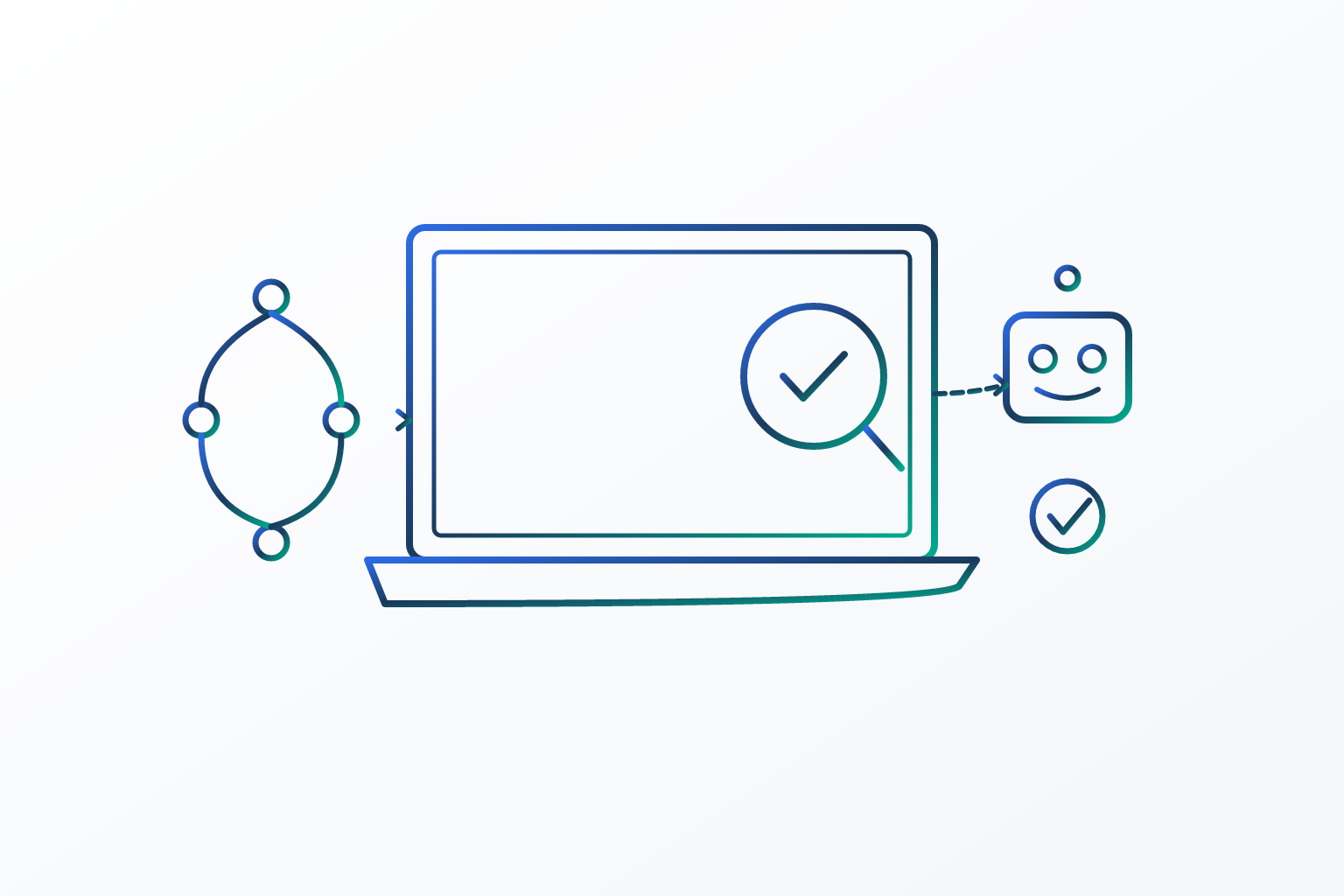
AI code review tools help when they sit where their skills fit in the pull request workflow. Early semantic feedback, selective deep review, deterministic merge gates, and human judgment each have a different job. Integrating those layers deliberately reduces the verification backlog created by AI-generated code, while deploying another reviewer without clear boundaries can simply add comments to an already congested process.
Why AI-generated code has made review the new bottleneck
AI coding tools accelerated implementation without rebuilding the review infrastructure needed to absorb the output. More pull requests now arrive per sprint than human reviewers can process at the old cadence. The scarce resource has shifted to senior reviewer time. Teams can generate changes faster, but verifying their correctness, dependencies, and production consequences still requires capacity that code generation does not supply.
Honeycomb’s documented internal transformation illustrates this imbalance. Peak-weekday merges roughly doubled, while incidents grew 2.9× and tracked almost linearly with change volume. That relationship shows the operational risk of increasing throughput without proportional verification capacity.
Teams pay for this later through review work, integration problems, security remediation, and maintenance. Faster implementation can therefore coexist with slower delivery or greater instability, because writing the change is only part of getting it safely into production. Teams that leave their review process untouched absorb the difference as rework, incidents, and technical debt. Teams lack a review layer designed for the volume of AI-generated code.
What AI review tools actually do, and what they cannot replace
Static analysis and AI review address different verification problems. Static analyzers apply rules whose results are repeatable for a fixed analyzer version, configuration, and build inputs. That repeatability makes them suitable for hard compliance gates. AI reviewers instead send the diff and surrounding repository context to an LLM-backed agent, which produces semantic feedback about issues that simple lint rules may miss.
The distinction extends to how review quality develops. An AI review involves diff ingestion and context gathering, model evaluation against rules and patterns, and comment generation with noise filtering. Context sets the limits of the evaluation. A reviewer restricted to the diff cannot assess the same relationships as one that also examines called functions, related tests, and recent commits to the affected paths. The model is only one component of that process.
Even broader repository context does not make AI a reliable judge of architectural tradeoffs, cross-system dependencies, or deployment risk. A human reviewer still needs to catch a renamed database column that breaks a shared analytics pipeline. Static analysis enforces rules with high confidence, while AI review gives earlier feedback based on context so human reviewers can focus on what a change does to the system as a whole.
How the leading tools differ in what they flag, fix, and block
GitHub Copilot Code Review fits directly into the pull request interface as an assignable reviewer on GitHub and, in public preview, Azure DevOps. It produces summaries and inline suggested changes that authors can apply from the PR. Its default role is advisory. It does not approve or request changes by default, though a September 2026 public-preview option lets administrators turn on approvals that count toward required-approvals rules. Repository instructions and automatic triggering through rulesets support integration with team standards.
Greptile connects to GitHub as a reviewer and automatically posts PR summaries and review comments. Its controls include review strictness, disabling automatic feedback, and per-command overrides for specific risk areas. Hosted and self-hosted deployment options meet different needs for how teams run the tool, but teams still need to set it up and grant repository permissions. It is therefore less suitable when a team wants feedback without integration work.
Gitar, from Sonar, occupies the agentic end of the category by acting on findings. CodeRabbit addresses a different operational problem through “Learnings” retained between reviews to reduce repeated false positives. Aikido Security’s Deep PR Review expands the evidence available before flagging an issue, taking in the whole codebase, related repositories, existing static results, and comments already on the change. These capabilities serve distinct purposes. Remediation, learned suppression, and broader context should not be treated as interchangeable features.
Manus fits a different workflow position again. It works as a task-driven reasoning engine that produces structured reports emphasizing failure mode, impact, and remediation. That makes it a better fit for intentional analysis of high-risk changes than routine hygiene on every merge. Across these options, the useful comparison is the relationship between context, actionable findings, and workflow authority.
Where in the PR lifecycle each type of review should fire
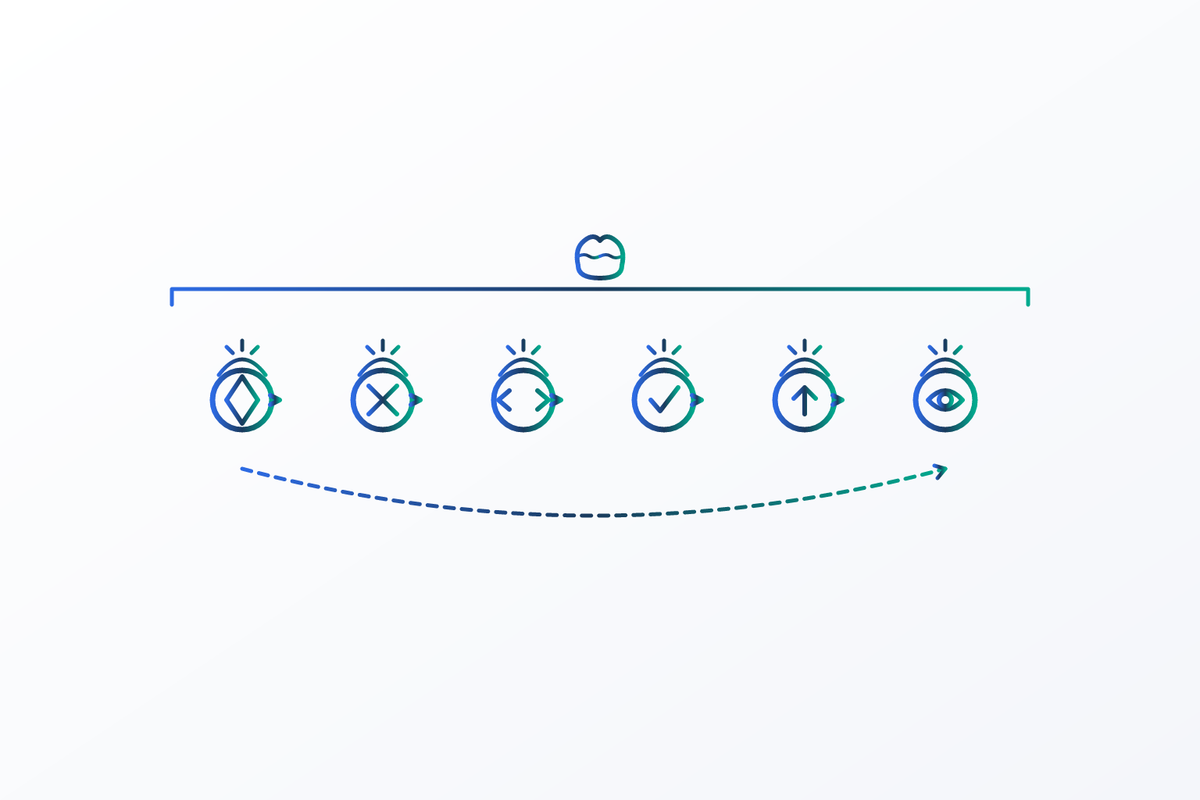
The sequence begins before a pull request exists. IDE assistants can catch issues while an engineer writes, establishing a quality floor before the diff reaches review. PR review still requires an independent examination of the proposed change and the checks required before merge.
When the PR opens, a first-pass AI reviewer should address findings that would otherwise consume human attention. These include style inconsistencies, duplicated code, unindexed queries, and missing test coverage. Copilot and Greptile operate natively at this stage. For security-sensitive logic, authentication changes, or regulated-data paths, deeper review should run in parallel with or immediately after that first pass. Manus and Aikido fit this selective layer rather than a requirement to apply expensive reasoning to every PR.
Static analysis then supplies the hard merge conditions. SonarQube, Semgrep, and Snyk can run as CI steps that block merge on rule violations. Human review remains necessary before approval, with attention directed toward architecture, intent, service dependencies, and deployment risk after lower-value findings have been addressed.
NKKTech Global’s legacy e-commerce migration illustrates integration within an existing delivery process. Its team, spread across Vietnam/Singapore/Japan, added AI review directly to the GitLab CI/CD pipeline, which greatly reduced defect density and cut critical vulnerabilities by 89% before staging.
Configuration decisions that separate useful reviews from review noise
Teams should encode repository conventions in instructions or configuration files before deployment. Defaults target a general codebase. Written rules give the reviewer a steady guide and help new engineers learn conventions without having to learn them again and again from comments that correct their work. They also distinguish a team requirement from a tool’s general preference.
Greptile exposes strictness as a setting, while CodeRabbit’s Learnings help prevent rejected findings from resurfacing. Teams should evaluate confidence thresholds, deduplication against review history, and suppression of comments on untouched lines before selecting a tool. These mechanisms determine how much attention each review consumes. A finding that repeatedly receives no action is a configuration signal.
Scope is the next operational control. Because Aikido uses existing static results and comments, teams need to check what context is available for review and reserve deeper reasoning for high-risk changes. The aim is to keep that layer’s cost and latency proportionate to risk. Teams should judge configuration by how it helps delivery, including shorter review waits and less post-merge rework.
What security and compliance gates AI review must enforce before merge in regulated industries
In healthcare and finance, review failures put teams at risk of regulatory and financial harm as well as code quality problems. Evidence about AI-generated vulnerability density is mixed. SIG’s State of Software 2026 and Veracode’s 2026 GenAI report support higher vulnerability density, while OX Security’s 2026 analysis reached a contrary conclusion. Methodology and language can change the result, so code origin alone is not a sufficient basis for declaring a change safe or unsafe.
Healthcare provides a concrete set of obligations. AI systems accessing production protected health information must operate within HIPAA-required safeguards, including access controls, minimum necessary standards, business associate agreements, and audit logging. Generated code also needs validation that it does not bypass Electronic Health Record access controls. Semantic review alone cannot check that all of those conditions are met. The approval process must address the safeguards themselves.
At the merge boundary, static analysis and security scanners provide repeatable, auditable enforcement for supported rules. OWASP Top 10 and common classes of software vulnerabilities give teams specific patterns to address through traceable findings. These checks support compliance evidence without replacing the wider validation process. AI can identify context-dependent concerns earlier, but the merge gate is where its variability must meet deterministic enforcement.
How team composition and vetting change when AI review is a primary workflow
Deterministic gates still need people who can interpret findings and assess what the rules do not cover. AI coding tools are therefore a team composition lever. In AI-assisted work, the constraint can move from implementation to verification within the first two months. Senior judgment becomes the scarce resource.
Faros AI’s longitudinal evidence shows why output alone is insufficient. High-adoption teams completed significantly more tasks and merged far more pull requests, but review time rose sharply without improvement in DORA metrics. Its later two-year study found that completed tasks rose alongside a dramatic increase in code churn and incidents per pull request. Those findings connect productivity claims to the work required after generation. More completed implementation tasks do not necessarily mean more stable delivery.
Candidates can be given a 300-line PR to review, making a growing part of the job visible during vetting. Briefly removing the tool also tests whether a candidate can reproduce a result from an underlying mental model. Tool use is not the red flag. Inability to reason without its output is the concern, while written conventions and repository configuration support onboarding once the engineer joins.
Staff augmentation can preserve a common review standard because augmented engineers work under the client’s direction and follow its process. Nearshore teams providing 6–8 hours of full daily overlap with the US workday can review AI output in real time within the sprint. By contrast, generated code waiting overnight for an onshore architect reflects a staffing and scheduling constraint that reviewer settings cannot resolve.
Measuring whether the integration is working after deployment
PR cycle time, time to first review, post-merge rework volume, and change failure rate show whether automated review absorbs the backlog or shifts it elsewhere. These measures connect review capacity to release outcomes. A faster first response has limited value if the change subsequently needs more repair or increases production instability.
Acceptance rate provides a narrower configuration signal. A 2026 study of CodeRabbit comments across a large PR dataset found that roughly a third were accepted and a majority were rejected. Teams should track their own acceptance rates to assess whether review settings fit their repositories, while interpreting those rates together with delivery and stability measures.
A rise in post-merge rework after deployment should lead teams to check staging and configuration. It can indicate that feedback arrives at the wrong moment, that its scope is poorly matched to risk, or that the review layer is not reducing the work left for humans. It does not, by itself, establish that AI review cannot work. The same evaluation must account for work displaced into integration, security, and maintenance rather than measuring only the point where code is produced.
Measurement should reveal where verification work goes and whether the team can absorb it. That evidence confirms the integration design or identifies where it needs to change.