GitHub Copilot Versus Cursor in Production Engineering Teams
Copilot and Cursor differ in operating model, so test both.
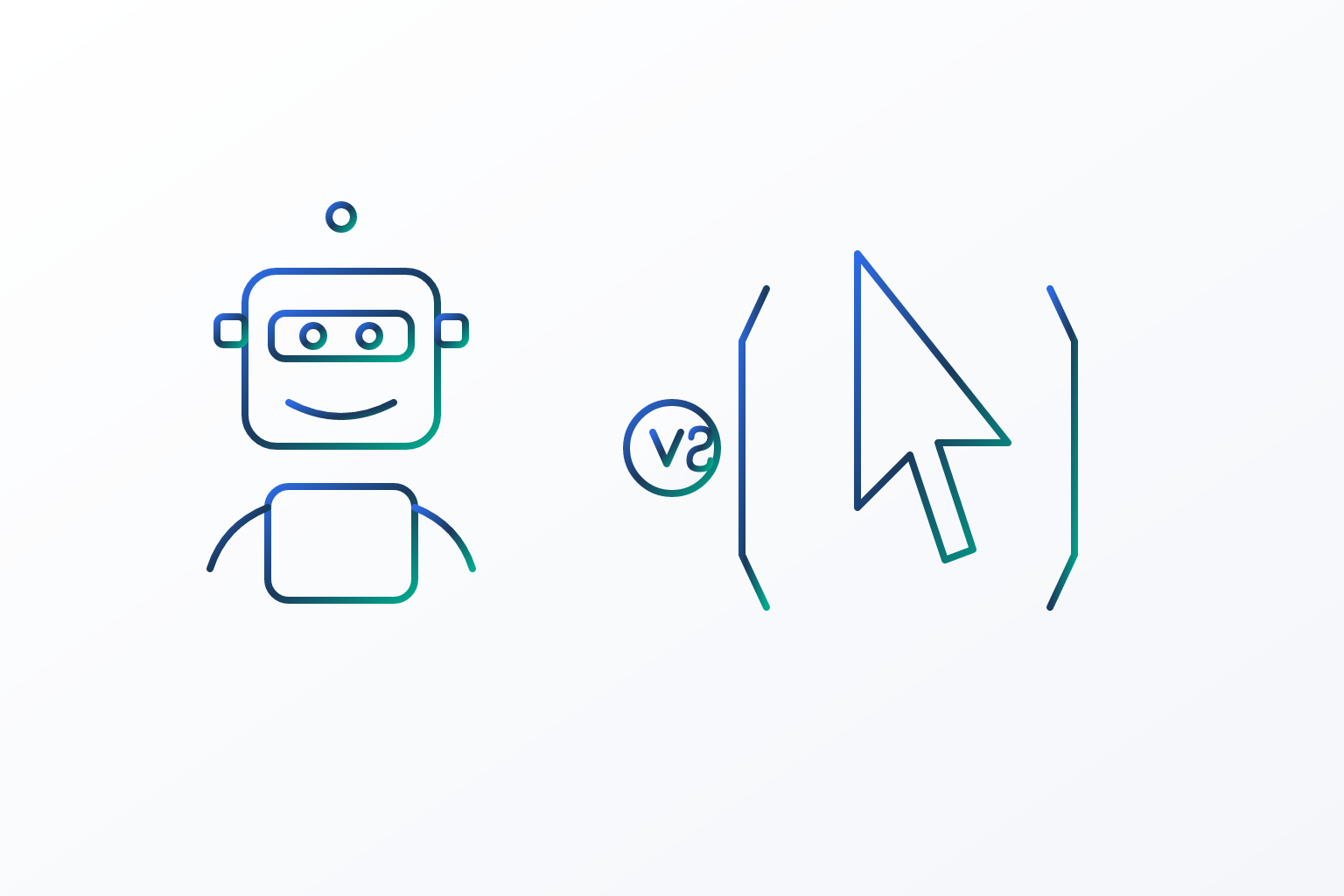
Choosing GitHub Copilot or Cursor for production engineering is a choice between operating models. Copilot brings AI into existing editors and GitHub workflows, while Cursor centers work on an AI-native editor and autonomous agents. The right choice depends on whether that architecture fits the team’s tools, review capacity, compliance obligations, and actual workload.
Why the Copilot-versus-Cursor debate shifted from autocomplete to architecture
By 2026, inline suggestions from both tools were good enough that they no longer gave teams a clear reason to buy one for the whole organization. What changed the comparison was the scope of work engineers could delegate, from individual suggestions to tasks spanning files, repositories, and environments. That shift makes the surrounding workflow more consequential than the quality of a single completion.
Copilot is an extension layer that meets engineers in editors they already use, whereas Cursor asks them to work primarily inside a dedicated editor. This difference shapes context handling, agent depth, rollout friction, and governance. Engineering leads are therefore evaluating how work gets directed and reviewed, rather than simply which assistant writes the better suggestion.
What each tool actually is at the structural level
Copilot treats AI as a capability within an existing engineering environment. Its extension model preserves editor choice, while its GitHub integration connects assistance to the platform where many teams already coordinate development. The editor need not become the organizing center.
Cursor starts from the opposite premise. It is a standalone VS Code fork in which AI is the editor’s native substrate, with agentic workflows built into that environment. This gives engineers a different center of control for directing work across a codebase. Cursor’s expansion into JetBrains through the Agent Client Protocol qualifies the plugin-versus-editor distinction, but teams still need to decide whether to standardize on an editor.
Ownership adds a separate procurement consideration to that structural comparison. SpaceX completed a $60 billion all-stock acquisition of Cursor on August 14, 2026, while Copilot remains under Microsoft through GitHub. Both products therefore have substantial corporate parents. That context informs long-term planning, but it does not make their engineering operating models interchangeable.
How pricing actually works now that both tools bill on usage, not seats
Both tools moved to usage-based billing in 2026, making the advertised seat price a starting point for a budget that also accounts for usage. Workload determines how much the sticker-price gap explains. A team using occasional assistance has a different cost profile from one directing sustained agent work.
Cursor Teams has Standard and Premium seats, and Premium comes with five times the usage. Requests to third-party models on Teams and Enterprise add a charge per million tokens to the model’s own price. Copilot has a different dependency to account for. Copilot Enterprise requires GitHub Enterprise Cloud, which has a monthly cost for each user on top of the advertised seat price.
Usage instead became governed by available credits and admin budget controls, leaving teams without admin budgets exposed to uncapped overage. These billing rules make it essential to run a usage-based pilot before buying for the whole organization. Teams should compare costs using work like their own, because buying the same number of seats can still lead to different bills.
Where the two agent architectures diverge in practice
Cursor’s agent architecture emphasizes multi-file autonomy, while Copilot’s emphasizes platform-integrated throughput. Cursor’s April 2026 Agents Window in Cursor 3 lets developers manage multiple agents across repositories and environments, including local work, worktrees, cloud environments, and remote SSH. Engineers can direct parallel execution rather than remain inside a repeated cycle of accepting individual suggestions.
Copilot fits a different pattern of coordination. For teams whose work already flows through GitHub Issues, Actions, and branch protection, its agent can do more within the tools they already govern. Cursor’s deeper parallel-agent workflow may instead justify its premium during sustained refactoring or framework migrations.
Q1 2026 published software engineering benchmark comparison data places the tools within a few points of each other, with Copilot ahead on single-file accuracy and Cursor ahead on complex multi-file task throughput. Those results describe different axes of performance. Choosing one axis as the definition of quality effectively chooses the winner in advance. Engineering leads should therefore test both against representative workloads, particularly where feature completion depends on coordinated changes.
The review bottleneck both tools create and why it falls hardest on senior engineers
Both tools accelerate code generation faster than senior engineers can safely review it. That imbalance becomes the dominant operational consequence at scale. AI can raise the apparent sophistication of junior-authored code before it raises the author’s ability to assess that code. The review queue then receives senior-adjacent implementations without a corresponding increase in the people qualified to validate them.
The Madrona Builders Summit 2026 survey of engineering leaders found that a majority identified code review queue time as the top bottleneck. Okta found that PR reviews were the one output metric that increased after Copilot adoption, reflecting the additional diffs requiring attention. Agoda rolled out AI coding tools across its engineering organization but saw barely any change in how fast it delivered work. In that case, faster generation accelerated work that was not the binding constraint.
Sonar’s 2026 State of Code Developer Survey found that developers overwhelmingly did not fully trust AI-generated code. Teams need to assess whether they can evaluate the additional code safely, especially when architectural and business-logic decisions concentrate in a small senior group.
The productivity paradox: what controlled research actually shows
The METR randomized controlled trial in 2025 found that experienced developers using AI tools took longer to complete tasks despite predicting they would finish faster. LinearB’s 2026 analysis likewise found that developers felt faster while being measurably slower end-to-end. Perceived speed and completed work can diverge substantially. Rapid generation makes progress visible, while the effort needed to understand and validate that output can offset the apparent gain.
Junior developers show a different pattern on well-defined tasks, with studies reporting gains ranging from a quarter to a third. Ewents’ May 2026 interviews with LATAM senior engineers recorded large self-reported productivity multipliers and attributed them to deliberate use, including better problem structure, intentional prompting, and aggressive validation. Juniors in those interviews reported smaller gains from the same tools.
These findings have not yet been reconciled in the literature. For experienced teams doing complex, long-horizon work, the practical response is structured measurement and process change. Plan/Confirm cycles, structured prompting, and a review sandwich offer ways to organize AI use, but their effect still needs measurement in the team’s own workflow.
How team structure — specifically the senior-to-junior ratio — changes which tool fits
The senior-to-junior ratio determines how much generated work a team can absorb. Senior-heavy teams running focused refactoring or migration sprints are a natural fit for Cursor’s parallel agent depth because the engineers directing execution also have the judgment to validate it. Junior-heavy teams face a different constraint. Copilot’s tighter GitHub-native review guardrails fit that composition more readily, although they do not create additional senior review capacity.
Distributed work adds a timing dimension to this constraint. Nearshore teams whose senior-to-junior ratios mirror the client’s internal team tend to see stronger outcomes from either tool. Timezone alignment lets review cycles run in real time, preventing reviews from accumulating overnight. This is an operational advantage rather than a property of the assistant, because delayed feedback can turn an already constrained review queue into a blockage.
The practical test is to locate the bottleneck before choosing. If review capacity limits delivery, neither tool resolves it without process change. If generation throughput on complex multi-file work is the constraint, Cursor’s agent depth has a measurable edge. Who is on the team affects both how much autonomy helps and how much training the team needs to use the tool.
Compliance and security requirements that can remove one tool from consideration entirely
Compliance can end the comparison before capability becomes relevant. For healthcare teams where protected health information is unavoidable in the codebase, the safest current option is air-gapped or local-only deployment. Neither Copilot nor Cursor meets that requirement in its standard configuration. A favorable agent benchmark does not override that deployment constraint.
Copilot has SOC 2 Type II and ISO 27001 credentials, but its federal authorization status needs a separate check. Copilot Enterprise is pursuing FedRAMP Moderate authorization, with High outside the scope of that pursuit, and Cursor is also in the FedRAMP authorization process. Active pursuit is not authorization for either product.
Copilot Business’s SOC 2 Type II certification satisfies many financial-sector requirements, while telemetry retention and the absence of data residency controls may conflict with jurisdiction-specific obligations. Business and Enterprise are excluded from training by contract, so personal-account use can change the organization’s exposure.
What the Gartner Magic Quadrant placement and market data reveal about long-term risk
Both products have enterprise-grade market validation, but that does not establish identical long-term risk. Copilot’s Microsoft parentage favors the stability case for a multi-year commitment. Cursor’s Gartner “completeness of vision” placement and aggressive development cadence are relevant signals for teams that prioritize agent innovation.
Ownership also changes the context for roadmap assessment. Cursor’s acquisition introduces a new variable, but it does not establish what SpaceX will do with the product. Copilot’s parentage likewise cannot substitute for workload fit. When a tool shapes team process for years, market position belongs in the decision as evidence about vendor stability and direction alongside operational evaluation.
A decision framework for engineering leads making the call for their specific team
Engineering leads should apply four questions in sequence, beginning with editor standardization. Can the team standardize on a single editor? If engineers work across VS Code, JetBrains, Visual Studio, Neovim, Xcode, or Eclipse, Copilot’s extension model is the frictionless path. Cursor’s JetBrains agent expansion reduces this constraint without removing it.
Do the organization’s obligations allow either tool? Healthcare teams handling PHI, US federal agencies, and defense contractors should check whether they are allowed to use the tools before comparing what they can do. For many financial-sector teams, Copilot Business satisfies baseline requirements, but data residency still needs separate verification.
Does it have enough experienced reviewers for the work agents generate? Junior-heavy teams benefit from Copilot’s GitHub-native guardrails, while senior-heavy teams undertaking sustained multi-file work are better positioned to exploit Cursor’s parallel depth. Distributed teams should also account for whether review can happen during shared working hours.
Is the need primarily completions and chat across diverse editors, or long-running agentic refactoring and framework migrations? The former points toward Copilot and the latter toward Cursor. For organizations that alternate between both, Copilot as the default with Cursor provisioned for migration-sprint engineers is the most defensible mixed-seat model.
To test those answers, the pilot should measure tokens consumed per merged PR, review cycle time before and after adoption, and production debugging rate. Subjective satisfaction is not enough to establish throughput. Shared repository context packs, Plan/Confirm cycles in PR discussions, structured prompting, and AI screening of surface issues before human architectural review address the common bottleneck. For nearshore partners, those practices and AI-assisted automated testing should be visible in the delivery methodology, making AI fluency part of the workflow.