DORA Metrics Baseline Reporting for Staff-Augmented Engineering Teams
Establish team boundaries and measurement windows before collecting DORA data.
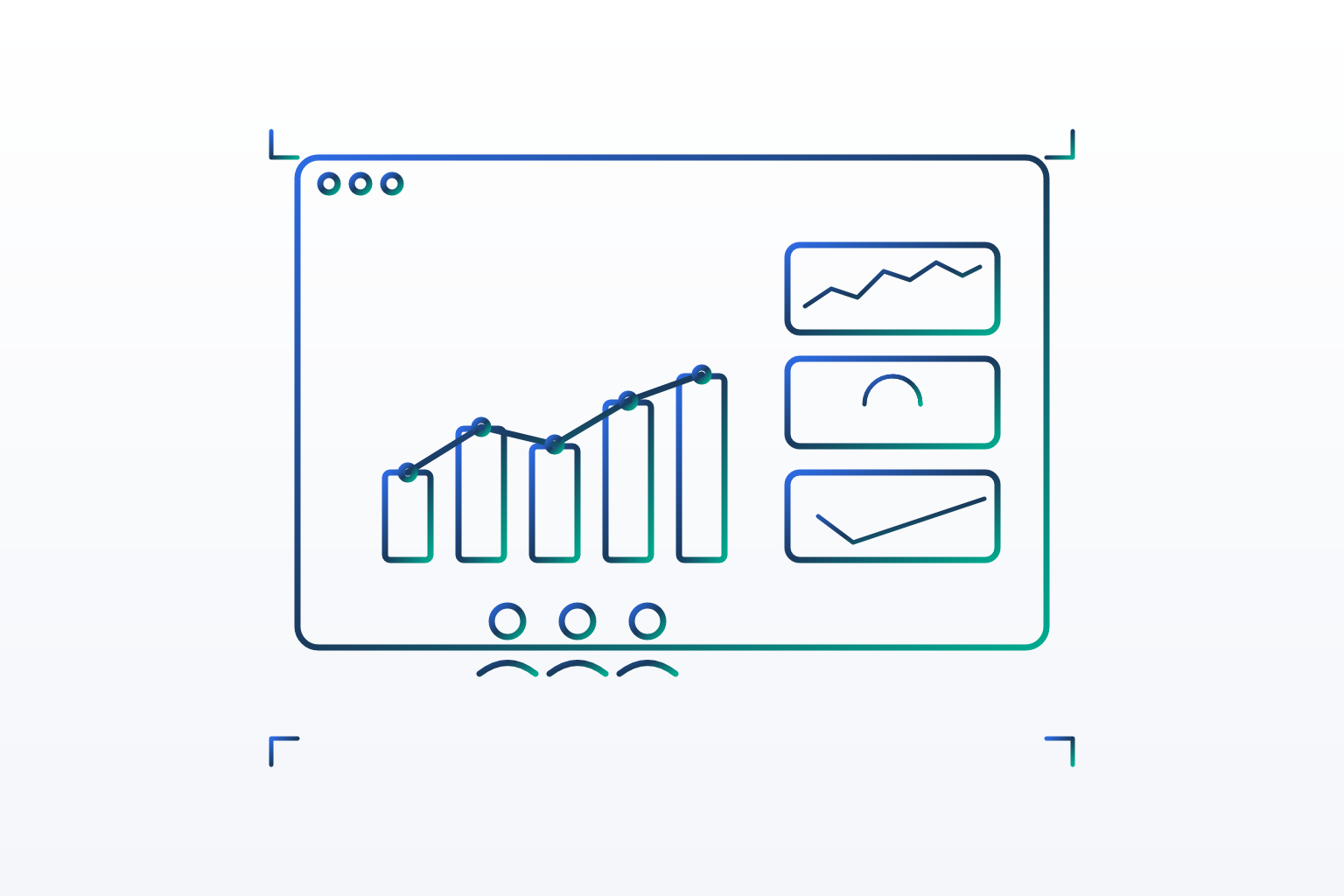
Split ownership, varied tooling, and recurring onboarding can make accurate numbers misleading. A reliable baseline therefore starts with agreed boundaries and measurement windows, then combines shared instrumentation with interpretation that separates delivery performance from the conditions of the hybrid arrangement.
Why DORA metrics present a structural problem for staff-augmented teams
An engineering leader sees a lead-time spike on a DORA dashboard but cannot tell whether newly augmented engineers are learning the codebase or the pipeline has developed a bottleneck. Both conditions produce the same visible result. Yet one concerns integration and the other concerns delivery capability. The dashboard records what happened without explaining which condition caused it.
That ambiguity is structural because DORA was built for cohesive, single-organization delivery pipelines. Its assumptions include shared tooling, consistent commit-to-deploy ownership, and stable team composition over the measurement window. Staff-augmented teams may instead have separate repository branches and CI environments, with handoff boundaries between them. Engineers also rotate into the arrangement, making onboarding a recurring condition.
These seams break up the measurement chain before anyone starts to read the results. A baseline collected before the team structure stabilizes can describe the hybrid boundary more than the team's delivery capability. Even similar scores can conceal very different working conditions, including healthy delivery in one team and unsustainable pressure in another. DORA produces useful information, but its numbers do not explain the structure that produced them.
How the 2025 DORA framework evolution changes what you are being asked to measure
DORA grew from four to five metrics by adding Deployment Rework Rate, which tracks deployments made in response to problems. The throughput dimension includes Change Lead Time, Deployment Frequency, and Failed Deployment Recovery Time. The instability dimension, also called stability, includes Change Fail Rate and Deployment Rework Rate. For hybrid teams, the new metric helps show how much shipping is planned and how much is firefighting while augmented engineers learn the codebase.
DORA's 2025 report also replaced the elite/high/medium/low performance tiers with seven team archetypes that combine delivery performance with human factors such as burnout, friction, and perceived value. Setting a baseline therefore helps teams diagnose how they work instead of giving them a starting place on a single ranking. Teams need to identify which cluster describes them and what conditions place them there. Two teams can fall into the same archetype because of different team structures, so the label still leaves hybrid attribution problems unsolved.
A baseline needs to capture rework as well as output and support interpretation beyond a performance tier. AI-assisted output makes that distinction more important because throughput gains can coexist with worsening stability.
Where hybrid team boundaries break DORA data collection before it starts
Consider a team that collects three months of data before discovering that one-third of commits never flowed through the shared pipeline. Forked repositories and separate CI environments can omit part of the commit-to-deploy chain or double-count activity at the merge boundary. If a single augmented engineer's commit cannot be traced to production in one query, the measurement chain is split.
Onboarding can skew the data in another way because each new engineer can bring a delivery trough. Treating that trough as an isolated anomaly hides a recurring feature of the staffing model. Incident attribution adds another seam when augmented and core engineers share responsibility for the code involved. The incident may exist in the records while its relationship to the shared delivery outcome remains contested.
Tooling differences amplify these problems when collection agents do not cover both environments uniformly. Missing events can then make weak performance seem to be the cause when the records are incomplete. Before baseline collection begins, every engineer contributing to the shared delivery outcome must emit events into a shared observability layer. Otherwise, later analysis is trying to explain a partial record.
Defining the measurement window and team boundary before collecting a single data point
The first action is to agree on what counts as the team and which period constitutes the baseline. The team boundary must be functional, including every engineer whose commits contribute to the shared delivery outcome. Measuring core and augmented engineers separately creates incomparable baselines. However, including augmented engineers before their tooling and pipeline access are unified mixes complete and incomplete records. Service scope must also be explicit because DORA baselines belong at the service level.
The window must exclude onboarding ramp rather than embed the first thirty days after engineers join as normal performance. Structured milestones, including first PRs merged, co-owning a service, and owning a roadmap slice, provide signals that integration has progressed far enough to begin measurement. The window must capture at least two full deployment cycles and at least one incident. A weekly deployment schedule therefore needs more calendar time than a daily one. Once agreed, the window must be documented and frozen to prevent trimming that would improve the result.
A baseline charter makes these decisions durable. The engineering leader, augmented team lead, and partner organization should agree in writing on team membership, service scope, window dates, event sources, and ownership of contested incident attribution. That agreement prevents the measurement definition from drifting when staffing or tooling changes.
Collecting DORA data across split tooling without losing attribution
With the charter settled, instrumentation must cover the whole defined boundary. A single version control system, or a unified view across mirrored repositories, must capture every commit, PR, and merge event in scope. Where engineers work in a fork and merge through a PR, the merge is the canonical data point only when its timestamp reaches the shared system. A timestamp held solely in the partner's tooling leaves the common record incomplete.
Production activity needs the same coverage. Every deployment must write a timestamped event to a shared, queryable log, including deployments triggered through custom scripts. Every production incident and how it was resolved must also be recorded in a system both teams use. Separate incident records create attribution gaps even when repository coverage is complete.
Lead time then needs decomposition into coding time, pickup time, review time, and deploy time. AI-assisted output can add to the review burden, especially for senior engineers on the core team who review work from augmented engineers. Stage-level timestamps distinguish that queue from a deployment delay within a lead-time spike. When CI/CD systems differ, version control is usually the lower-friction integration point because merge events are easier to normalize than deployment events. A neutral aggregation layer that pulls from both environments via API can keep the records complete without moving pipelines in the middle of the engagement.
Reading the baseline numbers when onboarding, AI assistance, and split ownership all distort the signal
Onboarding distortion has a recognizable signature, including longer lead times, higher change failure rates, and smaller PRs as engineers take safer work while learning. If this pattern enters the baseline, ramp completion can masquerade as delivery improvement. Annotate the data with each augmented engineer's onboarding start date and integration milestones. A trend that tracks ramp completion should remain classified as ramp noise until it holds for at least one full deployment cycle after the milestone. This preserves the distinction between learning the system and improving it.
More merged PRs can coexist with longer review times, more bugs, and more incidents per PR. In an AI-native augmented team, that pattern can look like evidence against the staffing arrangement when AI adoption is contributing to the trade-off. Report throughput and stability separately, then interpret them together. Faster delivery accompanied by worsening Change Fail Rate or Deployment Rework Rate is a warning.
When ownership is split, teams need a clear attribution rule to settle who is responsible without arguing over the contract. If the hybrid team reviewed and merged the code as a unit, the resulting incident belongs to its shared baseline. Recording it under only one sub-team, or omitting it from one record, suppresses or fragments the signal. The five metrics are expected to vary more in the first hybrid window, so unusually narrow ranges need to be checked. Credibility comes from examining significant deviations against engineer arrivals, tooling changes, and incidents before assigning them to delivery performance.
Why DORA alone cannot tell you whether the augmented team arrangement is working
A coherent DORA baseline is necessary, but it cannot establish whether the arrangement is sustainable. Senior core-team engineers may preserve delivery speed by carrying an excessive review burden that aggregate lead time does not expose as workload. Knowledge transfer can also fail without an immediate delivery penalty because undocumented knowledge leaves only when the engineer does. Similarly, successfully deployed AI-assisted code can become harder to review or maintain before that debt appears in delivery metrics.
Using DORA as the sole engagement scorecard also creates incentives to improve appearances. Teams can split PRs artificially to pursue deployment targets, under-report incidents, or front-load simple tickets to lower lead time. The correction is not to discard DORA but to surround it with measures that expose the costs hidden behind acceptable delivery numbers.
Building the measurement layer that DORA does not provide for hybrid teams
The measurement architecture needs DORA to measure delivery and three more dimensions: developer experience, AI attribution, and business alignment. Track senior engineers' review workload separately from aggregate lead time, use surveys or review-acceptance rates to assess trust, and use handoff reviews to check documentation coverage. A monthly developer experience pulse should cover review burden, collaboration quality, and confidence in the codebase. These signals can warn of trouble before it shows up in delivery metrics.
DX Core 4 has a structure that brings speed together with effectiveness, quality, and business impact. DX developed it with input from Dr. Nicole Forsgren and Dr. Margaret-Anne Storey and tested it across a large number of organizations. Its relevance here is the discipline of examining several dimensions together. An apparent gain in one dimension should not pass unnoticed when another deteriorates.
AI attribution adds the evidence needed to distinguish assisted output from sustainable delivery. Ask the augmented engineering partner to report AI-assisted and human-authored PRs separately, then compare change failure rates across those populations. Read the result against planned feature delivery, rework, and incidents. This makes the quality trade-off visible rather than treating every increase in output as equivalent.
Business alignment translates the baseline into the purpose of the engagement. Track roadmap delivery ratio, maintenance-to-new-capability ratio, and incident cost in engineering time consumed. Better DORA numbers still fall short of that purpose when planned feature delivery drops. The partner must therefore bring instrumentation discipline, documentation habits, and willingness to expose AI attribution data alongside available headcount. Rigorous technical screening and structured onboarding milestones support the conditions under which this measurement stack can produce reliable signals.
Setting the cadence for reviewing and updating baselines as the hybrid team evolves
A baseline is a managed reference point. Review it when augmented headcount changes by more than roughly a quarter of the hybrid team, because the change can alter onboarding noise and the team's archetype. Tooling changes also call for a review because events that were once captured may disappear. Changes in service ownership can also cause structural shifts in results. As the engagement winds down, measure knowledge transfer and check how complete the documentation is before closing the baseline.
Between these triggers, a monthly DORA review should annotate deviations with their structural causes. A quarterly review should bring DORA, developer experience, and business alignment together rather than judge the engagement from pipeline performance alone. These reviews keep comparisons tied to the conditions under which the data was collected. A baseline update then reflects an acknowledged change.
As integration improves, the hybrid baseline can converge toward the variance characteristics of a stable single-organization team. Shared processes resolve attribution ambiguity, tooling coverage becomes consistent, and onboarding noise settles. Long-term client-partner relationships support that convergence by retaining institutional knowledge across engagements. Teams that define boundaries first, instrument the whole delivery chain, and review at structural trigger points gain a measurement system that tells them the truth about delivery performance.