Definition of Done Standards in Cross-Timezone Agile Sprints
Shared completion standards prevent silent handoff failures across timezones.
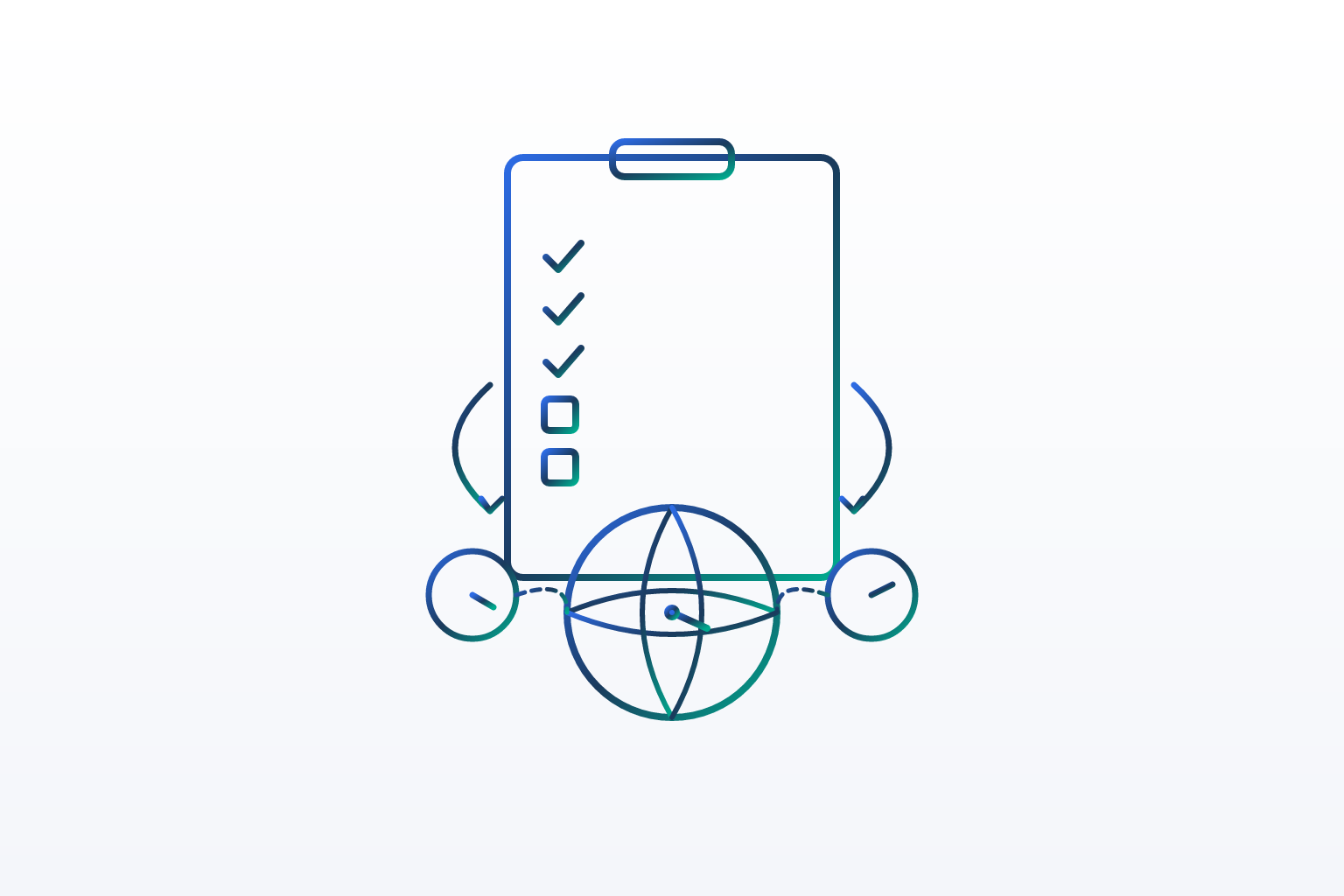
A developer in one timezone merges code, watches the local test suite pass, and marks a story complete at the end of a working day. Eight hours later, a QA engineer in another timezone opens that same story and finds it was never deployed to staging, never documented, and far from ready for sign-off. The gap between those two moments is where distributed Agile teams lose the most time, and it costs a full asynchronous cycle to correct: a day, sometimes more, spent discovering a problem that a shared standard would have caught before the handoff ever happened. This article argues that the Definition of Done, properly built, is the mechanism that closes that gap. In a cross-timezone sprint, the DoD stops functioning as a quality checklist and starts functioning as the coordination contract that keeps the team's asynchronous handoffs from failing silently.
The breakdown follows a consistent pattern. Engineering tends to treat "done" as code-complete: the branch merged, the tests green on a local machine. QA treats "done" as validated: deployed somewhere real, exercised against acceptance criteria, free of regressions. Product treats "done" as documented and deployable, ready for a stakeholder to look at without a translator in the room. In a co-located team, these three readings collide in real time, over a shoulder tap or a thirty-second conversation, and the mismatch gets resolved before anyone builds on top of the wrong assumption. In a distributed team with little or no overlap window, that collision doesn't happen until the next person picks up the work, and by then the misreading has already shaped a day's worth of downstream decisions. It can survive into the next sprint entirely unaddressed, because nobody flagged it as a defect in the standard rather than a one-off mistake.
Atlassian's Modern Work Coach, Mark Cruth, names the dependency directly: a team's Definition of Done has to account for whatever the downstream team needs in order to succeed. That requirement holds in any Agile setting, but it tightens considerably when downstream means a different timezone rather than a different desk. A co-located team can patch a missing dependency with a conversation. A distributed team only has what was written down.
What the DoD actually is, and what distributed teams tend to get wrong about it
The Definition of Done is a team-wide quality contract. The same criteria apply to every backlog item, every sprint, and every team member, which makes it fundamentally different from a personal checklist that a given developer keeps for their own work. Scrum.org describes the DoD as a formal description of the state of the Increment, serving as the commitment attached to that artifact. The value of that commitment is transparency: everyone with a stake in the work, including people who weren't present when a decision got made, can look at the DoD and know what "complete" means without needing to ask.
That transparency rests on three structural purposes. The DoD gives the team a shared baseline, so nobody is negotiating the definition of complete on a story-by-story basis. It builds quality into the process rather than bolting it on after the fact, catching problems at the gate rather than in production. And it gives the team a consistent reference point for inspection and adaptation, a fixed target that retrospectives can measure against. All three purposes collapse the moment team members operate on different implicit standards, because a baseline that only some people follow isn't a baseline.
The most common mistake distributed teams make is treating the DoD as something each subteam gets to define for itself. One timezone runs its own version, another runs a slightly different one, and the result reproduces the exact fragmentation the DoD was built to eliminate. A Definition of Done that varies by region or by role is a set of local habits wearing a shared name, and it collapses under the same handoff failures the standard was supposed to prevent.
Structuring the DoD Across Three Levels: Story, Sprint, and Release
A single-level DoD, one list applied uniformly regardless of scope, isn't enough for distributed delivery. Distributed teams need completion gates at three distinct levels: story, sprint, and release. Each level exists because each corresponds to a different point where an asynchronous handoff can fail.
The story-level DoD sets the minimum bar a single work item has to clear before it leaves one timezone's hands and lands in another's. These gates exist to protect the receiving timezone from inheriting incomplete work. Representative criteria include code reviewed, unit and integration tests passing, acceptance criteria verified, documentation updated, and the build pipeline green. The governing design principle at this level is that every gate must be machine-verifiable or artifact-verifiable. If confirming a gate requires a phone call or a synchronous conversation, it will fail under async conditions, because the person who needs to verify it won't be awake when the question comes up. A story-level DoD has to be specific enough that a developer arriving eight hours later can check compliance against the evidence alone.
The sprint-level DoD confirms something different: that the combined increment holds together as a coherent, usable whole, not simply a pile of individually-done stories stacked next to each other. Representative gates at this level include a regression suite passing across all of the sprint's stories, a confirmed staging deployment, a completed product owner review within the sprint window, and no open critical defects. For a distributed team, this level has to account for which timezone the sprint review actually happens in. Either acceptance has to be completable inside the team's real overlap window, or the team needs an explicit async sign-off protocol that doesn't depend on everyone being present at once.
The release-level DoD confirms production readiness, which is a higher bar than sprint readiness. Representative gates include end-to-end validation, performance and security checks, compliance checks where applicable, and deployment readiness confirmed against infrastructure, monitoring, and rollback plans. For distributed teams, release-level criteria have to name which timezone or role holds final sign-off authority. Ambiguity at this single point is the most common cause of missed release windows, because without a named owner, the decision drifts toward whoever happens to be online when the question comes up, and that person may not have the authority or the context to make it.
| Level | Protects against | Representative gates | |---|---|---| | Story | Incomplete work crossing a timezone handoff | Code reviewed, tests passing, acceptance criteria verified, docs updated, pipeline green | | Sprint | A disjointed increment despite individually-done stories | Regression suite passing, staging deployment confirmed, PO review completed, no open critical defects | | Release | Production risk despite sprint readiness | End-to-end validation, performance and security checks, compliance checks, rollback plan confirmed |
These lists aren't exhaustive, and no two teams should expect to run identical gates. The structure, three tiers matched to three distinct handoff risks, is the actual claim. The specific checklist items are a starting point for adaptation.
How the DoD changes when ceremonies can't all happen in a shared window
A well-built three-tier DoD still fails in practice if the ceremonies meant to enforce it assume everyone can show up at once. A sprint review that only half the team can attend live turns the DoD compliance walkthrough into an optional step for whoever wasn't in the room. A release sign-off that requires a meeting nobody can schedule turns a release-level gate into a bottleneck that stalls the whole pipeline. These are failures of the process wrapped around the DoD, and they produce the same silent rework the DoD was designed to prevent.
The constraint that determines how much adaptation a team needs is the size of its daily overlap window. Teams with meaningful daily overlap can run shortened synchronous check-ins against DoD criteria and get most of the benefit of co-located enforcement. Teams with minimal or no overlap have to design verification into the DoD itself, so the criteria are self-documenting and don't depend on anyone being present to explain them.
A few ceremony adaptations protect DoD enforcement under these constraints. Daily standups move to async updates, posted by a locally reasonable morning time, using a shared template that maps directly onto DoD gates: what was completed to DoD standard, what is still in progress, and what is blocked. Sprint planning splits into three phases: async story preparation where teams pre-populate acceptance criteria and preliminary DoD checks, a focused synchronous session during the actual overlap window, and a 24-hour async refinement phase to finalize DoD criteria on each story before anyone starts work. Sprint review has to include an explicit DoD compliance walkthrough, since for many distributed teams this is the first time every timezone sees the full increment together, which makes it the single most important enforcement checkpoint in the sprint. Retrospectives run async input collection first, followed by a shorter synchronous clustering session, so that DoD gaps discovered during the sprint become explicit, tracked retro items instead of quiet fixes nobody writes down.
None of this works if the burden of showing up for synchronous sessions falls on the same region every time. Forcing all DoD enforcement ceremonies into the overlap window concentrates the cost on whoever holds the inconvenient time slot, usually the team furthest from wherever the organization's center of gravity sits. Healthy distributed teams rotate that scheduling obligation so no single region absorbs it sprint after sprint.
Where the DoD and Async Handoffs Interact
A Definition of Done in a distributed team is only as reliable as the artifacts that make compliance visible across the hours when nobody is around to ask a question. A teammate picking up a story eight hours later needs to determine its DoD status from what's written down, not from a conversation that won't happen until tomorrow.
A few artifacts carry that weight. Pull request descriptions, structured against story-level DoD gates, should list each gate with a pass or fail and a link to the actual evidence: a test run, a staging URL, a review comment thread. The sprint board itself should reflect real DoD status rather than self-reported completion, so a story shouldn't move to "done" until automated checks confirm the gate criteria are met. A handoff document or async standup note should name explicitly what the outgoing timezone completed to DoD standard, what remains open, and what the incoming timezone is expected to pick up. And sprint review sign-off needs to be documented somewhere accessible to every timezone, not just the people who happened to be on the call, because a DoD only lets a team review progress confidently when the review record itself is available to everyone it affects.
These artifacts exist to prevent a specific failure: a story marked done in one timezone's tooling that the next timezone opens and finds is missing a DoD gate. That discovery triggers a silent rework cycle that burns a full async round-trip before anyone even notices the standard was breached. The fix is largely a toolchain decision. Project management and CI/CD systems should enforce DoD gates automatically wherever that's possible, letting automated test results, pipeline status, and deployment confirmation block the "done" state directly, rather than relying on someone to remember to update a checklist by hand.
The DoD and AI-Assisted Development in Distributed Sprints
AI coding assistance changes the math on DoD compliance in two directions at once. It raises throughput, so more code enters review in the same amount of time, and it raises the cost of skipping or weakening a review gate, because a mistake now scales across a larger volume of generated code before anyone catches it.
AI tools handle bounded, verifiable tasks reliably, things like CRUD generation and test scaffolding. They degrade on cross-repository reasoning, architectural trade-offs, and undocumented business logic, the kind of judgment that depends on context an AI tool doesn't have access to. Story-level DoD gates need to be built with that failure profile in mind, catching the specific errors AI-assisted development introduces rather than only the errors a human developer typically makes.
The distributed context compounds this risk directly. Code generated by an AI assistant at the end of one timezone's working day enters the async gap with no senior engineer present to catch a reasoning error before it travels. If the DoD doesn't mandate a human review gate with an explicitly defined architectural scope, that error arrives in the next timezone's hands labeled "done," indistinguishable from work that actually cleared the bar.
A few adaptations address this directly. Code review gates should require explicit human confirmation of cross-system correctness for AI-generated sections, beyond a line-by-line approval that checks syntax. Regression test mandates become more important as throughput rises rather than less: the DoD should require a passing regression suite before any story is marked done, regardless of whether a human or an AI tool wrote the code. Documentation gates matter more as well, because undocumented AI-generated logic is opaque to whoever picks it up next, and it produces exactly the kind of tribal-knowledge gap that distributed teams are least equipped to absorb.
Building and maintaining a DoD that distributed teams actually use
A Definition of Done handed down by a single role or a single timezone turns into a compliance burden that the rest of the team quietly works around. A Definition of Done built collaboratively, with input from every part of the distributed team, becomes the shared contract that makes asynchronous coordination possible.
Building it that way requires input from engineering, QA, product, and any other role involved in validation or release. In a distributed team, that means opening async input channels before the synchronous creation session happens, so no timezone is structurally locked out of shaping the standard it will be held to. Atlassian's guidance points in the same direction: include everyone who should have a say, product owners, Scrum masters, testers, and relevant stakeholders, because each role brings domain knowledge that shapes what "complete" actually requires in practice. Teams new to working with an explicit DoD should start with a short, high-confidence list and strengthen it over time as retrospectives surface the gaps that matter. An overbuilt DoD that the team routinely skips does more damage than a minimal one the team consistently meets.
Keeping the DoD alive takes ongoing maintenance. Treat it as a living document, revisited at retrospectives whenever a recurring failure reveals a gate that's missing. A static DoD, never revised, becomes a relic that the team routes around rather than a standard that actually binds anyone. Because the DoD serves as a consistent reference point for inspection and adaptation, every distributed team's retrospective should ask a direct question: did every timezone experience the DoD as enforceable, or were there gates that only ever applied to some of the team? Visibility matters just as much as the content. The DoD belongs in the team's shared workspace, linked from every sprint board, and referenced explicitly during sprint planning, not buried in a document only the Scrum master remembers how to find.
Where an organization already maintains an enterprise or program-level DoD, team-level standards should extend that floor upward, never downward. Distributed teams working in regulated industries carry a particular obligation here: confirming that whatever timezone-specific adaptations they've made still meet the organizational minimum. The teams that get the most out of a Definition of Done treat it as non-negotiable at the sprint board level, enforced story by story, revisited continuously rather than only when a retrospective goes looking for what went wrong.