Automation Bias in Human-AI Collaborative Hiring Decisions
People trained on biased AI recommendations adopt those biases and struggle to override them.
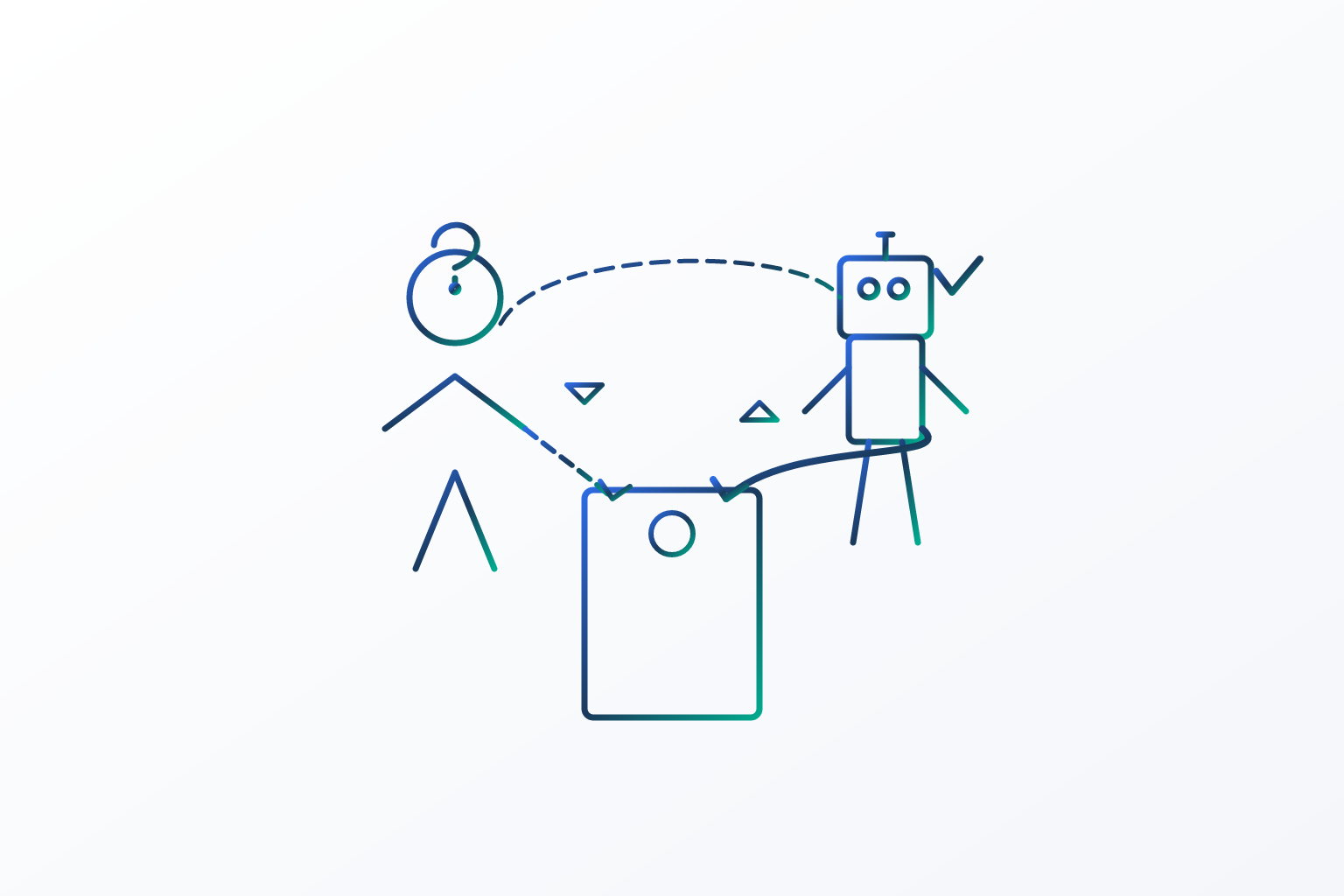
AI-assisted hiring needs more than a human signature to make oversight meaningful. Automation bias can turn review into a self-reinforcing loop in which people adopt the system’s errors, validate them and lose some of the judgment needed to challenge future recommendations. Interrupting that loop requires independent deliberation, preserved evaluation skills and evidence that the system’s judgments can withstand scrutiny.
Why human review of AI hiring recommendations is not working as designed
A recruiter receives an AI-generated shortlist, reviews the candidates and confirms the recommendation. The workflow looks supervised from beginning to end. The recruiter may also believe they made the final choice on their own, even though the system has already decided which candidates they see. Most organizations using AI hiring tools require human review before rejection, so this apparent safeguard is part of the standard workflow.
The University of Washington study found that people making hiring choices closely mirrored biased AI recommendations. Even when the bias became severe enough to recognize, awareness did not reliably lead them to override it. Recognition alone was not an effective safeguard. The distinction is between having authority to reject a recommendation and actually exercising an independent basis for doing so. Automation bias helps explain why those two things can diverge within a process that formally preserves human control.
What automation bias is and why hiring is an ideal environment for it to take hold
Automation bias is the tendency to follow automated advice and discount information that contradicts it. Users may miss signs that the advice is wrong or regard the system as more capable than themselves. Deference need not reflect careless or irrational behavior. A preference for mental shortcuts is a strong predictor of the effect, and high-volume, time-pressured hiring makes those shortcuts attractive. Framing AI as an efficiency multiplier can further encourage users to lower their assessment of their own competence relative to the system.
Hiring adds an upstream source of influence. Recommendations come with ranks and framing that shape how people read them. Surati, Bellini, and Black (2026) describe genAI as an “invisible architect” that shapes the foundations of recruiting decisions. Before a recruiter reviews a shortlist, the system may already have defined relevant qualifications, established how interview performance should be weighed and determined which candidates surface. The reviewer therefore judges within a decision space the AI has constructed.
How bias enters AI hiring models and why it is hard to detect at the point of human review
Data on past hiring can teach a model to favor candidates who are like past hires. The resulting errors are directional. Resume-screening tools trained on male-dominated hiring histories can reproduce discriminatory patterns, while algorithmic tools have also disproportionately downgraded resumes from Black, Indigenous and other minority candidates. Amazon’s AI hiring tool provides a concrete example. Trained on a decade of historical hiring patterns, it learned to downgrade women and was eventually discontinued.
Those patterns need not be apparent in any single recommendation. The Washington study found that bias generally operated below the threshold of human recognition, becoming noticeable only at severe levels. Its simulated recommendations favored different racial groups, and people in the study followed whichever group the AI favored. The direction of bias was therefore not fixed. A reviewer looking only for an expected form of discrimination could miss the broader problem of unequal treatment embedded in the recommendations.
Raghavan et al. (2020) found that commercial hiring vendors often did not share useful technical documentation or empirical evidence to back their bias-mitigation claims. Definitions of bias were also vague or inconsistent. Without that evidence, a reviewer cannot infer fairness from a vendor’s stated commitment to it.
How automation bias converts human review into a mechanism that amplifies AI errors rather than catching them
The first step in the loop is mirroring. The Washington study found that participants’ choices tracked the AI’s racial preferences, including when its bias was moderate, and reached 90% mirroring when bias was severe. When they chose without AI suggestions, they showed little bias. That contrast locates the problem in the interaction. Review allowed the automated preference to become a human-approved decision.
Repeated exposure can then change the reviewer’s own judgment. Glickman and Sharot (2025) found that exposure to biased AI outputs alters human judgments and amplifies bias over time. Biased human data shapes GenAI systems, which in turn shape the people using them. When validated decisions feed subsequent training, human approval can help reproduce the pattern rather than supply the corrective signal oversight was intended to provide.
The next consequence is a weakening of independent evaluation. Surati and colleagues found evidence of recruiter deskilling in core elements of applicant assessment, despite hopes that GenAI would develop those skills and isolated instances of upskilling. Reviewers who practice less independent evaluation may become less able to detect flawed recommendations, making further deference more likely.
The NYU study also found a mismatch between perceived and effective control. Recruiters believed they retained final authority even as GenAI shaped job qualification definitions, interview rubrics and candidate summaries before the final decision. Confidence did not establish independence in that workflow. A recruiter could control the last approval while accepting the system’s earlier judgments about what counted as evidence. That misperception makes procedural oversight especially difficult to distinguish from substantive review.
Why the Workday lawsuit and New York City's enforcement record show the loop is now a legal liability
Title VII can expose employers to liability for discriminatory outcomes whether a human or an algorithm made the decision. A human reviewer does not transfer that risk to the vendor. The EEOC removed its AI technical-assistance guidance in 2025 and de-prioritized disparate-impact enforcement under Executive Order 14281, but those changes do not make procedural review a legal shield.
Workday’s hiring-bias litigation puts that defense under scrutiny. The company argued that its tools do not make final hiring decisions and do not disparately impact applicants. Those arguments are being tested in court. The case focuses attention on how responsibility should be understood when software influences selection but a person formally makes the final call. That is precisely the division of labor automation bias makes unreliable as a safeguard.
New York City’s bias-audit law makes oversight more concrete. Enforced since July 5, 2023, it prohibits use of a covered automated employment decision tool unless it has passed an independent bias audit within the prior year and a summary is publicly posted. Candidates must also receive advance notice and instructions for requesting an alternative selection process or reasonable accommodation, although the law does not require employers to provide one. A 2026 enforcement review signaled a sharper regulatory approach. A reviewer’s approval cannot substitute for these requirements.
Other jurisdictions are moving toward enforceable obligations through different frameworks. The EU AI Act classifies recruitment AI as high risk, with compliance due by 2 December 2027. The Colorado AI Act, as amended by SB 26-189 and effective January 1, 2027, requires developers and deployers of covered hiring tools to provide notices and afford human-review rights. Its earlier reasonable-care and algorithmic-discrimination framework was repealed before taking effect. These approaches differ, but none treats the mere presence of a human as sufficient.
The strongest evidence that human oversight can work — and what it requires to do so
Kaya and Bogers provide an important empirical counterweight to the failure of routine review. Their research found that a hybrid recruiting model outperformed both human-only and AI-only approaches on gender fairness. The result is genuinely encouraging for collaborative hiring. It shows that combining human judgment with automated recommendations need not reproduce the worst tendencies of either.
In the hybrid condition, recruiters engaged with the AI-recommended slate and then conducted independent manual searches. That structure required recruiters to exercise judgment beyond the options the system had already surfaced. The finding therefore supports a design argument. It identifies a form of deliberation that ordinary approval workflows do not necessarily provide.
The Washington findings sharpen that distinction because unrecognized bias was readily accepted, and even obvious bias did not reliably prompt correction. Effective oversight needs both a chance to see the problem and a process for departing from the recommendation. Recruiters cannot always create those conditions themselves. The NYU study found that GenAI adoption was frequently driven by top-down mandates outside recruiters’ control. Responsibility for meaningful oversight therefore rests partly with those who design and authorize the workflow.
How agentic AI systems are making automation bias harder to interrupt before regulations require it
Agentic recruiting systems extend automation across sequential decisions. In 2026, recruiting agents can find candidates, screen applications, hold first-round interviews through voice AI and write offer letters. The recruiter increasingly supervises work the agent performs. This changes the location of oversight because a final output may sit several steps away from the evidence and judgments that produced it. Identifying where bias originated becomes harder than inspecting a single recommendation.
The deskilling risk also becomes more acute in this structure. As recruiters perform less evaluative work themselves, the skills needed to audit an agent’s reasoning may weaken further. An enterprise team needs to be able to trace each score to specific candidate responses, rather than receive an unexplained result after several automated stages. Explainability is still largely missing, so organizations have less insight into how their systems work just as those systems take on more responsibility.
Colorado’s requirements take effect on January 1, 2027, and the EU deadline follows in December 2027. Organizations adopting agentic workflows now are therefore making decisions that will shape their ability to meet those obligations. Missing audit trails create compliance debt as well as review difficulties.
What organizations can do now to make human oversight substantive rather than procedural
Organizations should require explainability before they put a tool to use. Vendors should provide written reasoning for every score that is traceable to specific candidate inputs. This gives reviewers an evidentiary basis for challenge. It also makes vendor accountability more concrete than a general assurance that bias has been mitigated. Where that reasoning is unavailable, the organization lacks a foundation for assessing how the output was reached.
Review workflows should then require structured independent deliberation. Kaya and Bogers’ findings support an independent search after engagement with AI recommendations, so that the shortlist does not define the entire candidate pool under consideration. Bias-awareness interventions should also occur at the decision point. The Washington study found that giving people an implicit association test before review reduced biased decisions by 13 percentage points. That measured effect came from an intervention within the workflow.
Organizations should treat recruiter deskilling as a threat to their ability to oversee AI and help recruiters keep and build their evaluation skills as they take up AI. Independent bias audits should also cover tools already in use. New York City requires audits every year, but tools elsewhere need checks too because feedback can change a tool’s outcomes after it is first assessed. The goal is not to remove AI from hiring, but to require a genuine human contribution where a procedural signature now stands.