Data Minimization Requirements for AI Hiring Tools Under GDPR and CCPA
Employers must limit AI hiring tools to job-relevant data to comply with GDPR and CCPA.
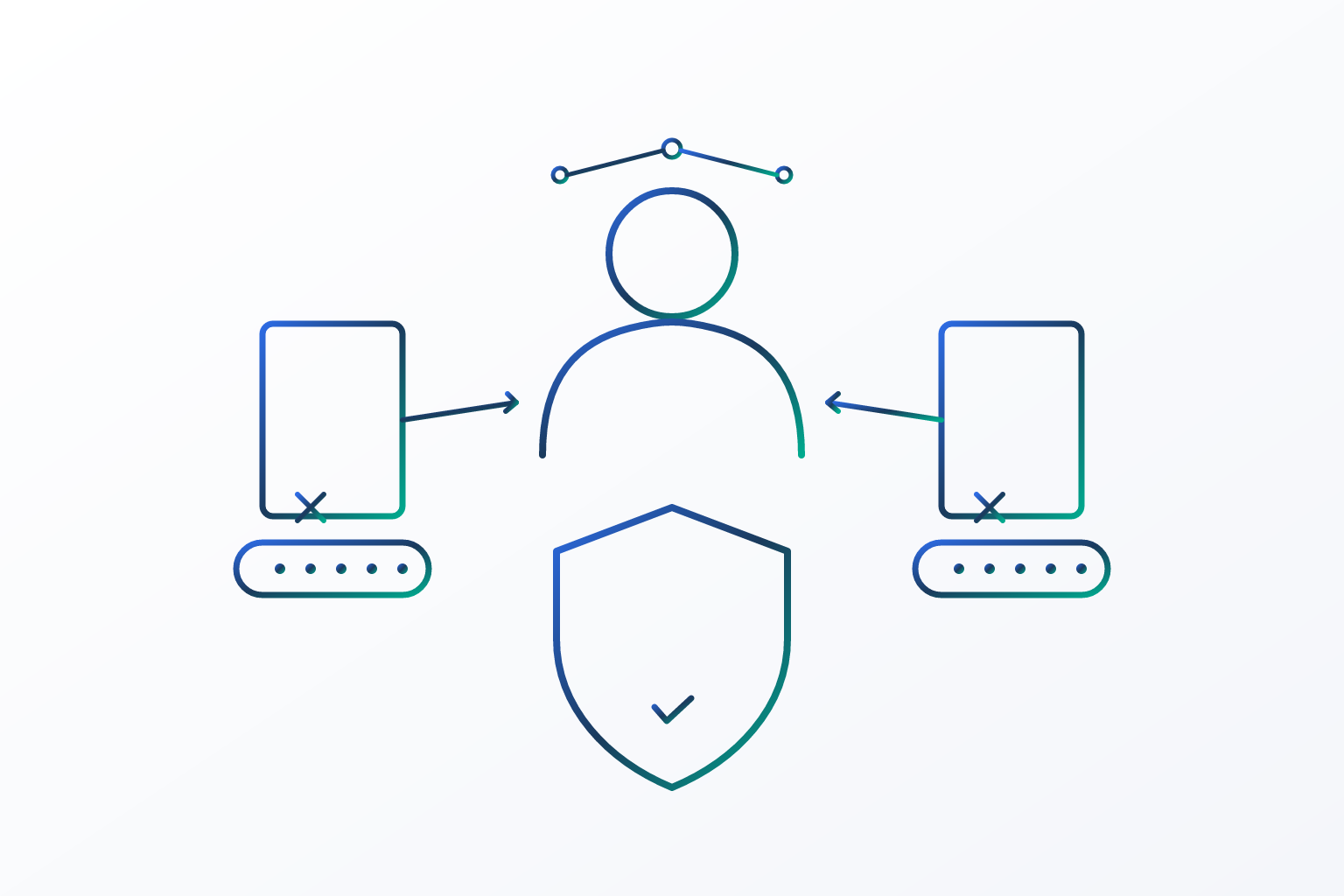
AI hiring tools put data minimization under pressure because they can process more candidate information than a hiring decision needs. Under GDPR and CCPA, compliance depends on controlling that gap throughout collection, processing, sharing, and retention. Employers need tools that restrict unnecessary inputs, support substantive human review, and make data handling accountable across the hiring pipeline.
Why AI hiring tools create a data minimization problem regulators can no longer ignore
Conventional machine learning wisdom favors more data, while privacy law demands less unless the purpose justifies it. That is the core paradox of AI hiring. The properties that make these tools useful, including processing large volumes of information into scored and ranked outputs, also encourage collection beyond a defined recruitment need. SoK: Data Minimization in Machine Learning identifies this collision between conventional assumptions about model performance and a foundational regulatory principle.
The pressure builds across the recruitment workflow. Tools find candidates by scraping job networks and social media, screen résumés, analyze video interviews, and rank those who apply. Each processing layer can widen the gap between available information and information necessary for the decision. Agentic systems intensify that pressure because greater autonomy and fewer human decision points increase the volume and scope of processing. The ICO’s audit found the practical result in some tools, which collected far more personal information than necessary and retained it indefinitely to build candidate databases without candidates’ knowledge.
What GDPR's data minimization obligation actually requires of AI hiring tools
GDPR Article 5(1)(c) requires personal data to be adequate, relevant, and limited to what is necessary for the purposes of processing. A lawful collection does not justify every later use, and a field present in a résumé does not automatically belong in a scoring model. Operationally, parsing tools should extract job-relevant skills, education, and experience rather than feed photographs, marital status, or dates of birth into AI decision matrices.
Article 6’s six lawful bases apply to every kind of candidate data that is processed. Legitimate interest matters especially when reaching out to recruit candidates, while consent matters when keeping candidates in talent pools after a specific hiring process ends. Neither is a blanket permission to collect. Legitimate interest requires a documented three-part test showing that the interest is real and present, the processing is necessary, and the candidate’s rights do not override the organization’s interest. Establishing that case for AI-driven bulk processing is materially harder than for individual recruiter outreach.
Transparency and retention impose further operational limits. Articles 13 and 14 require the recruiting organization, as controller, to explain how its AI tools process candidate data. The vendor’s privacy policy cannot substitute for that explanation. Candidate data should also be retained no longer than necessary for the role for which it was collected, with consent required to extend retention into a talent pool. These requirements connect the stated purpose to both what the tool processes and how long the organization keeps it.
What CCPA and CPRA add for US employers using AI in hiring
CCPA’s minimization obligation, codified in CPRA at §1798.100(c), requires collection, use, retention, and sharing to be reasonably necessary and proportionate to the purposes for which personal information was collected or processed. That standard reaches tool configuration and downstream data transfers. California candidates must be informed about the personal data collected for AI processing and have a right to request deletion within a set timeframe. By 2026, more US states enforce privacy laws that affect HR data and AI hiring tools, so California’s framework is a starting point for compliance across states.
Privacy compliance is only one layer of employer responsibility. The EEOC holds employers liable for discriminatory outcomes from tools they deploy under Title VII, the ADA, and related statutes. Vendor responsibility does not displace the employer’s liability. A city law, Local Law 144, adds AI-specific bias-audit and publication requirements that employers must meet alongside general privacy and anti-discrimination rules. The NY State Comptroller’s December 2025 audit nevertheless found DCWP’s enforcement largely ineffective, with no subpoenas or penalties documented, illustrating the distinction between an existing obligation and the effectiveness of its enforcement.
Where AI hiring tools create the sharpest friction with these minimization rules
The ICO found that most audited providers reused candidate personal information to train, test, and maintain their tools, and several used it to develop other products. Providers typically pseudonymized or anonymized profiles for these uses. In many cases, however, they could not demonstrate compatibility with the original collection purpose. A recruitment purpose had become a product-development purpose without an adequate account of that transition.
Sensitive inference creates a different failure at the input stage. Some tools estimated gender, ethnicity, and other characteristics from application information or a candidate’s name, often without candidates’ knowledge or a lawful basis. Those estimates were not accurate enough for effective bias monitoring. Responsibility was also obscured when providers acting as controllers or joint controllers incorrectly classified themselves as processors. The ICO found that some providers consequently failed to meet data protection principles and attempted to pass all compliance responsibility to recruiting organizations.
An Amsterdam appeals court found in 2023 that Uber’s human review of automated decisions was little more than symbolic. Although not a hiring case, it has direct implications for Article 22 compliance where an employer places a nominal human check before an automated rejection. The Dutch authority later fined Uber on August 21, 2026, and Uber has appealed the fine. Separately, external APIs can weaken control over vendor handling and deletion, leaving employers unable to guarantee that candidate information can be retrieved for access or removed in response to deletion requests.
The EU AI Act's high-risk classification and what it adds on top of GDPR
The EU AI Act classifies recruitment, screening, interview analysis, and candidate-ranking tools as high-risk under Annex III. Targeted job advertising, application filtering, candidate evaluation, and systems used for promotion, termination, task allocation, and worker monitoring also fall within this category. The rules for these tools cover the quality of training data, activity logging, transparency, and human oversight. They supplement GDPR rather than replace it, so a GDPR-compliant tool still faces a separate regulatory assessment.
The deadline for standalone Annex III high-risk systems, including HR and recruitment tools, was extended from August 2, 2026, to December 2, 2027. The EU Council formally adopted the Digital Omnibus on June 29, 2026, after the European Parliament endorsed it on June 16. Organizations should treat the extension as a reprieve. The prohibition on workplace emotion-inference tools is already in force. The penalty structure places prohibited practices in a higher tier, reaching the higher of a fixed maximum or a percentage of global annual turnover, while breaches of high-risk obligations face a lower but still significant tier. Both developers and deploying organizations are accountable, requiring employers to verify vendor compliance.
The technical reality: data minimization and model performance are not always opposites
The systematization study explains that unchecked personal-data collection can infringe rights while contributing little to model performance, as marginal gains diminish and irrelevant or noisy inputs can degrade accuracy. Feature selection already addresses this problem within machine learning. Choosing inputs that support accurate predictions has a long history as a way to improve performance and reduce computational and storage costs, independently of privacy compliance. Excluding marital status or date of birth can therefore be better engineering.
That does not make every minimization choice painless. The ICO acknowledged trade-offs between statistical accuracy and minimization, accuracy and explainability, and transparency and understandability. Those tensions require deliberate, documented choices rather than a standing assumption that additional data is beneficial. The audit’s weak sensitive-characteristic estimates show the risk that collecting more data can still leave processing without a lawful basis and measurements of little use.
What compliant AI hiring tool architecture and data governance look like in practice
CNO Financial’s approach provides an enterprise anchor for treating minimization as an architecture and governance problem. The two-layer PII-stripping approach removes identifiers before candidate information reaches the AI model, so information it does not need stays outside the processing boundary. The boundary is the essential design choice. It turns minimization from a statement of intent into a restriction on what the model receives.
Privacy-by-design extends that restriction into the matching algorithm. Keeping candidate names, gender, and protected characteristics out of matching simplifies lawful-basis documentation and reduces exposure under GDPR Articles 22 and 35. A data protection impact assessment, or DPIA, is easier to conduct when the system structurally excludes prohibited inputs than when avoiding them depends on configuration. Employers should verify adequate bias testing, compatibility of secondary uses with the original collection purpose, and correct classification of providers as processors, controllers, or joint controllers.
Teams should check from time to time which fields each tool actually processes and write down why each field they keep is needed. Bias testing should be recorded before the tool goes into use and repeated at regular intervals after that. Subject access workflows should reach every system holding candidate information, including archived accounts and downloaded CSVs.
Review processes should enable reviewers to override AI outputs and establish that they actually do so when warranted. The Amsterdam ruling warns that a human checkpoint alone can fall short. For hiring teams, the connection between Article 22 and the AI Act is operational.
Building an internal compliance posture that keeps pace with enforcement
The Irish Data Protection Commission’s EUR 310 million fine against LinkedIn in October 2024 shows how costly failures to meet data protection rules can be. National data protection authorities reported that GDPR complaints about recruiting rose by a large amount in 2025. The ICO also made a substantial number of audit recommendations, almost all accepted or partially accepted, with none rejected. Acceptance signals willingness to change, but the recurring failures it documented show that market-wide compliance remains incomplete.
An organization’s response should connect legal ownership with engineering practice. Distributed engineering teams, including those engaged through nearshore staff augmentation arrangements, face the same compliance obligations when building, configuring, or maintaining hiring tools. Engineers closest to the pipeline are well positioned to implement minimization at its source. Living DPIAs should change with tool configurations, while vendor contracts should specify data handling, deletion, and audit rights. Bias testing should follow the cadence of model updates, and candidate-data mapping should include archived systems and email threads before subject access requests are answered.
The December 2, 2027 deadline provides time to complete that work. Much of the DPIA, bias-audit, and minimization architecture needed for AI Act compliance overlaps with existing GDPR requirements. The constructive posture is to make necessity a design criterion whenever inputs, models, vendors, or retention practices change.