Hiring Automation RisksLong read
Regulatory Compliance Exposure From Unaudited Hiring Algorithms
Employers carry the liability, and thin audit records won't defend them.
· 10 min read
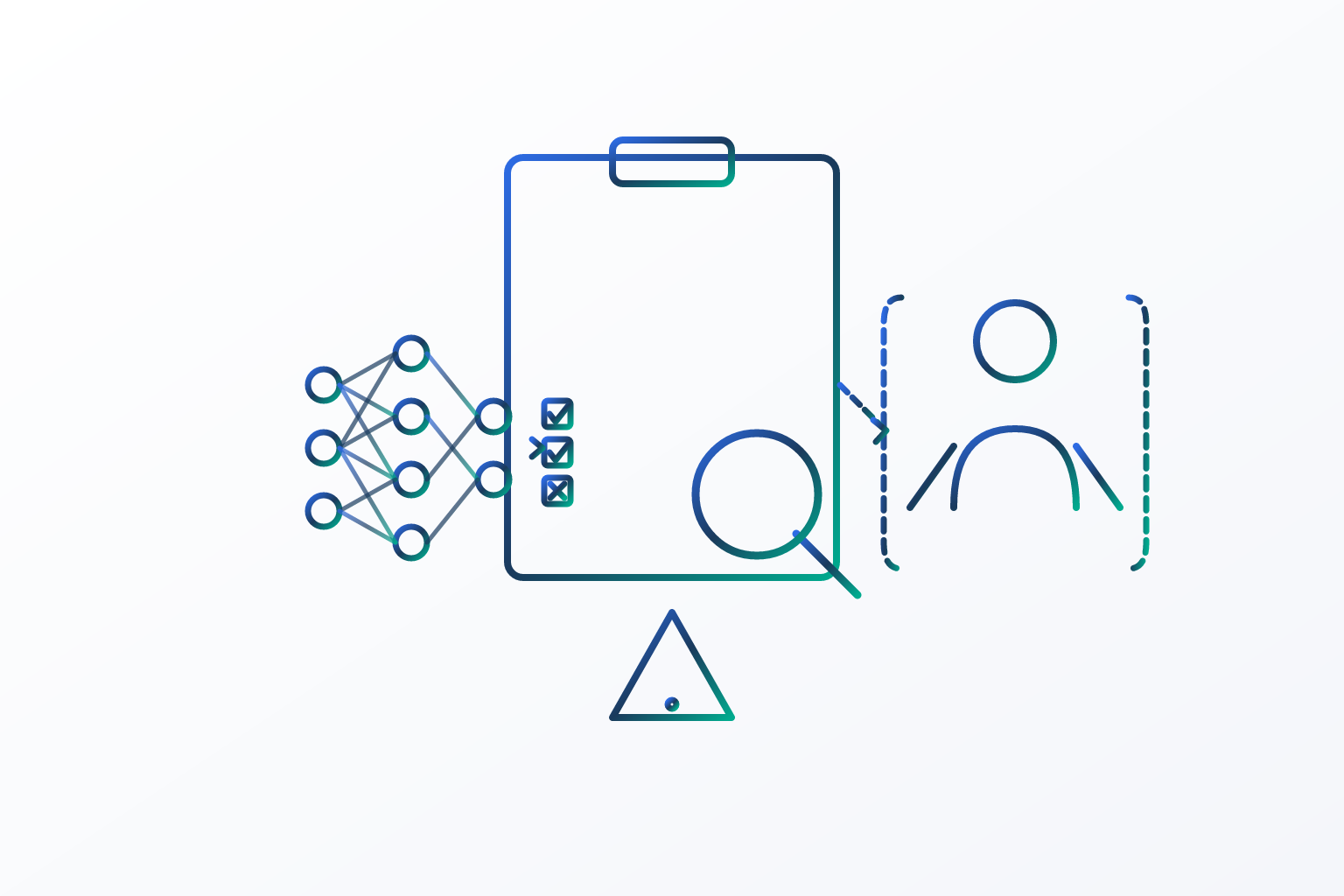
Why hiring algorithm compliance shifted from fairness intent to provable fairness
- Role: Opens the argument by establishing the structural change that makes everything else in the piece consequential — without this reframing, the sections that follow read as a checklist rather than a liability map.
- The compliance burden around hiring algorithms has moved from a question of intent to a question of documented proof, and that shift is what turns an unaudited tool into an active liability — 65% of organizations were found to have failed to maintain required documentation for algorithmic decision-making processes.
- Until recently, an employer who bought a vendor's "bias-free" tool and deployed it in good faith occupied defensible ground; that ground has been removed
- The mechanism that made this shift possible: four separate regulatory regimes now simultaneously govern the same resume-screening tool, and none of them share a definition, a deadline, or a documentation format — meaning the employer must satisfy all of them independently
- Note: Open on the compliance lead's experience described in the sources — the answer to "what changed?" is not a new prohibition but a new evidentiary standard. This is the hook. Keep the regulatory names out of this section; they are unpacked in the next two sections.
- Note: Establish early that vendor marketing claims ("EEOC-compliant," "bias-free") provide zero legal protection — the employer remains the liable party regardless of who built the tool. This is the premise the rest of the argument depends on.
The four overlapping regulatory regimes that now govern the same tool
- Role: Builds on the opening by naming the specific jurisdictions and statutes that create the multi-front liability — moves from the abstract shift to the concrete regulatory terrain the employer must navigate.
- Four distinct compliance regimes currently govern AI hiring tools, and their incompatibility with each other is itself a source of exposure.
- Colorado SB 26-189 — a full legislative reset: Colorado's original high-risk AI statute (SB 24-205) was repealed and replaced when Governor Jared Polis signed SB 26-189 on May 14, 2026; the new law builds around "covered automated decision-making technology" (ADMT) — any technology that processes personal data and uses computation to generate output used to make, guide, or assist a decision concerning an individual, and is 'covered' ADMT only when it materially influences a consequential decision, including hiring, promotion, compensation, and termination
- The risk management program and pre-deployment impact assessment mandates of the prior law are gone; what survives: point-of-interaction notice, a post-adverse-outcome disclosure within a defined window, a right to request meaningful human review, and three years of compliance recordkeeping covering ADMT version identifiers, change logs, and documentation of material changes to risk mitigation
- California and Illinois — recordkeeping and consent requirements that run in parallel:
- California's amended Fair Employment and Housing Act regulations make anti-bias testing, or its absence, explicitly relevant evidence in a discrimination case
- Illinois HB 3773, effective January 1, 2026, amends the Illinois Human Rights Act to prohibit AI that has a discriminatory effect in employment decisions and bans the use of zip codes as a proxy for protected characteristics
- Illinois's AI Video Interview Act (AIVIA), in force since 2020, requires consent (form unspecified by statute, though written consent is best practice) before AI analysis of video interviews, an explanation of what the AI evaluates, and deletion of video data within a specified period upon an applicant's request — applying to any employer using such a tool on an Illinois candidate, regardless of where the employer is based
- EU AI Act — high-risk classification for employment AI:
- Recruitment systems are classified as high-risk under Annex III; the compliance deadline for this category moved from August 2, 2026 to December 2, 2027 — a 16-month delay that is runway, not relief; the artifacts a regulator will require are the same ones they would have required the prior quarter
- Certain features are already illegal as of February 2025: workplace emotion recognition, biometric categorization of protected traits, social scoring, and harmful manipulation
- Note: Present each regime factually and on its own terms — the argument here is that their incompatibility compounds the employer's burden, not that any individual regime is unreasonable. Do not editorialize about the regulations themselves.
- Note: Keep the EU AI Act brief — it matters for multinational employers, but the US jurisdictions are the primary terrain. Flag the 16-month delay explicitly so readers don't mistake it for relief.
Why employers bear the liability even when the algorithm was built by a vendor
- Role: Closes the regulatory terrain section and opens the litigation section — the critical link is that regulatory compliance obligations and litigation exposure both land on the employer, not the vendor, regardless of who wrote the code.
- The employer-as-responsible-party principle is settled across every regime covered above, and recent litigation is stress-testing it from the vendor side simultaneously.
- Title VII of the Civil Rights Act of 1964 prohibits selection procedures that create unjustified adverse impact on protected groups; employers remain responsible for tools they deploy, whether built in-house or purchased — "the vendor said it was compliant" is not a legal defense
- iTutorGroup / EEOC (2023, settled): the EEOC's lawsuit established the first enforcement benchmark — iTutorGroup's application software was programmed to automatically reject female applicants aged 55 or older and male applicants aged 60 or older, rejecting more than 200 qualified applicants; the case settled for a substantial sum; the key compliance lesson is that the automation made the discrimination invisible to anyone who wasn't reading the code — no human review caught it while it ran
- Mobley v. Workday, Inc. (N.D. Cal., active): plaintiffs allege Workday's AI screening tools create disparate impact disproportionately screening out applicants based on age (over 40), race (specifically African American candidates), and disability; as of June 22, 2026, the court denied Workday's motion to dismiss FEHA claims (while granting the motion in part on other grounds), holding that plaintiffs adequately alleged a nexus to California because Workday allegedly designs, develops, maintains, and operates its algorithmic screening tools from its California headquarters; Workday's opposition to class certification is due November 10, 2026
- The scale implication: the lawsuit covers billions of job applications processed during the covered period — a single algorithm translates into a collective action of enormous scale
- The case also produced a significant discovery ruling on May 29, 2026: bias-testing data can be shielded under attorney-client privilege when attorneys curate the underlying data for legal advice purposes — but employers and vendors should be aware they may also face broad discovery obligations regarding their own use of the same AI tools they market to customers
- Eightfold AI class action (filed January 2026): alleges Eightfold operated as a consumer reporting agency — collecting and scoring applicant data from third-party external and public sources without consent or disclosure — in violation of the Fair Credit Reporting Act; this introduces the FCRA as a second statutory framework into what had been primarily an employment-discrimination body of law
- Note: The Mobley privilege ruling is worth a brief dedicated note to readers — it is both a shield (structure audits under legal counsel) and a warning (discovery obligations can run in both directions). Keep it concise and practical.
Why federal enforcement retreat makes private and state-level exposure larger, not smaller
- Role: Addresses the strongest objection to the article's thesis — that rollback of federal enforcement reduces the risk — and turns it: the shift from federal to private and state enforcement is what makes the multi-front liability argument more urgent, not less.
- The EEOC's retreat from disparate-impact enforcement has not reduced the legal risk to employers using unaudited hiring algorithms; it has redistributed it toward state regulators and private plaintiffs who are harder to predict and harder to settle with at scale.
- The EEOC's National Enforcement Plan of June 4, 2026 does not mention AI and states the agency will not commence, develop, or continue to pursue litigation advancing disparate-impact claims; in 2025, the EEOC removed its AI technical-assistance documents; Executive Order 14281 (April 23, 2025) directed federal agencies to deprioritize disparate-impact enforcement
- Title VII itself is unchanged by executive action — disparate-impact liability remains as a statutory matter, and private plaintiffs can still sue under it; what has changed is who is most likely to bring the claim
- As federal enforcement recedes, states have moved to expand existing anti-discrimination law to expressly address AI in employment: Illinois HB 3773 (effective January 1, 2026) is an example of this pattern
- Mobley v. Workday and the Eightfold AI FCRA suit are private actions, not agency actions — they are advancing regardless of the EEOC's enforcement posture
- Warden AI's 2026 bias audit study makes the vendor-selection point explicitly: vendor selection, not AI adoption itself, is now the dominant legal and reputational risk in HR — which means the employer's due-diligence decision at procurement is itself a source of exposure
- Note: The objection this section answers ("federal pullback means less risk") is the most common misreading of the current environment. Name it directly and answer it directly before moving to what a defensible posture actually requires. Do not dwell — one paragraph of acknowledgment, then the turn.
The specific documentation gaps that convert a compliance program into a liability
- Role: Shifts from the regulatory and litigation landscape to the operational chokepoint — what employers are actually failing to do — setting up the final section's prescription for what a defensible audit posture looks like.
- The dominant source of compliance exposure is not that employers have failed to run bias audits, but that the audits they run leave documentation gaps that render them legally indefensible.
- Gap 1 — audit independence: the audit must be conducted by an independent third party, not the vendor that built the tool and not the employer's internal data science team; Promise Legal's 2026 compliance playbook notes that many companies fail this step entirely or bury the summary where candidates cannot find it — regulators treat self-certified audits as no audit at all
- Gap 3 — public disclosure: audit summaries must be publicly available where candidates can access them; many employers either skip publication entirely or bury the summary where no candidate would find it — the absence of a published summary is itself evidence in litigation
- Gap 4 — candidate notice procedures: NYC requires meaningful advance notice before AEDT use; Illinois AIVIA requires documented consent for video AI analysis; both require that the opt-out or alternative process be real and operational, not merely stated
- Gap 6 — the NYC enforcement signal from December 2025: the New York State Comptroller reviewed the same 32 publicly posted bias audits that DCWP had reviewed; where DCWP identified one compliance issue, the Comptroller's own review found at least 17 instances of potential non-compliance — DCWP has committed to more rigorous, less complaint-dependent enforcement going forward.
- Note: This section is the operational heart of the piece. Be specific about each gap. Resist the urge to soften — the point is that partial compliance is not a defense, it is a different form of exposure. Close by noting that a well-documented audit that surfaces a problem and shows the employer acted on it is stronger than an audit that found nothing, because it demonstrates the program is real.
What a defensible audit posture actually requires
- A defensible audit posture is not a single event but a continuous documentation discipline that must survive vendor updates, regulatory changes, and the evidentiary demands of litigation discovery.
- Step 1 — inventory every AEDT in the talent pipeline: resume screeners, video interview analysis platforms, algorithmic ranking systems, and any tool that "substantially assists or replaces" discretionary hiring decisions; the inventory is the foundation — you cannot audit what you haven't mapped
- Step 2 — structure audits under legal counsel: the May 29, 2026 discovery ruling in Mobley confirmed that bias-testing data can be shielded under attorney-client privilege when attorneys curate the underlying data for legal advice; companies that structure bias-testing under the direction of legal counsel preserve that privilege — those that do not may find their own audit findings become plaintiffs' exhibit A
- Step 3 — require contractual audit cooperation from vendors: vendors must be contractually obligated to provide data for independent audits and to notify employers of material algorithm updates that would reset the audit clock; a vendor who cannot or will not meet this standard is itself a compliance risk
- Step 4 — run both test types on every audit cycle: disparate impact analysis (four-fifths rule across sex, race/ethnicity, and intersectional categories) and counterfactual consistency testing; document methodology, sample source, date, and findings — the date and version identifier are as important as the result
- Step 5 — publish and maintain candidate notice infrastructure: audit summaries must be publicly accessible, not buried; notice procedures must be operational, not theoretical; opt-out alternatives must be real; these are the elements most likely to be checked first in an enforcement review
- Step 6 — treat the EU AI Act deadline as a planning horizon, not a deadline: the December 2, 2027 compliance date for high-risk employment AI gives multinational employers runway; the documentation artifacts required will not change between now and then; organizations that build the evidence trail now avoid a compressed sprint later
- Note: Do not restate the liability figures or case names in this section — the reader has them; this section is entirely forward-looking and practical.
Filed underHiring Automation Risks
More in Hiring Automation Risks
Third-Party Auditing Standards for AI Hiring Vendors
Vetted Talent Options Editors
Data Minimization Requirements for AI Hiring Tools Under GDPR and CCPA
Vetted Talent Options Editors
Vendor Lock-In Risks in AI Screening Platform Adoption
Vetted Talent Options Editors