Shared On-Call Rotation Design for Augmented Engineering Teams
Sustainable on-call rotations need eight engineers plus explicit contracts for augmented staff.
Shared on-call rotation design for augmented engineering teams requires more than adding names to a schedule. Sustainable coverage depends on solving two problems together, namely the arithmetic of shared responsibility and the integration of engineers with different contract terms, availability windows, and system context. Both belong in the design from the start.
Why on-call rotation design is harder when your team includes augmented engineers
A team seeking augmentation often needs help with the pager right away, but incoming engineers have yet to learn enough about the system to give that help. Assigning shifts can spread who is responsible on paper without spreading the skills needed to resolve incidents. Senior engineers remain the fallback for unfamiliar failures.
Below a workable staffing floor, teams face alert fatigue, uneven load, knowledge silos, and repeat incidents that never receive systemic fixes. Augmentation introduces additional constraints, including contractual availability and the depth of each engineer’s production experience. Adding a secondary, shortening shifts, or moving coverage between regions cannot solve those problems on its own. Those changes work only when the people assigned have the availability, authority, and context their roles require.
The arithmetic floor: how many engineers a rotation actually requires
A rotation divides a fixed coverage obligation among eligible engineers. As that pool shrinks, each person spends more time on-call, while departures and difficult incident periods consume the remaining margin. With four engineers, each person is on-call roughly one week in four. That leaves little room for disruption. Six provide more breathing space, but one departure or a sustained incident cluster can make the arrangement fragile.
Eight engineers provide the working floor for sustainable coverage in this design, with enough separation between assignments to allow proper recovery. The role structure still affects the calculation. In a primary-plus-secondary arrangement, the primary handles the page while the secondary provides backup when the primary is unavailable or an incident runs long. Staffing both roles requires twice as much coverage as staffing primary alone.
For a core team of four or five, augmentation is therefore necessary to address a structural shortage. But headcount is only the first test. An engineer can count toward coverage only for the hours and duties their engagement allows.
What makes augmented engineers structurally different from full-time rotation members
An augmented engineer can safely hold a production pager only if their contract terms, how pay is set up, and their system knowledge support that responsibility. These are design variables. After-hours availability must be explicit, including whether it is paid separately, which vendor bills for it, and whether the engineer serves as primary or secondary. A standard business-hours engagement does not settle those questions.
An unexpected 3 AM page exposes the compensation gap immediately. The engineer either performs uncompensated work or generates charges the buyer did not plan for. Neither outcome supports a stable rotation. System context is harder to accelerate because effective response requires knowing how services fail, which alerts are noisy, and which runbooks remain current.
That knowledge accumulates through ownership. Giving augmented engineers primary responsibility before they build it can produce slower resolution, heavier escalation, and little lasting knowledge transfer. The “farm out the pager for a quarter and get it back” approach therefore weakens the rotation. Participation needs to include the conditions for developing operational ownership.
Shadow-first versus embedded-from-day-one: the real stakes of the primary pager debate
Shadow-first lets incoming engineers watch for at least one full rotation before they take secondary duty. Primary stays with internal staff until the engineer shows they can resolve incidents on their own. The benefit is deliberate context accumulation. The cost is delayed relief for the existing rotation.
Embedded-from-day-one starts from a different premise, namely that a sufficiently senior, operationally mature engineer with runbook access can take responsibility without a prescribed shadow period. Where the contract includes on-call participation, an unnecessary delay prolongs the existing team’s load. Neither position is universally correct. Experience with a comparable production pager says more about readiness than location or job title alone.
Readiness also depends on runbook literacy, escalation judgment, and AI tooling fluency. An engineer must be able to navigate and improve instructions, recognize when an investigation needs escalation, and critically assess diagnostic assistance. The practical resolution is conditional. Shadow-first is the right default without demonstrated pager experience at comparable scale, while immediate embedding is defensible for senior engineers when runbooks are complete and after-hours compensation is explicit.
Rotation models and how geographic distribution changes which one works
Readiness determines who can take the pager, while geographic footprint constrains the coverage architecture. A weekly rotation gives one engineer primary responsibility for a defined period with a structured handoff. It is easy to run for single-timezone teams above the eight-engineer floor. Round robin cycles eligible engineers through a fixed order, distributing responsibility and building cross-functional knowledge while accommodating shadow participation.
Follow-the-sun instead divides coverage into regional daylight windows. It requires genuine geographic coverage. Engineers in Mexico, Colombia, Argentina, and Brazil have six to eight hours of daily overlap with US Eastern and Central time. That overlap supports a daylight shift and coordination with a US-based core team, but overlap alone does not establish overnight coverage.
The handoff is the critical boundary between regions. Active incidents, silenced alerts, scheduled deployments, and known flaky alerts need to transfer with responsibility. Rootly’s scheduling guide recommends a consistent format, which may be a concise Slack summary, a short daily sync, or a written digest. Runbooks and escalation paths must remain accessible across that boundary, because relocating the page without transferring context does not create effective follow-the-sun coverage.
Alert hygiene as a rotation design variable, not a tooling problem
Even a well-staffed schedule fails when it distributes excessive noise. Long-tenured internal engineers can draw on repeated exposure to judge whether a familiar alert is likely to require intervention. An augmented engineer has yet to learn those patterns. Each false positive can then need a full investigation, adding to resolution time, escalation, and the mental effort the work takes.
Actionable alerts stay in the paging channel, while false positives require threshold correction. Informational alerts belong in a non-paging channel, duplicates need deduplication, and self-healing conditions should auto-resolve. This is workload design. It determines what an engineer must learn and act on during a shift.
The Google SRE Workbook targets a maximum of two actionable incidents per 12-hour on-call shift. Consistently exceeding that baseline points to a problem with alerting. Alert hygiene should therefore precede or run concurrently with augmented onboarding. Otherwise, a shadow rotation teaches recognition of noise instead of the failure patterns the engineer will need when taking primary.
Runbooks as the knowledge-transfer mechanism that makes augmented on-call viable
Clean alerts establish what deserves attention, but runbooks provide the context needed to act. A usable runbook immediately explains what an alert means, what to check first, and what usually fixes it. The engineer should not have to reconstruct that path from scattered dashboards or colleagues’ recollections. This makes runbooks an operational interface.
For augmented engineers, that interface must expose knowledge internal staff often leave implicit. That context includes conditions that have caused noise in the past, dependencies left out of the alert description, and the right escalation contact for a failure mode. It also includes what information to bring and whether an issue can wait until morning. Those details shorten the path from unfamiliarity to safe action.
A focused runbook sprint covers the incident types that come up most often before more engineers join the rotation. The investment targets readiness directly. Maintenance then belongs in the handoff, with outgoing engineers correcting instructions that proved incomplete or misleading. Agentic assistants can generate diagnostic queries, surface relevant logs, and suggest resolution steps, but they do not remove the need for system judgment. The engineer still has to verify the output.
Compensation and contract terms that need to be settled before the rotation is built
Operational readiness does not establish a contractual obligation to answer. Before assigning shifts, the engagement needs to state whether after-hours availability is included in the base arrangement or paid separately. It also needs to distinguish event-based payment from a fixed shift allowance, define primary, secondary, or shadow participation, and specify response-time expectations. Leaving those terms to unwritten rules can lead to missed pages and disputes over bills.
Shift-based compensation is usually easier to sustain because it pays for the time an engineer has to be available, including time without incidents. A quiet week still restricts the engineer’s time. Per-event payment does not compensate for that obligation in the same way. Role definitions also need to connect to billing so that a change in responsibility does not become an unplanned commercial change.
For buyers, explicit terms covering rotation membership, SLO dashboard access, and runbook responsibilities provide a useful procurement test. Engineers with production pager experience and SRE or DevOps depth command rates toward the higher end of their market band. Nearshore Latin American engineers can combine timezone alignment with a total-cost advantage over US-based equivalents, but the engagement still needs to price the operational skill and availability being purchased.
The tooling layer: what changes when your rotation spans internal and augmented engineers
The tooling layer must make the agreed responsibility executable. Pages, runbook links, and escalation paths need to reach engineers who may not have SSO access to internal systems. Access cannot remain an assumption. A schedule entry is ineffective if the responder cannot open the instructions or reach the next person in the escalation chain.
In a mixed rotation, primary receives the page immediately, and secondary escalation follows on a defined timer if primary does not acknowledge. An engineering manager or technical lead follows if secondary does not resolve the incident. Domain-specific routes also need to be explicit, including database issues to a DBA and security incidents to the security team. Institutional memory is not an accessible escalation policy.
Teams still on Opsgenie face a forced migration, making these requirements part of an immediate infrastructure decision. Simple configurations can take several weeks to migrate, while many integrations and layered escalation policies require considerably longer. A parallel run with proper validation needs room in that schedule.
The alternatives address different operational needs. PagerDuty offers deep integrations for complex service hierarchies, with pricing a friction point at smaller scale. incident.io keeps incident coordination inside Slack, reducing context switching where augmented engineers lack access to other internal tools. Better Stack combines monitoring, on-call, log management, status pages, and error tracking for teams seeking fewer tools. The migration provides an opportunity to assess whether the current toolchain supports mixed participation rather than merely reproducing existing configurations.
Metrics that reveal whether an augmented rotation is working before attrition does
Once the rotation is running, pages per shift show whether the number of alerts stays within the sustainable baseline. Time to acknowledge and mean time to resolve show different parts of response performance. Higher MTTR during augmented shifts points to a runbook or context gap rather than automatically establishing a performance gap. Tracking pages outside business hours separately reveals whether geographic scheduling removes overnight interruptions or only redistributes them.
Escalation rate shows that context has failed to reach engineers before problems keeping people do. How often engineers update runbooks shows whether they are building institutional knowledge, while how long they stay in the rotation is a way to gauge whether that knowledge stays. Continuity has operational value. Frequent cycling removes accumulated context faster than documentation work can replace it, which favors long-term augmented placements.
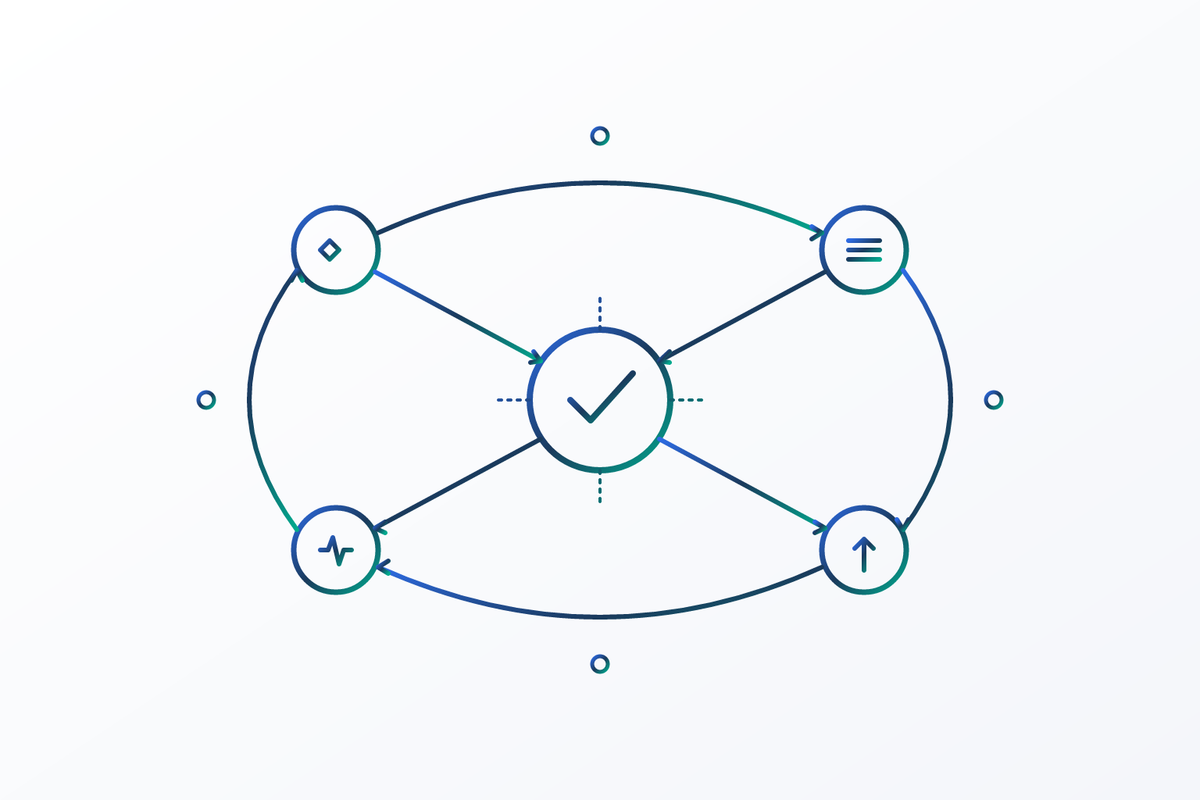
A monthly alert review turns those signals into a feedback loop by classifying the prior month’s pages as actionable, false positive, noise, duplicate, or self-healing. It also gives augmented engineers a structured way to improve the system they support. When MTTR and escalation rise while runbook updates decline, the intervention sequence is to audit alert hygiene, assess runbook completeness, evaluate rotation model fit, and only then consider headcount changes.
Over multiple rotation cycles, stable placements deepen runbook knowledge and system context. The distinction between internal and augmented engineers can then become operationally irrelevant because responsibility is supported by shared knowledge and shared scheduling.