Incident Response Runbooks for Distributed On-Call Rotations
Distributed on-call teams need runbooks designed for handoffs across time zones and skill gaps.
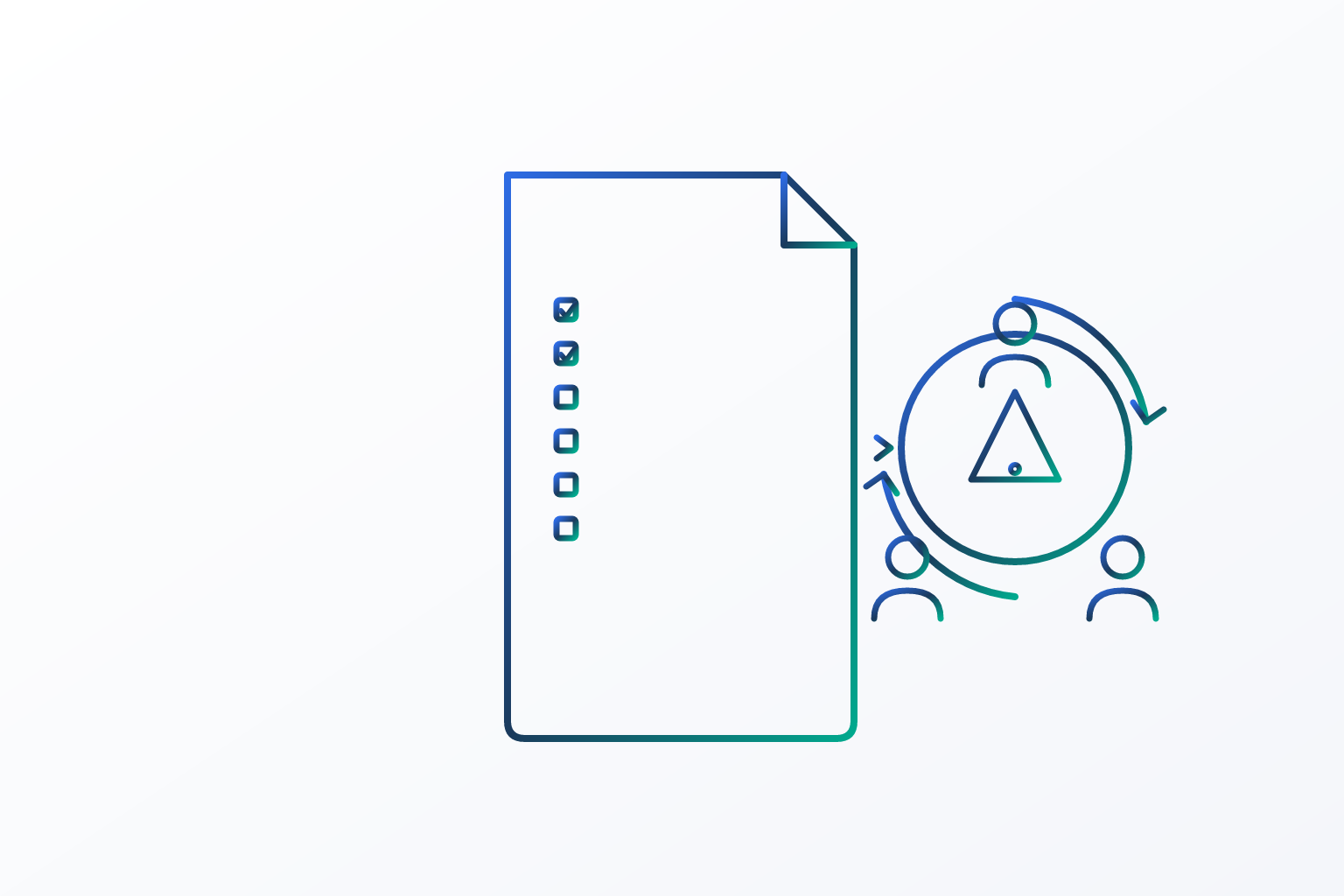
A production alert fires at 3 a.m. for the engineer on call, and the engineer who picks it up has never touched this service, cannot find a runbook that matches the alert, and has no record of whether this exact failure happened last month. Each piece can look fine on its own review and still fail the team completely, because the failure appears in the connections between them: a team adjusts its alert thresholds but never updates the runbook that references the old ones, or runs a careful blameless post-mortem and never feeds what it learned back into how the next rotation is built. The same incident then recurs, with different engineers on shift and the same gaps waiting for them. incident.io's 2026 guide frames the incident lifecycle as five stages, prepare, detect, respond, recover, and learn, and insists the five form a loop rather than a line. Break the loop at any single stage and the degradation spreads through all five, which is the argument this piece makes about distributed on-call programs specifically: geography, language handoffs across shifts, and uneven familiarity with any given service all raise the cost of a weak link far above what a co-located team would pay for the same mistake.
Rotation structure as the foundation the rest of the system depends on
Rotation structure is not a scheduling preference. It sets the physical and mental conditions under which every runbook step gets carried out and every post-mortem gets written, so the rest of the system has to sit on this foundation, not treat it as just one more input. Larger teams commonly run three tiers, primary, secondary, and an escalation engineer, with each tier expected to engage less often than the one before it but still ready to cover when the prior tier can't respond. One-week shifts are the standard starting point for rotation length; if you stretch a rotation longer than that, engineers settle into a sustained hypervigilance, and that wears down sleep, cognitive sharpness, and morale in ways that are hard to reverse once they set in.
The choice between follow-the-sun coverage and a weekly primary/secondary rotation is a structural decision, and you have to make it against the team's actual geography, not a cultural preference. Follow-the-sun only works with strict handoff discipline: incident state has to be documented clearly, handoff times have to be fixed, and the incident tracking tool has to carry context across the timezone boundary intact. When a team's distribution spans more than eight hours of time-zone difference, overlap windows start to shrink toward nothing, and at that point you need to split into sub-teams with clearly defined ownership and handoff processes.
Skill distribution matters as much as time distribution. A tiered rotation has senior engineers covering the systems where a mistake is most expensive and junior engineers shadowing before they take primary responsibility, so that whoever gets paged can actually fix what they're being paged for. The same logic applies to who coordinates an incident: rotating the Incident Commander role on a schedule, paired with shadowing before someone takes it solo, builds coordination skill across the team without handing a live incident to someone who isn't ready for it. If the most senior engineer always defaults to IC, you get two problems at once: those engineers burn out from carrying the load repeatedly, and junior engineers never get a path to develop that skill. A rotation built this way answers a specific question: who will be holding the runbook when the page comes in. Whether that runbook is worth holding is a separate question, and it's the one the next section takes up.
Making a runbook usable at 3 a.m. in a different time zone
"Ask Dave, he knows this system" is not a runbook. It's a single point of failure with a name attached, and the first rotation that runs while Dave is on vacation or has left the company will discover that fact at the worst possible moment. That scenario captures what a runbook is actually for: enabling any on-call engineer, including one with no prior context on the service in question, to respond effectively. A document that only makes sense to someone who already understands the system has failed at the one job it exists to do.
Format decides whether a runbook gets used under pressure or gets abandoned halfway through an incident. incident.io's 2026 guide finds that teams keeping runbooks short, linking them directly to specific alert types, and reviewing them after every relevant incident see substantially higher usage rates when a real incident is underway. A runbook functions as a checklist, answering "what do I do right now" rather than serving as a manual that explains the architectural history of a service. Decision trees hold up better than prose paragraphs when someone is reading at 3 a.m. half-awake, because visual branching reduces the odds that a tired engineer skips past a conditional step buried in a paragraph.
What goes into that checklist is specific. Uptime Labs' runbook guide lays out the components that make a runbook tactically complete: incident identification criteria tied to specific metrics or logs, step-by-step containment, eradication, and recovery procedures, explicit escalation paths with contact details and escalation triggers, pre-written communication templates for stakeholder updates, direct links to observability dashboards, log aggregators, and diagnostic commands, and verification steps confirming the system is fully functional before anyone closes the incident. For a distributed team, the escalation contact list has to be built around time zones from the start: the right person to call at 2 a.m. Pacific is rarely the right person to call at 2 a.m. GMT, so if a contact list doesn't make that distinction, it will send someone chasing the wrong name while the incident runs on.
Runbooks and playbooks get confused constantly, and the confusion costs teams real time during incidents. Uptime Labs draws the line: a runbook is tactical and specific, addressing a single technical task or alert, restarting the SQL Service, say, with exact commands, scripts, and checks. A playbook is strategic and broad: it covers a large-scale event or methodology with policies, roles, and communication protocols. Combining the two into a single document means neither job gets done well: the tactical steps get buried under policy language, and the strategic guidance gets lost among command-line instructions nobody needs during a routine alert. A runbook earns its usefulness through maintenance, not through how well it reads the day it was written. It's only as current as the last incident that tested it, which is exactly where post-incident learning comes in.
Severity levels and incident roles as the operating grammar every runbook assumes
A runbook step that tells an engineer to "escalate to the Incident Commander" only means something if the Incident Commander role has already been defined, assigned on a schedule, and understood by everyone who might read that step. Severity levels and incident roles are the decisions a team makes in advance so that every runbook can reference them without re-explaining them during a live incident. Severity decides who gets paged, how often stakeholders hear updates, and which escalation path applies, and all three of those have to resolve in seconds during a real incident, not after a discussion.
Severity inflation undermines all of it. If you call every service degradation a SEV-1 so leadership notices, you get alert fatigue, and on-call engineers eventually stop treating any page as genuinely urgent. That outcome is a structural failure of the severity scheme, so you fix it with tighter tier definitions tied to specific, measurable thresholds.
The four core incident roles, typically Incident Commander, Communications Lead, Technical Lead, and a dedicated note-taker tracking the incident timeline, give every runbook a shared vocabulary that holds up across engineers and time zones. For a distributed team, the Communications Lead carries outsized weight: a time-zone gap means stakeholders in other regions may wake up to an incident that has already been running for hours, and without someone explicitly responsible for updates, that information vacuum fills with speculation instead of facts. The same IC rotation problem raised in the previous section applies to role design broadly: always assigning the most senior engineer burns that person out while leaving junior engineers no way to build coordination skill, and a shadow-pairing model for IC rotation spreads that skill across the team without putting a live incident in untested hands. Even well-defined roles and carefully calibrated severity tiers will not stop the same incidents from recurring if nothing captures what each one taught the team, which is the gap post-incident learning exists to close.
Handoffs as the highest-risk moment in a distributed rotation
The shift handoff is where a distributed rotation most often loses the information it worked hardest to gather. Context that one engineer built up over hours of investigation has to transfer completely to another engineer, often in a different country, who may share no prior history with the incident in progress. Whatever doesn't make that transfer is gone, and the incoming engineer starts from a position worse than zero: not just uninformed, but unaware of what they don't know.
What a handoff has to carry across that gap is incident state, documented in a form that survives the timezone transition. A verbal handoff doesn't survive it. A shared incident tracking tool with a structured state field is a structural requirement for any team running follow-the-sun or near-follow-the-sun coverage.
A handoff done poorly costs more over time; it doesn't stay contained to the moment it happens. An engineer who has to reconstruct incident context from nothing loses exactly the time advantage that follow-the-sun coverage was built to provide in the first place, since the entire rationale for that model is continuous progress across time zones rather than a nightly reset. And if the outgoing engineer happens to be the one person who understood the affected service, the handoff exposes the tribal-knowledge problem in real time, in the middle of a live incident rather than in a post-mortem where it can be fixed calmly. Runbook completeness and handoff quality are the same failure mode wearing two different names: a runbook with the right escalation contacts and clear steps gives an incoming engineer something to stand on even when the verbal context didn't make it across the timezone gap. Some of that documentation burden during a handoff is now shifting to tooling built specifically to capture and carry incident state automatically.
How AI assistance changes the runbook and on-call system
AI tools are improving the mechanical side of incident response, gathering context, documenting state, routing alerts, triggering the right runbook, but they are not replacing the structural decisions a team has to make about how its rotation is built, who writes its runbooks, and how it learns from what goes wrong. That distinction matters because it's easy to mistake faster context-gathering for a solved rotation problem, when the two sit at entirely different layers of the system.
Where AI demonstrably helps is in the early minutes of an incident, when an engineer's time is most expensive and least available. An AI agent can ingest an incoming alert, pull together context such as recent deploys, log anomalies, and metric trends, and post an initial diagnosis to the incident channel before a human has finished reading the page. That cuts down the time an on-call engineer spends on manual context assembly, work that costs more during the first minutes of an incident than at almost any other point in the lifecycle. The same mechanisms that help with context gathering can help carry incident state across a handoff, reducing exactly the kind of information loss described above.
None of that changes who should be Incident Commander, how long a rotation should run, or whether a severity tier is calibrated correctly. A team still needs judgment about its own geography, skill distribution, and service ownership to make those calls, and no automated system can substitute for that. AI assistance built on top of a poorly structured rotation or an undisciplined handoff process will document the chaos faster without resolving it. The structural work described throughout this piece, rotation architecture matched to team geography, runbooks that are short and current and linked to specific alerts, severity and role definitions that remove ambiguity, and handoff processes built to survive a timezone gap, is still the work that decides whether a distributed on-call program holds up under a real incident at 3 a.m., wherever on the map that 3 a.m. happens to fall.